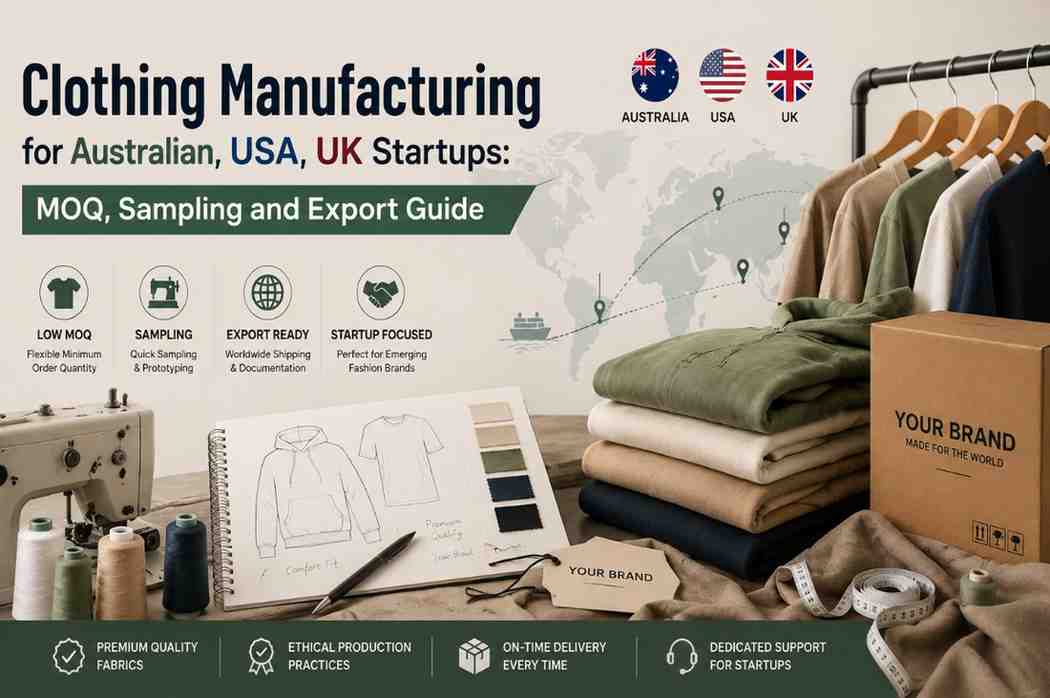

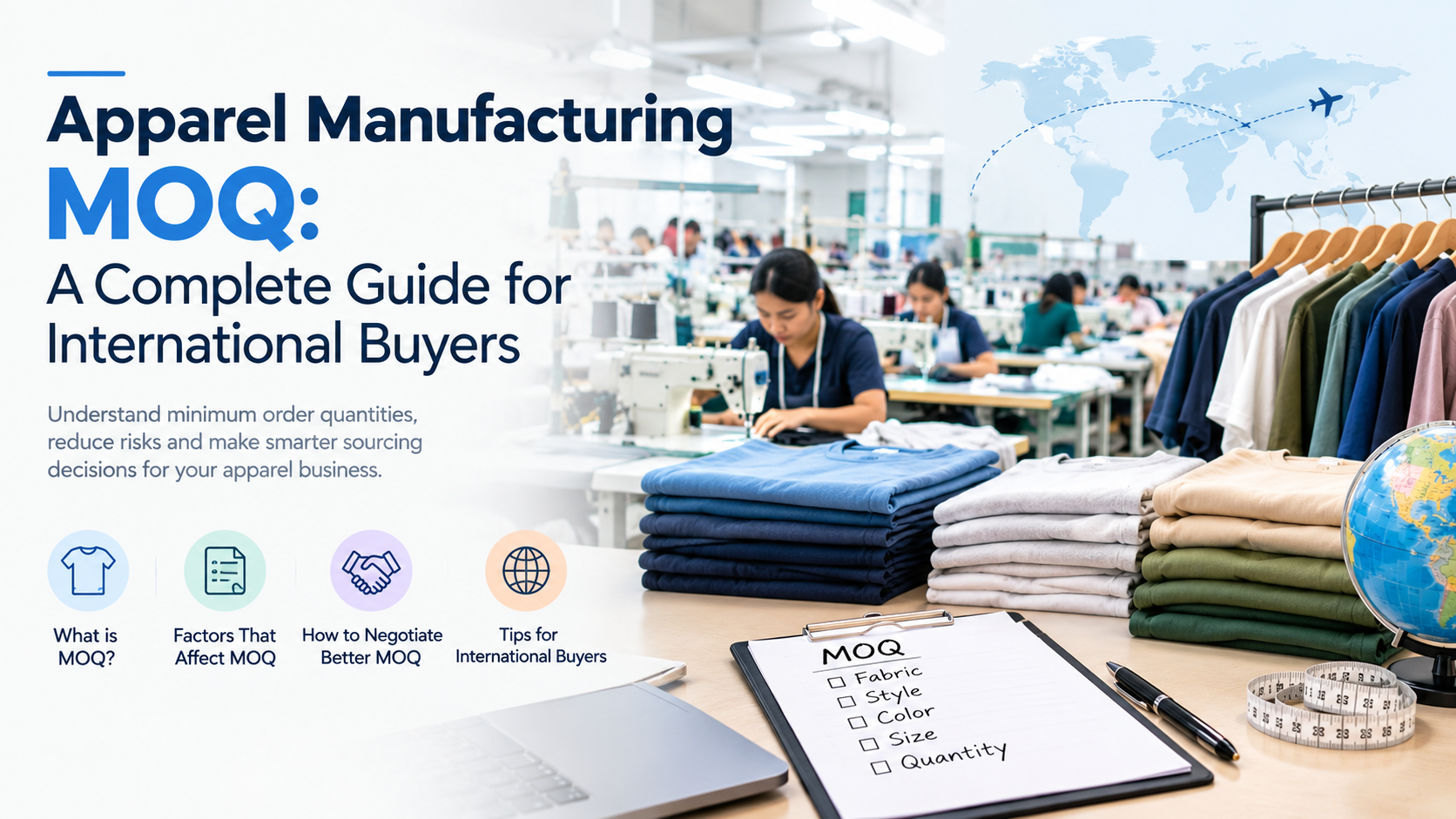
When an international fashion brand starts looking for an apparel manufacturer, one of the first commercial questions is usually about MOQ, or Minimum Order Quantity. MOQ determines how many garments a buyer needs to order before a manufacturer begins production. For established fashion companies, a higher MOQ may be manageable because they already have predictable sales volumes, but for emerging labels, boutique retailers, startups, and businesses testing a new market, MOQ can significantly influence investment, inventory risk, cash flow, and product strategy. Understanding how apparel manufacturing MOQ works can therefore help international buyers make more informed sourcing decisions and choose production partners that match their business model.
For brands sourcing garments internationally, MOQ should not be viewed simply as a number written on a supplier’s quotation. It can vary according to fabric, garment category, colors, sizes, printing, embroidery, dyeing, trims, packaging, production technology, and the level of customization required. A buyer researching Apparel Manufacturing MOQ USA, Apparel Manufacturing MOQ UK, or Apparel Manufacturing MOQ Australia needs to understand these variables before comparing manufacturers. At Echo Earth, the focus can be positioned around helping international apparel businesses understand manufacturing requirements and develop products with a practical approach to sourcing, production, quality, and order planning. Whether a brand is launching its first collection or expanding an established clothing line, understanding MOQ can make the manufacturing process more predictable and commercially sustainable.
What Does MOQ Mean in Apparel Manufacturing?
MOQ stands for Minimum Order Quantity. In apparel manufacturing, it refers to the smallest quantity of garments a manufacturer is willing to produce for a particular order, style, fabric, color, or production requirement. The exact meaning of MOQ differs between factories, so international buyers should always ask what the quoted MOQ actually applies to.
For example, one manufacturer may state that its MOQ is 100 pieces per style, while another may require 100 pieces per color and another may calculate MOQ according to fabric consumption. A supplier could also have a minimum fabric order that affects the final garment quantity. This means that a buyer should never compare MOQ figures without understanding the complete production terms behind them.
MOQ exists because apparel manufacturing involves fixed and variable costs. Creating patterns, preparing cutting markers, arranging fabric, setting up sewing lines, preparing printing or embroidery equipment, sourcing trims, developing samples, checking quality, and preparing packaging all require time and resources. Producing a very small number of garments may not be commercially efficient for a factory, particularly when the product requires specialized materials or processes.
For this reason, MOQ is not automatically an indication that a manufacturer is expensive or inflexible. Instead, it is often connected to production efficiency and the economics of manufacturing.
Why MOQ Matters to International Buyers
MOQ directly affects how much inventory a business must purchase at the beginning of a production cycle. A brand ordering 500 garments has a very different cash-flow requirement from a brand ordering 5,000 garments. If the product sells quickly, a larger order can reduce the per-unit manufacturing cost. However, if demand is uncertain, excessive inventory can create storage costs, discounting pressure, and working-capital challenges.
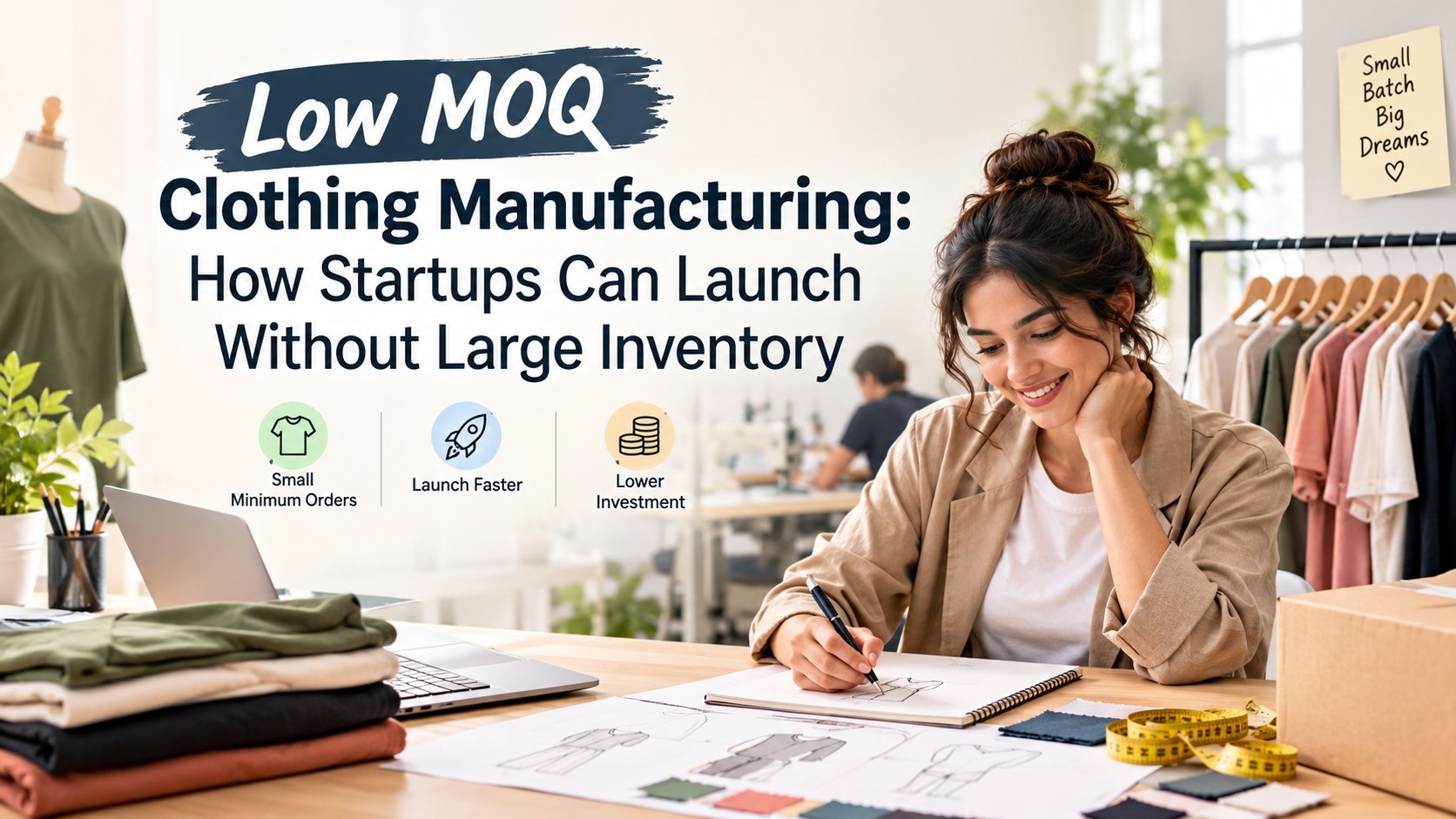
This is particularly important for startups and smaller fashion labels. A business may have a strong product concept but limited historical sales data. Ordering a large quantity before testing the market can increase financial risk. A lower MOQ can allow the brand to validate its product, collect customer feedback, analyze sales performance, and then place larger repeat orders.
For international buyers, MOQ should therefore be evaluated alongside unit price, lead time, quality, payment terms, shipping costs, production capacity, and expected sales volume. The lowest MOQ is not always the best option, just as the lowest price is not necessarily the best manufacturing solution.
How Apparel Manufacturing MOQ Is Calculated
There is no universal MOQ formula used by every apparel manufacturer. Factories may calculate minimum quantities differently depending on their production model.
One common approach is MOQ per style. In this case, the buyer must order a minimum number of units for each garment design. For example, a manufacturer could accept 200 units of a particular T-shirt design regardless of the number of sizes included.
Another approach is MOQ per color. A buyer may need to order a minimum number of garments for each color because fabric dyeing and preparation create additional production costs. If a brand wants the same shirt in five different colors, the total minimum order may therefore become considerably larger.
Some manufacturers use fabric-based MOQ. This is particularly relevant when custom fabrics or special dyeing processes are involved. A fabric mill may have its own minimum production requirement, meaning that the apparel manufacturer needs to purchase a certain quantity of material even if the garment order itself is relatively small.
Understanding these distinctions is essential for international buyers comparing Apparel Manufacturing MOQ USA, Apparel Manufacturing MOQ UK, and Apparel Manufacturing MOQ Australia suppliers.
Typical MOQ Differences by Garment Category
MOQ can vary substantially depending on the type of apparel being manufactured. Basic T-shirts, shirts, leggings, hoodies, dresses, jackets, uniforms, activewear, and technical garments may all have different production requirements.
Simple garments are generally easier to manufacture because they may use fewer components and standardized construction methods. More complex products can require additional trims, specialized machinery, detailed stitching, lining, zippers, custom hardware, embroidery, or technical fabrics.
For example, a basic cotton T-shirt may be relatively straightforward to produce, while a structured jacket with multiple panels, lining, custom buttons, zippers, and specialized finishing may require more preparation. Similarly, activewear can involve stretch fabrics, specialized stitching, performance finishes, elastic components, and technical construction.
This is why international buyers should ask for MOQ on a product-by-product basis rather than assuming that one factory-wide MOQ applies to every garment.
Apparel Manufacturing MOQ USA: What International Brands Should Know
The US apparel market is highly diverse, ranging from independent fashion labels and boutique retailers to large e-commerce companies and established clothing brands. Buyers considering Apparel Manufacturing MOQ USA often look for a balance between production volume, quality, customization, pricing, and supply-chain reliability.
For US-based brands working with international manufacturers, MOQ can become especially important when launching new products. A smaller initial order can help a brand test demand before committing to larger quantities. Once a design demonstrates strong sales, repeat orders can potentially be increased according to the manufacturer’s capacity and fabric availability.
US buyers should also consider delivery timelines and replenishment requirements. A manufacturer offering a low MOQ may be useful for product testing, but if the factory cannot support larger repeat orders, the brand could face supply shortages when demand increases.
A strong manufacturing relationship should therefore be evaluated over the complete product lifecycle, from sampling and initial production to repeat orders and collection expansion.
Apparel Manufacturing MOQ UK: Important Considerations
The UK fashion market includes independent designers, online clothing brands, boutique businesses, private-label retailers, and established apparel companies. Buyers researching Apparel Manufacturing MOQ UK may have different requirements depending on whether they are developing small seasonal collections, private-label products, uniforms, or larger commercial ranges.
For smaller UK brands, MOQ flexibility can be valuable because many businesses operate with limited initial inventory. Instead of producing a large number of every design, a brand may prefer to launch a curated collection and monitor customer response.
UK buyers should also consider whether the manufacturer can support multiple size ratios and color combinations. A low MOQ can lose its advantage if the manufacturer imposes separate minimum quantities on every color or size. Therefore, buyers should ask for a complete MOQ breakdown before confirming an order.
Clear communication about specifications, packaging, labeling, production timelines, and shipping requirements can also reduce complications later in the manufacturing process.
Apparel Manufacturing MOQ Australia: Planning for Distance and Inventory
Australia presents unique considerations for international apparel sourcing because many brands need to manage long-distance logistics and shipping timelines. Businesses researching Apparel Manufacturing MOQ Australia should consider MOQ alongside production lead time and inventory planning.
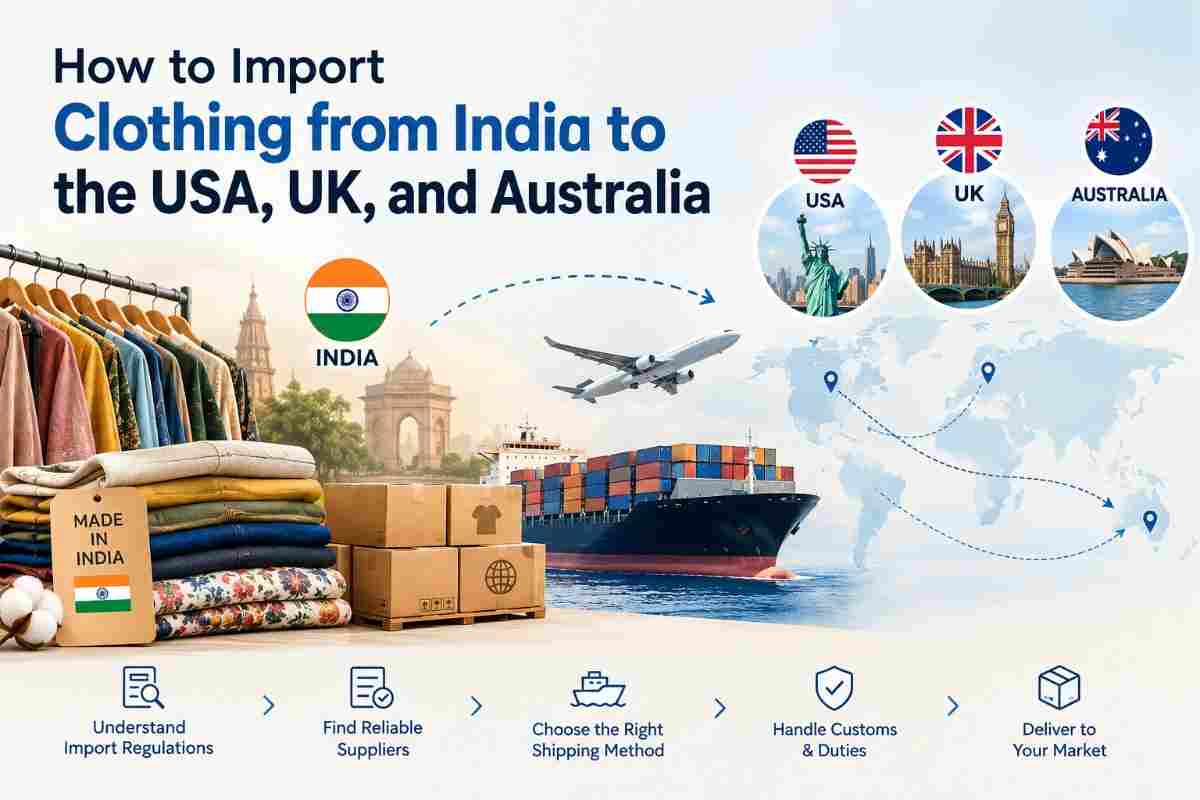
When shipping garments internationally, a brand needs to allow sufficient time for manufacturing, quality inspection, freight, customs clearance, and final delivery. If the MOQ is too low and the brand repeatedly needs small shipments, the overall logistics cost per garment may increase.
At the same time, ordering excessive quantities can create inventory pressure. Australian fashion businesses should therefore develop an order strategy based on expected sales, product lifecycle, storage capacity, shipping schedules, and available working capital.
Brands looking for the Best Apparel Manufacturing MOQ Australia solution should not focus exclusively on finding the smallest minimum order. The better approach is to find a manufacturer whose MOQ, quality, production capacity, and communication fit the brand’s actual requirements.
What Determines Apparel MOQ?
Several factors can influence the minimum quantity required for apparel production.
Fabric Requirements
Fabric is one of the most important factors. Standard fabrics that are readily available may allow greater flexibility, while custom-developed, dyed, printed, or specially finished fabrics may require larger minimum quantities.
Garment Complexity
Simple garments usually require less production preparation than highly detailed designs. Multiple panels, special stitching, lining, trims, custom hardware, and technical construction can increase production complexity.
Color Selection
Different colors may require separate dyeing or fabric preparation. A buyer requesting many colors may therefore face a higher effective MOQ.
Printing and Embroidery
Custom printing, screen printing, embroidery, digital printing, appliqué, and other embellishments may have separate setup requirements. The production quantity can affect the cost efficiency of these processes.
Custom Labels and Packaging
Private-label apparel often includes woven labels, hangtags, care labels, barcode stickers, custom packaging, and other branding elements. These components can have their own minimum quantities.
Production Capacity
A factory’s production model also matters. Some manufacturers are structured around high-volume production, while others specialize in smaller batches and flexible manufacturing.
How Small Brands Can Manage High MOQ
A high MOQ does not necessarily mean that a small brand has to abandon a manufacturing relationship. There are several strategies that can make production more manageable.
One approach is to reduce the number of initial styles. Instead of launching 15 designs simultaneously, a brand can select a smaller number of core products and place a larger quantity across those products. This can make the overall production plan more efficient.
Another strategy is to limit the number of colors during the first production run. Once sales data becomes available, successful colors can be reordered while weaker colors can be discontinued.
Brands can also focus on evergreen designs rather than highly seasonal products. A timeless T-shirt, hoodie, shirt, or trouser can potentially remain in the collection for longer, making a larger initial production quantity easier to manage.
Working closely with the manufacturer during product development can also help identify unnecessary complexity. Sometimes a small change in fabric, trim, packaging, or construction can make a product easier to manufacture without compromising its intended design.
Low MOQ vs High MOQ: Which Is Better?
Neither low MOQ nor high MOQ is automatically better. The right quantity depends on the buyer’s business model.
A lower MOQ generally provides greater flexibility. It can be useful for startups, emerging designers, limited collections, market testing, and businesses with uncertain demand. The trade-off may be a higher unit manufacturing cost.
A higher MOQ can often improve production efficiency and reduce the unit cost when the factory can run a larger production batch efficiently. However, the buyer assumes greater inventory risk.
The ideal solution is to match MOQ with expected demand. A growing brand may begin with smaller quantities and increase production after identifying its best-selling products.
How to Negotiate MOQ With an Apparel Manufacturer
MOQ can sometimes be discussed during the sourcing process, particularly when the buyer has a clear production plan. Instead of simply asking a factory to lower its MOQ, buyers should explain their expected order volume, product range, future growth potential, and repeat-order plans.
For example, a buyer may explain that the first order is intended as a market test and that successful products will be reordered at higher volumes. This provides the manufacturer with a clearer understanding of the potential business relationship.
Buyers can also ask whether MOQ applies per style, color, fabric, or total order. In some cases, combining colors or using stock fabrics may make a smaller production run possible.
Professional negotiation should focus on creating a commercially workable arrangement for both sides rather than simply pushing for the lowest possible quantity.
MOQ and Product Development at Echo Earth
For international brands, successful apparel manufacturing begins well before bulk production. Product development, material selection, sampling, fit approval, specifications, and production planning all influence the final manufacturing process.
At Echo Earth, the emphasis can be placed on helping apparel businesses approach manufacturing with a clear understanding of product requirements and production realities. For buyers entering international sourcing, this type of structured approach can help reduce misunderstandings and improve planning.
Whether a business is developing everyday apparel, private-label clothing, contemporary fashion, or a specialized collection, buyers should define the product specifications before discussing final quantities. A clear tech pack, approved sample, accurate size chart, material specification, color reference, branding requirement, and packaging instruction can make production communication significantly easier.
Questions International Buyers Should Ask Before Confirming MOQ
Before placing an apparel manufacturing order, buyers should ask several practical questions. What exactly does the MOQ apply to? Is it per style, color, size, or total order? Are fabrics included in the MOQ? Does custom printing or embroidery create a separate minimum? Can the manufacturer support repeat orders? What happens if the buyer needs a small replenishment? What are the sampling and production lead times? What quality-control procedures are followed? Can custom labels and packaging be produced? These questions help buyers understand the actual production commitment instead of relying on a single MOQ number.
It is also important to confirm the size breakdown. For example, a buyer ordering 500 pieces may need to distribute those units across XS, S, M, L, XL, and other sizes. The manufacturer should confirm whether the size ratio can be customized or whether a predefined ratio is required.
MOQ, Cost, and Long-Term Sourcing Strategy
MOQ should always be considered as part of a broader sourcing strategy. A garment’s manufacturing cost is influenced by fabric, labor, construction, trims, printing, embroidery, packaging, order volume, and production efficiency.
Ordering a larger quantity can potentially lower the unit cost, but the savings should be compared with the financial cost of holding inventory. A business should calculate how quickly the garments are expected to sell and whether the product has a long enough lifecycle to justify the production quantity.
For international buyers, shipping and import-related costs should also be considered. A lower factory price does not necessarily produce the lowest landed cost if freight, duties, handling, packaging, and other expenses are significantly higher.
This is why experienced buyers evaluate total landed cost rather than looking only at the manufacturer’s quoted garment price.
Building a Flexible Apparel Collection
One effective way to manage MOQ is to create a collection where products share common materials or manufacturing processes. If several styles use the same base fabric, similar trims, or compatible production methods, the overall sourcing process can become easier to manage.
For example, a fashion brand might develop several garment silhouettes using one primary fabric family. Instead of sourcing completely different materials for every product, the brand can create a cohesive collection around selected fabrics.
This approach can also strengthen brand identity because customers see consistency across products. It allows the business to develop a recognizable collection while potentially improving purchasing efficiency.
Why the Right Manufacturing Partner Matters
MOQ is only one part of a successful apparel manufacturing relationship. Buyers should also evaluate product quality, communication, sampling capabilities, production capacity, technical expertise, consistency, transparency, and the manufacturer’s ability to support future growth.
A supplier that understands the buyer’s market and product requirements can become more than a production vendor. It can become a long-term manufacturing partner that supports product development and collection expansion.
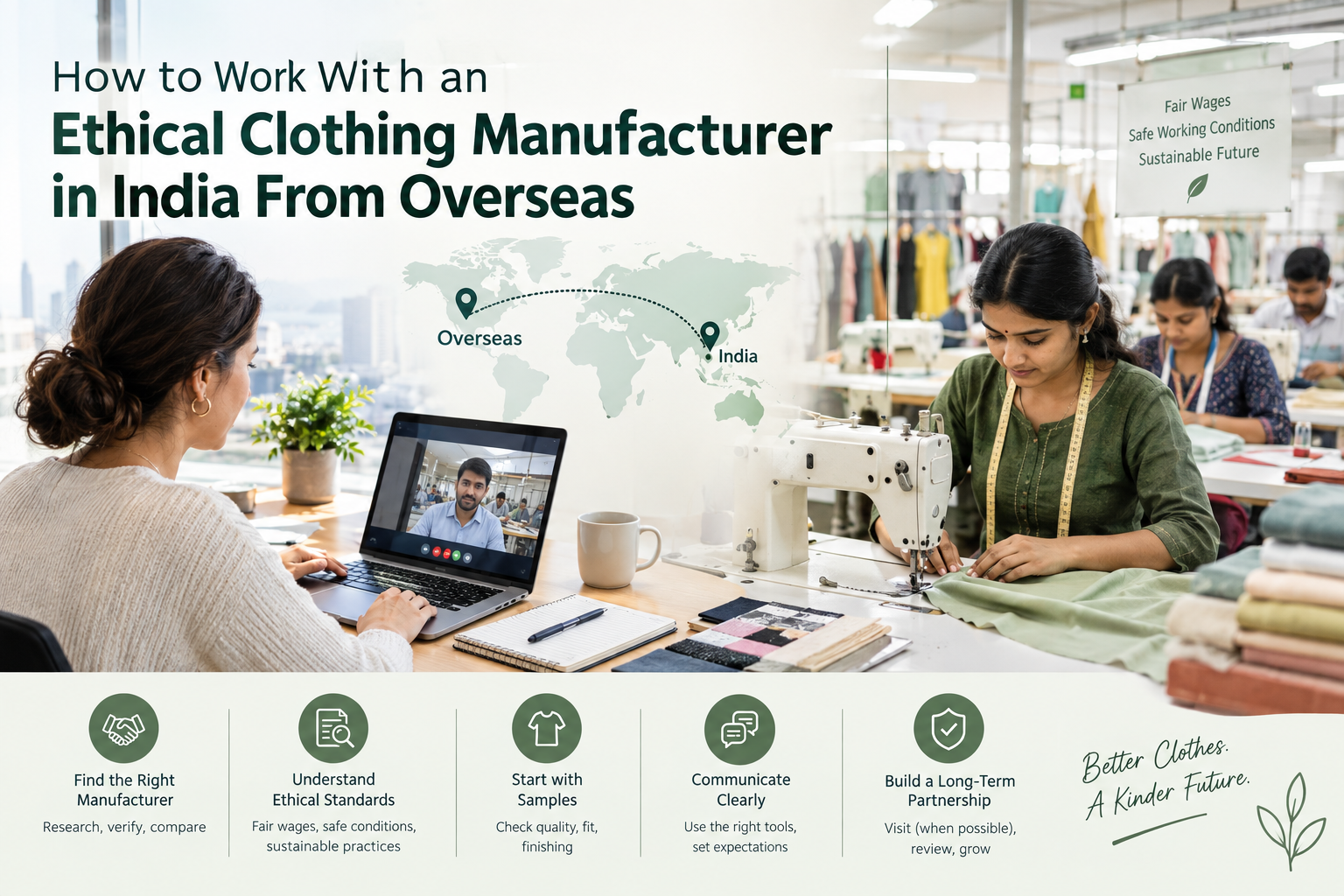
For international brands, this relationship is particularly valuable because manufacturing often involves communication across countries, time zones, currencies, logistics systems, and regulatory environments.
Choosing a manufacturer based on the complete relationship rather than MOQ alone can therefore lead to better long-term results.
Conclusion
Apparel manufacturing MOQ is an important consideration for every international clothing buyer, but it should never be evaluated as an isolated number. MOQ is influenced by fabric requirements, garment complexity, color selection, printing, embroidery, labels, packaging, production capacity, and manufacturing efficiency. Understanding these factors helps brands create realistic budgets, manage inventory, plan production, and select suppliers that match their commercial goals.
For businesses researching Apparel Manufacturing MOQ UK, Australia, USA the most important step is to understand exactly how each manufacturer’s MOQ is calculated. A smaller MOQ can provide flexibility for startups and product testing, while a larger MOQ can potentially improve unit economics for established brands with predictable demand. The right choice depends on sales forecasts, available capital, collection size, product lifecycle, and long-term sourcing plans.
International buyers should also remember that the best manufacturing partner is not necessarily the supplier with the lowest MOQ. Quality, consistency, communication, customization, production capability, lead times, and total landed cost are equally important. For brands working toward sustainable long-term growth, a carefully planned manufacturing strategy can reduce unnecessary inventory risk while creating a reliable foundation for future collections.
With a structured approach to sampling, material selection, production planning, and order management, Echo Earth can be positioned as a trusted apparel manufacturing partner for international buyers seeking practical and scalable solutions. Whether a business is entering the market for the first time or expanding an established clothing collection, understanding MOQ is an important step toward building a more efficient and predictable apparel supply chain.