



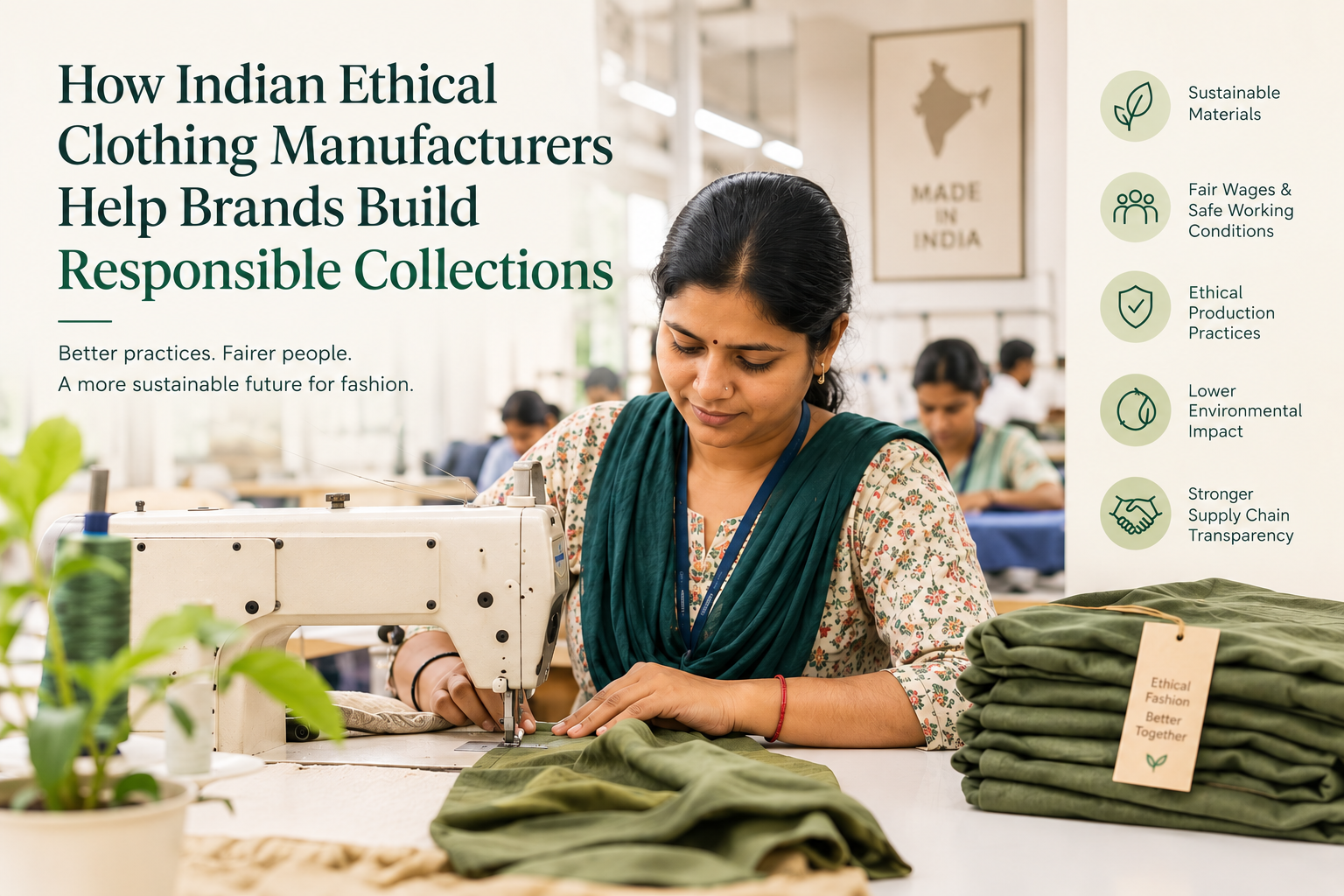
How Indian Ethical Clothing Manufacturers Help Brands Build Responsible Collections
As fashion brands expand into international markets, responsible clothing production has become an increasingly important part of product development. Customers, retailers, and business buyers are paying closer attention to how garments are designed, sourced, manufactured, packaged, and distributed. For brands selling in the USA, UK, and Australia, finding a manufacturing partner that can support clear production standards while maintaining design flexibility can make the product-development process more organized and transparent. This is where experienced Indian apparel manufacturers can play an important role, particularly for businesses looking to develop collections with considered materials, responsible production practices, and consistent manufacturing processes. Choosing a Clothing Manufacturer in India for USA, UK, or Australian markets involves more than finding a factory that can produce garments at a particular price. Brands need to consider fabric selection, sampling, quality control, production capacity, communication, lead times, compliance requirements, packaging, and export experience. Echo Earth works with international clothing brands looking for manufacturing support across product development and garment production. By combining manufacturing capabilities with attention to material selection and production requirements, Echo Earth helps brands develop apparel collections that are aligned with their product concepts and target markets. What Makes Ethical Clothing Manufacturing Different? Ethical clothing manufacturing is not simply about attaching a sustainability label to a garment. It involves looking at multiple stages of the product lifecycle, from raw-material selection and design decisions to manufacturing, finishing, packaging, and distribution. A responsible approach requires brands to understand where their materials come from, how products are manufactured, and what production practices are used throughout the supply chain. For international brands, working with a manufacturer that can communicate clearly about production processes can make these considerations easier to manage. Ethical manufacturing may involve responsible material choices, reduced production waste, efficient resource use, appropriate working conditions, quality-focused production, and better product durability. The exact practices and certifications involved can vary depending on the manufacturer, material, product category, and destination market. This broader approach is particularly relevant for brands that want to build collections around long-term product value rather than short production cycles. When design, fabric, construction, and manufacturing are considered together, brands can create garments that better match their intended positioning and customer expectations. Why India Is an Important Apparel Manufacturing Destination India has a long-established textile and apparel industry supported by a broad ecosystem of fibers, fabrics, processing units, garment manufacturers, artisans, suppliers, and export infrastructure. This range of capabilities allows international brands to source different types of apparel and develop products across multiple categories. Another advantage is the diversity of textile expertise available within the country. Depending on the product requirements, brands may be able to work with different fabric constructions, natural fibers, blends, woven materials, knitted fabrics, prints, dyes, embellishments, and garment finishes. For an international business, this can provide flexibility during product development. A brand may begin with a small collection and later expand into additional styles, materials, or categories as its market develops. A capable manufacturing partner can help translate these requirements into practical production specifications. How an Ethical Clothing Manufacturer Supports Responsible Product Development Responsible clothing production begins before the first garment enters manufacturing. Design decisions have a direct effect on fabric consumption, production complexity, durability, packaging requirements, and ultimately the overall product footprint. A manufacturing partner can contribute by discussing fabric suitability, construction methods, production feasibility, and sampling requirements at the development stage. Instead of discovering manufacturing limitations after finalizing a collection, brands can identify potential challenges earlier. This collaborative process is especially useful for smaller and growing fashion businesses. They may have strong creative concepts but limited in-house manufacturing knowledge. An experienced manufacturer can help convert those concepts into practical specifications while keeping the brand’s original design direction intact. Fabric Selection and Responsible Collections Fabric is one of the most important decisions in apparel manufacturing. The material affects the appearance, feel, durability, performance, care requirements, production process, and positioning of the finished garment. Brands developing responsible collections may explore materials such as organic cotton, hemp, bamboo-derived fabrics, recycled fibers, linen, or other material options depending on the product requirements. However, responsible sourcing should not be reduced to simply choosing a particular fiber. Brands should also consider the specific sourcing claims, applicable certifications, processing methods, durability, and suitability of the material for the intended garment. For example, a fabric may be appropriate for one category of clothing but unsuitable for another because of its weight, stretch, abrasion resistance, shrinkage, or care requirements. Working with a manufacturer during the fabric-selection stage can help brands evaluate these practical factors before production begins. Clothing Manufacturer in India for USA Brands A Clothing Manufacturer in India for USA brands needs to understand that American apparel businesses can have different product requirements depending on their market segment. A boutique label, private-label retailer, activewear company, resortwear brand, and lifestyle clothing business may all require different manufacturing capabilities. For USA-focused brands, product specifications should be documented clearly, including measurements, fabric composition, color requirements, construction details, labels, packaging, and quality expectations. International manufacturing also requires careful coordination around shipping, documentation, timelines, and communication. Echo Earth supports apparel brands that want to develop garments for international markets while maintaining a structured manufacturing process. By discussing product requirements during the development stage, brands can create clearer specifications and reduce avoidable production misunderstandings. Clothing Manufacturer in India for UK Brands The UK fashion market includes independent labels, established retailers, online brands, and specialist clothing companies, each with different sourcing requirements. A Clothing Manufacturer in India for UK brands should therefore be able to accommodate different product categories, specifications, quantities, and development processes. UK brands may also have specific expectations around product information, labeling, material descriptions, packaging, and supply-chain documentation. These requirements should be established before production rather than assumed. For brands developing collections for the UK, manufacturing communication is particularly important because sample approvals and production decisions may take place remotely. Detailed technical specifications, digital communication, sample reviews, and documented approvals can help keep international production organized. Clothing Manufacturer in India for Australia
