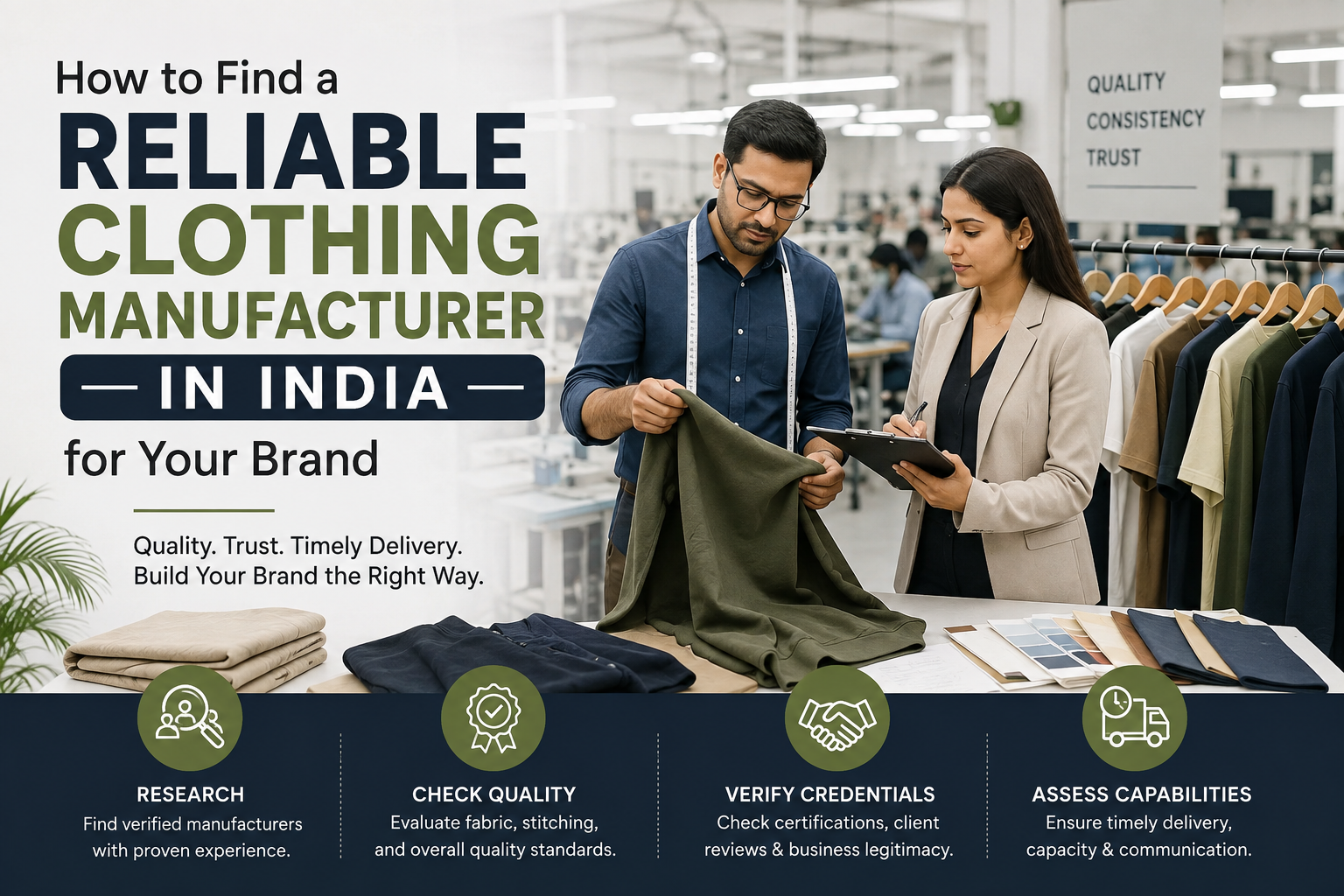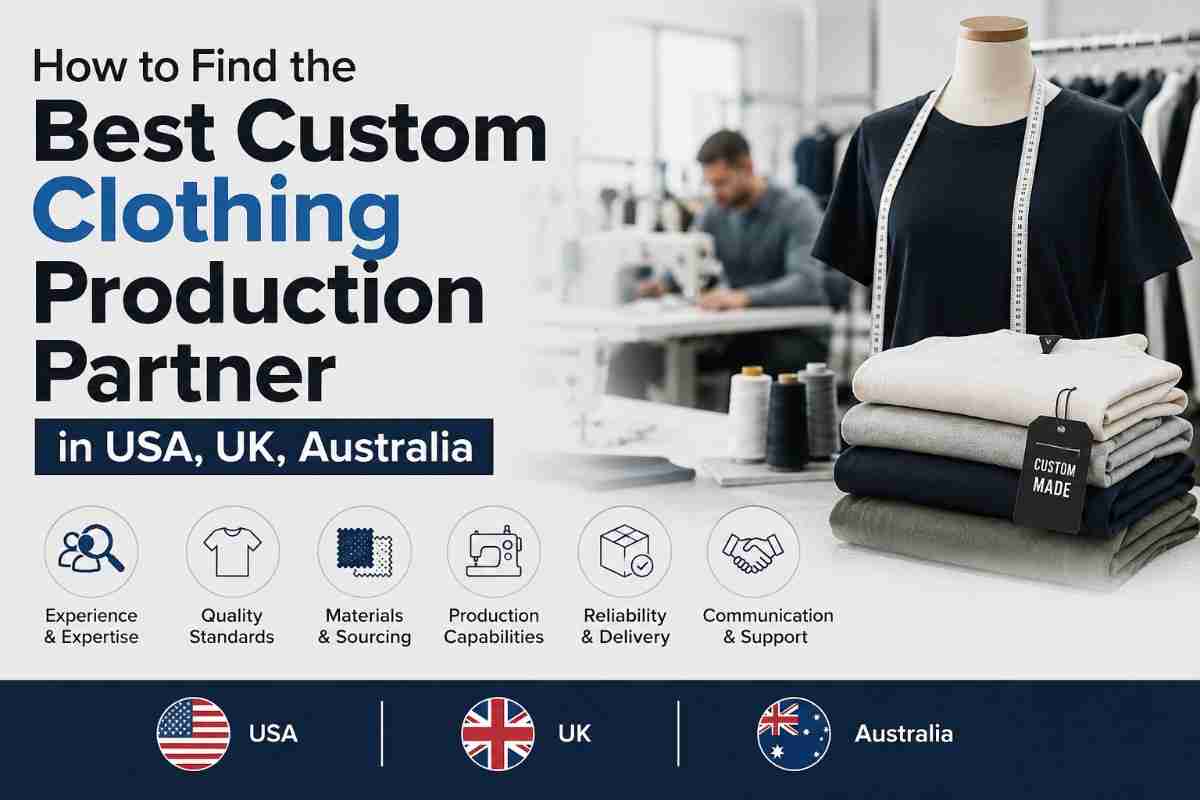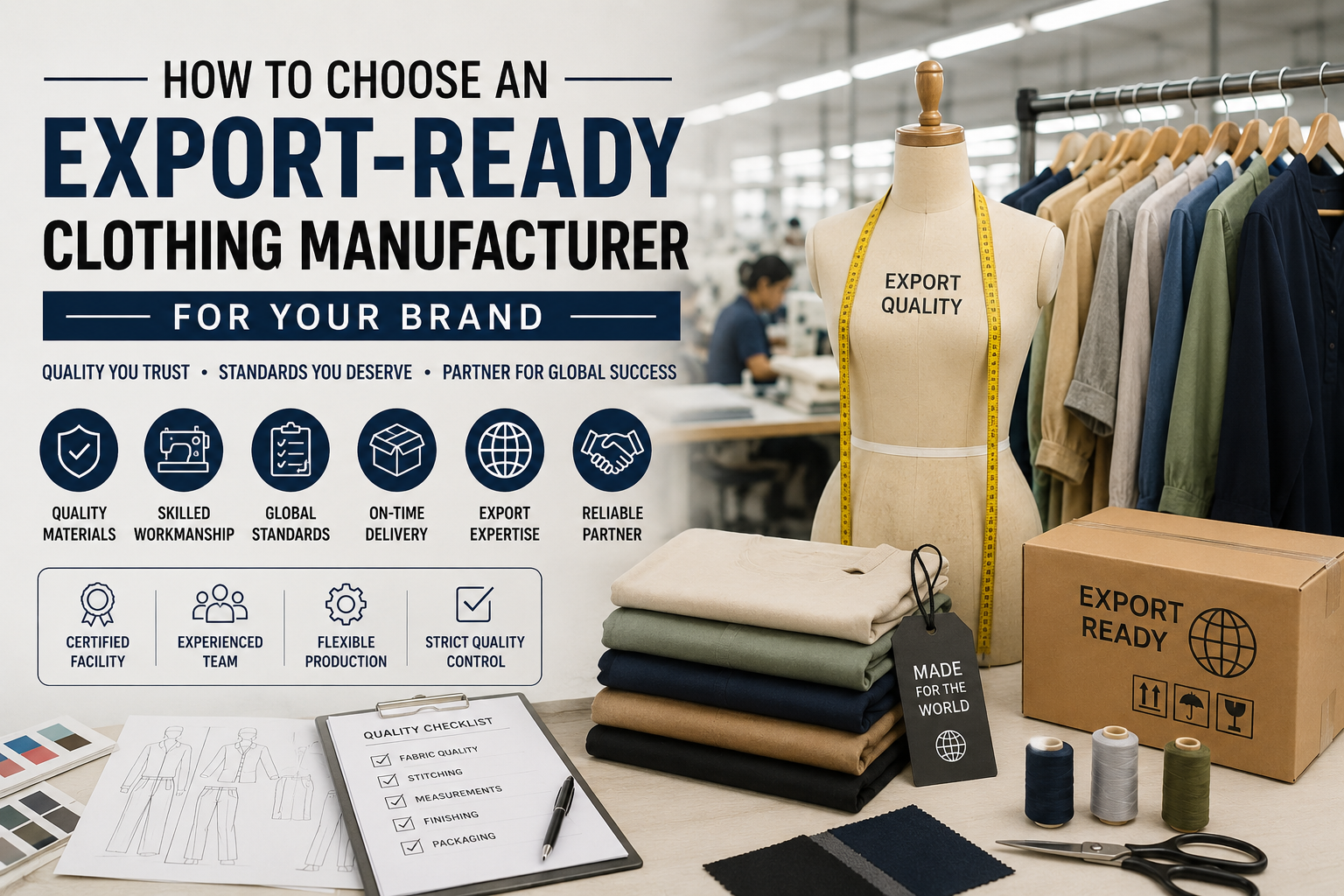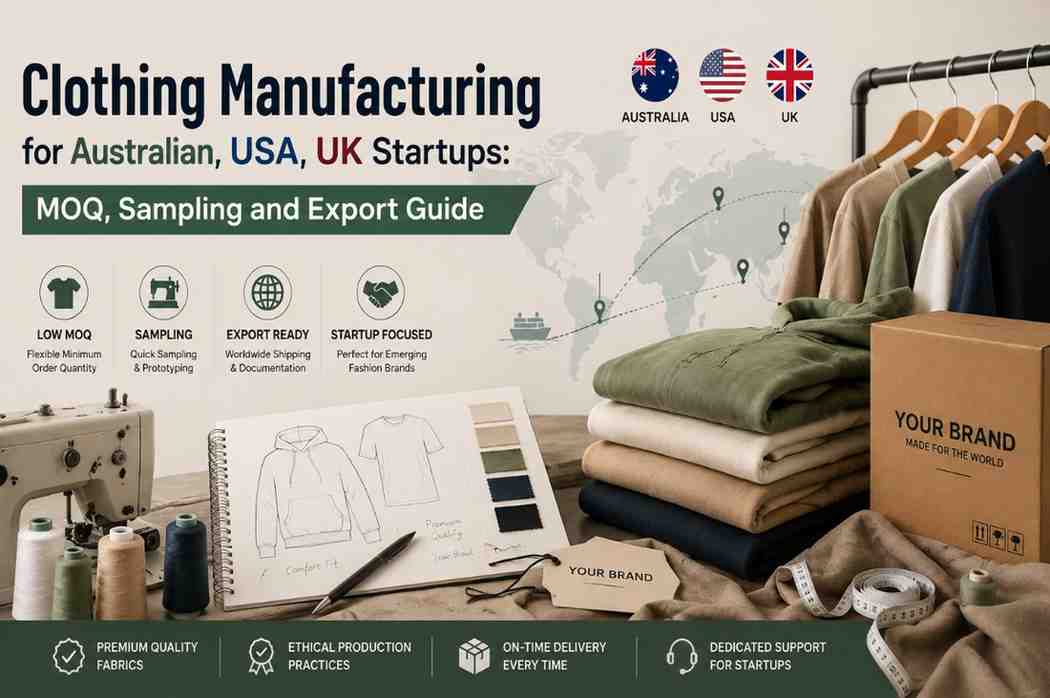
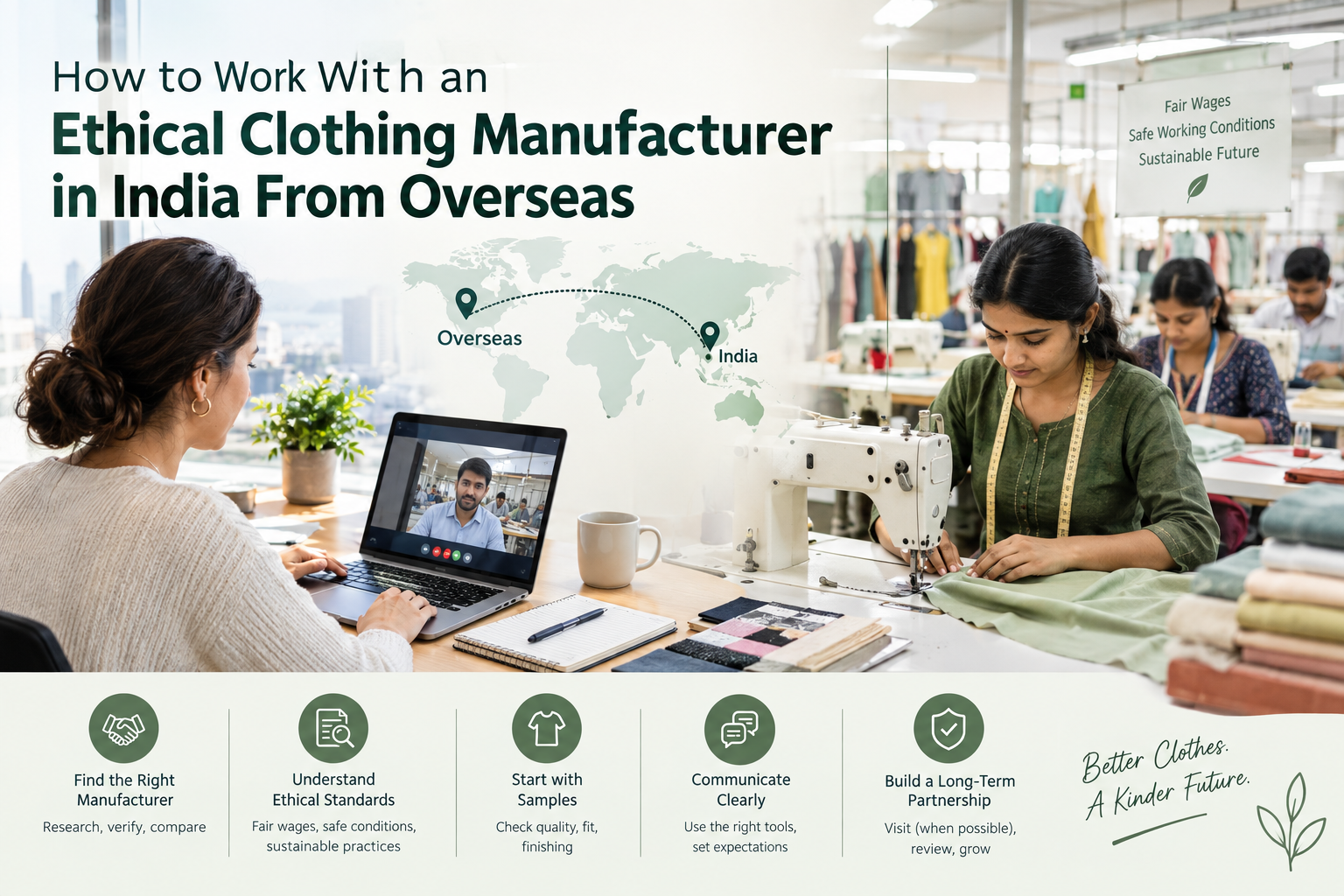
Working with an ethical clothing manufacturer in India from overseas can be a practical way for fashion brands, retailers, private-label businesses, and apparel companies to develop products with specialized manufacturing capabilities while maintaining clear standards for quality, production, and responsible sourcing. India has a large and diverse textile and apparel manufacturing ecosystem, covering cotton, organic and natural fibers, knitwear, woven garments, activewear, casualwear, resortwear, and many other categories. However, choosing a manufacturing partner from another country requires more than comparing product prices. Overseas buyers need to understand the manufacturer’s production capabilities, communication process, sampling system, certifications, material sourcing, quality control, minimum order quantities, lead times, packaging, shipping, and compliance requirements before entering into a long-term business relationship.
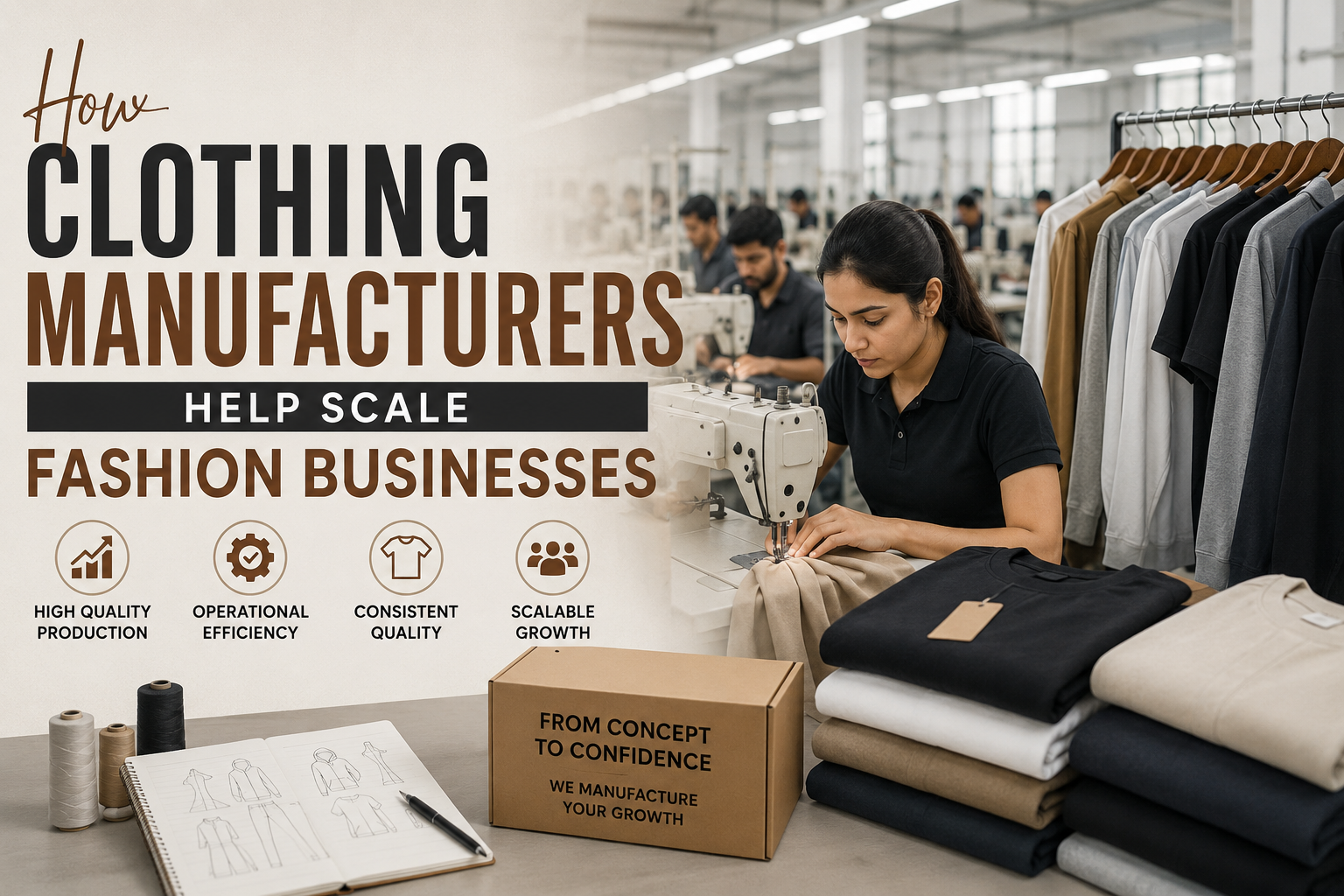
For international brands, the right manufacturing partner should be able to translate a product concept into a commercially viable garment while maintaining agreed specifications throughout production. This becomes particularly important when working with an Ethical Clothing Manufacturer in India, because responsible manufacturing involves more than using a particular fabric or adding a sustainability claim to a product description. Buyers should look at how materials are sourced, how workers are treated, how production standards are managed, how suppliers are evaluated, and whether the manufacturer can provide appropriate documentation for its claims. Echo Earth works with apparel requirements for international markets and can be considered by overseas businesses looking for an India-based clothing manufacturing partner for private-label, OEM, ODM, sampling, production, and related apparel requirements.
Understand What Ethical Clothing Manufacturing Means
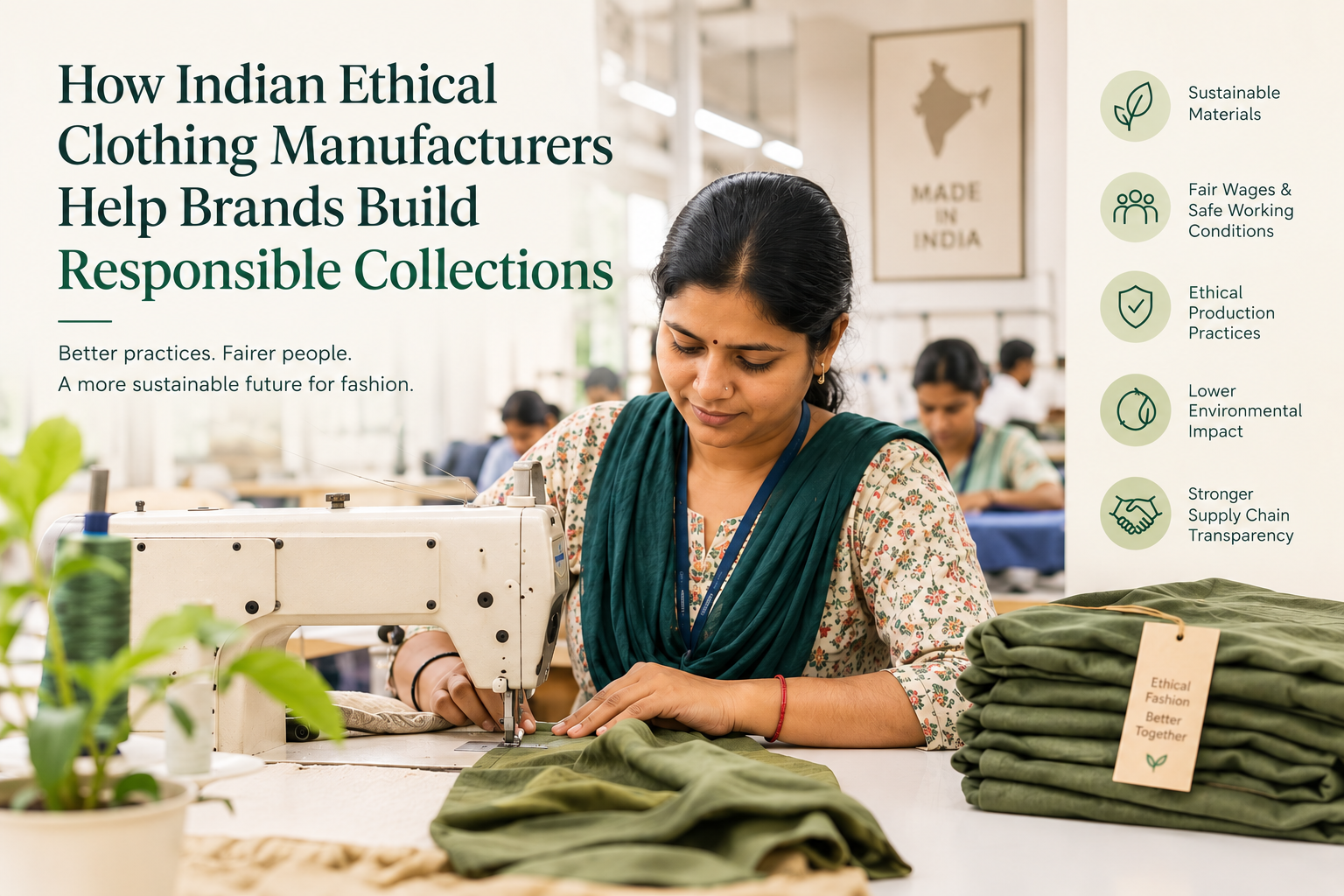
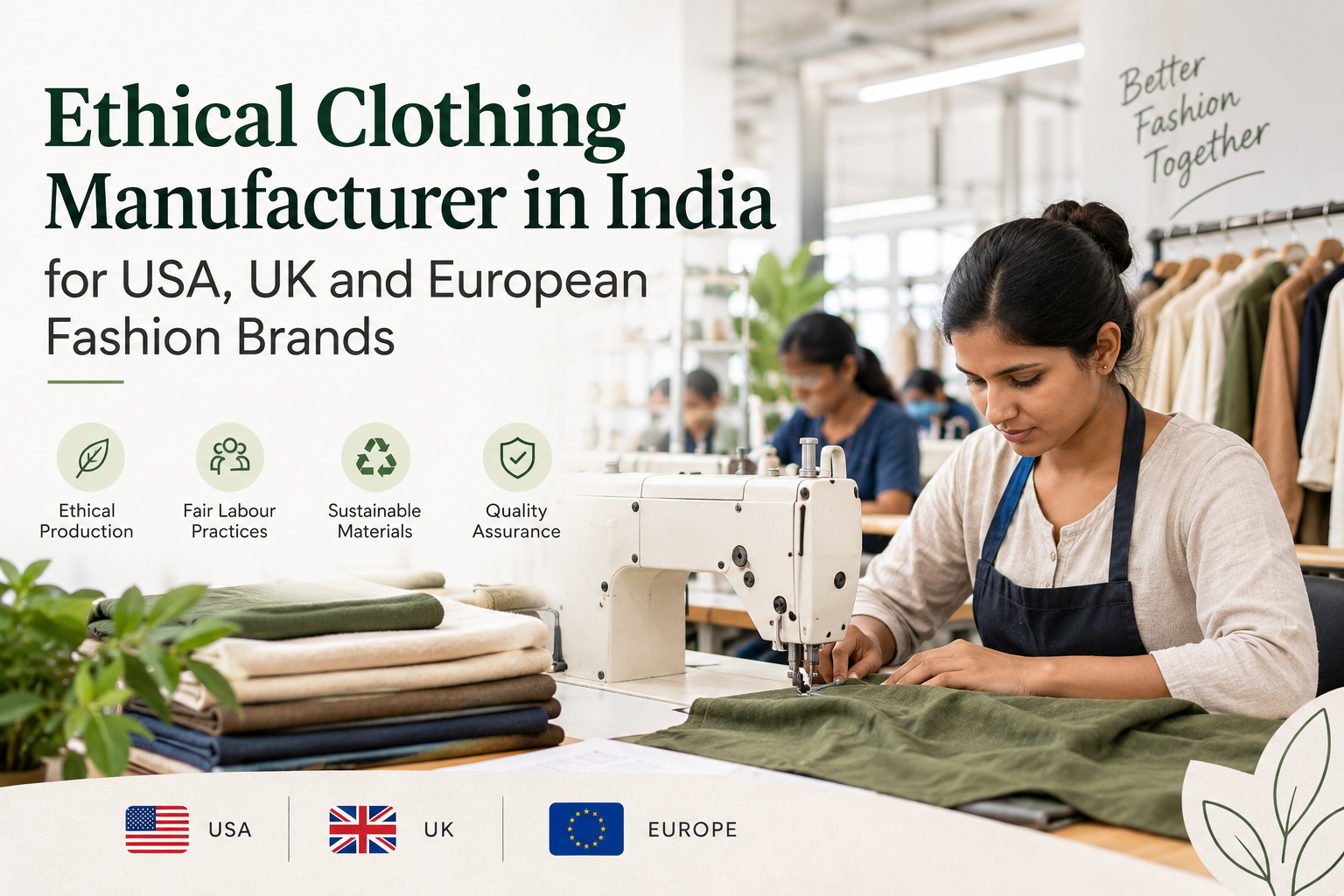
Before choosing an Ethical Clothing Manufacturer in India, overseas buyers should first define what ethical manufacturing means for their brand. Ethical clothing production can involve several interconnected areas, including responsible labor practices, workplace safety, transparent sourcing, appropriate wages and working conditions, environmental management, material traceability, responsible chemical use, waste management, and compliance with applicable standards.
The term “ethical” should therefore not be treated as a generic marketing label. A responsible buyer should ask specific questions about manufacturing facilities, workforce practices, material suppliers, certifications, audits, production processes, and documentation. Different brands may also have different priorities. One brand may focus heavily on organic materials, while another may prioritize worker welfare, factory transparency, lower-impact production processes, or responsible packaging.
Having clearly defined ethical requirements before approaching a manufacturer makes supplier evaluation much easier. It also helps prevent misunderstandings when discussing product specifications and manufacturing expectations.
Define Your Product Before Contacting a Manufacturer
Overseas communication becomes significantly easier when your apparel requirements are documented before contacting potential suppliers. A manufacturer needs sufficient information to understand what you want to produce and provide a realistic quotation.
Prepare details such as garment category, fabric composition, fabric weight, colors, sizes, measurements, construction details, trims, labels, embroidery or printing, packaging, estimated order quantity, and target market. If you have technical packs, tech drawings, measurement charts, reference samples, or design files, these can make the development process more precise.
For example, an overseas brand looking for activewear may require stretch fabrics, specific GSM, moisture-management characteristics, flat seams, custom labels, and specialized finishing. A brand developing casual shirts may have completely different requirements concerning fabric construction, buttons, collars, stitching, and washing. The more clearly these requirements are communicated, the easier it becomes for the manufacturer to understand the project.
Research the Manufacturer’s Export Experience
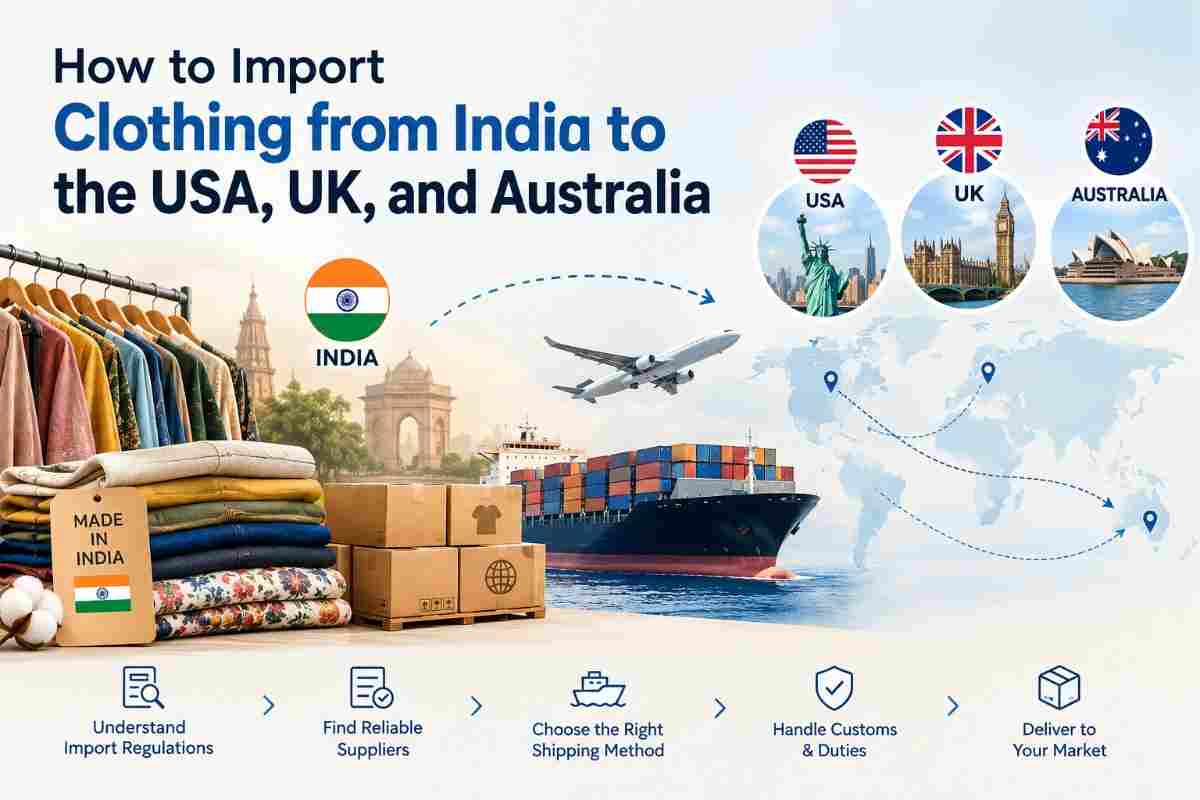
When you are located in the USA, UK, Australia, or another overseas market, international manufacturing experience matters. Working with an export-oriented supplier can make communication around documentation, packaging, shipping, customs, and international quality requirements more straightforward.
If you are searching for a Clothing Manufacturer in India for USA, ask whether the manufacturer has experience supplying apparel to international buyers and whether it understands the documentation and commercial requirements associated with exports to the United States. Similarly, businesses searching for a Clothing Manufacturer in India for UK should discuss UK-specific labeling, packaging, product information, and import requirements applicable to their products.
Australian brands can take a similar approach when evaluating a Clothing Manufacturer in India for Australia. Instead of assuming that every manufacturer can handle international orders in the same way, ask about previous export experience, shipping processes, documentation, and communication procedures.
This does not mean that a manufacturer must have previously supplied your exact country to be capable of working with you. Rather, export experience can provide useful evidence that the supplier understands the practical requirements of international business.
Ask for Factory and Manufacturing Information
Before moving forward, overseas buyers should understand where their garments will actually be produced. Ask whether manufacturing is performed in the company’s own facility, through approved partner factories, or through a combination of facilities.
Factory information can be especially important for brands that have defined ethical sourcing policies. Depending on your requirements, you may want to understand the facility’s workforce, production capacity, quality-control system, safety procedures, certifications, and audit history.
A professional manufacturer should be able to explain its production structure clearly. If a product involves specialized processes such as dyeing, printing, embroidery, garment washing, or finishing, ask whether these processes are performed internally or by specialized suppliers.
Supply-chain transparency is useful because it allows brands to understand where different stages of their product development and production take place.
Verify Certifications and Ethical Claims
Certifications can provide useful information, but overseas buyers should understand exactly what a certification covers before treating it as proof of overall ethical performance. Different certifications address different parts of the apparel supply chain.
For example, a certification may relate to organic fibers, recycled materials, chemical management, social compliance, factory standards, or chain-of-custody requirements. Therefore, if a manufacturer presents a certification, ask for the relevant documentation and verify whether it applies to the specific facility, material, product, or production process involved in your order.
For brands searching for the Best Clothing Manufacturer in India for USA, certification should be considered alongside manufacturing experience, product quality, communication, and quality-control processes. A certificate alone does not determine whether a manufacturer is the right fit for a particular apparel project.
The same principle applies to businesses looking for a Top Clothing Manufacturer in India for UK or a manufacturer serving Australian buyers. Responsible sourcing decisions should be based on documented information rather than broad marketing claims.
Understand Material Sourcing
Material selection is a major part of ethical apparel manufacturing. Overseas brands should ask where fabrics and other components are sourced and whether the manufacturer can provide the documentation needed to support material claims.
Depending on the product, materials may include cotton, organic cotton, recycled fibers, hemp, bamboo-derived fabrics, linen, recycled polyester, blends, trims, labels, buttons, zippers, threads, and packaging materials. Each material can have different sourcing considerations.
If your brand has a specific material policy, communicate it before sampling. For example, if you require a particular organic or recycled material standard, the manufacturer should know this before fabric procurement begins. Waiting until after sampling or production has started can create unnecessary delays and additional costs.
Echo Earth can support overseas apparel businesses exploring product development and manufacturing requirements across different apparel categories, including private-label and OEM/ODM production. Material specifications should always be finalized according to the buyer’s product requirements and applicable market standards.
Start With Sampling Instead of a Large Production Order
Sampling is one of the most important steps when working with an overseas clothing manufacturer. A sample allows you to evaluate the physical garment before committing to bulk production.
The first sample may not always be the final version. Depending on the complexity of the design, you may need several rounds of development to refine measurements, fabric, fit, construction, colors, trims, printing, embroidery, or finishing.
Overseas communication makes detailed feedback particularly important. Instead of saying that a garment “doesn’t look right,” provide measurable feedback whenever possible. Mention specific measurement differences, fabric requirements, stitching changes, color references, or construction adjustments.
Once the sample has been approved, maintain a clear record of the final specifications. The approved sample, tech pack, measurement chart, and production instructions can then serve as references during bulk manufacturing.
Discuss Minimum Order Quantities Early
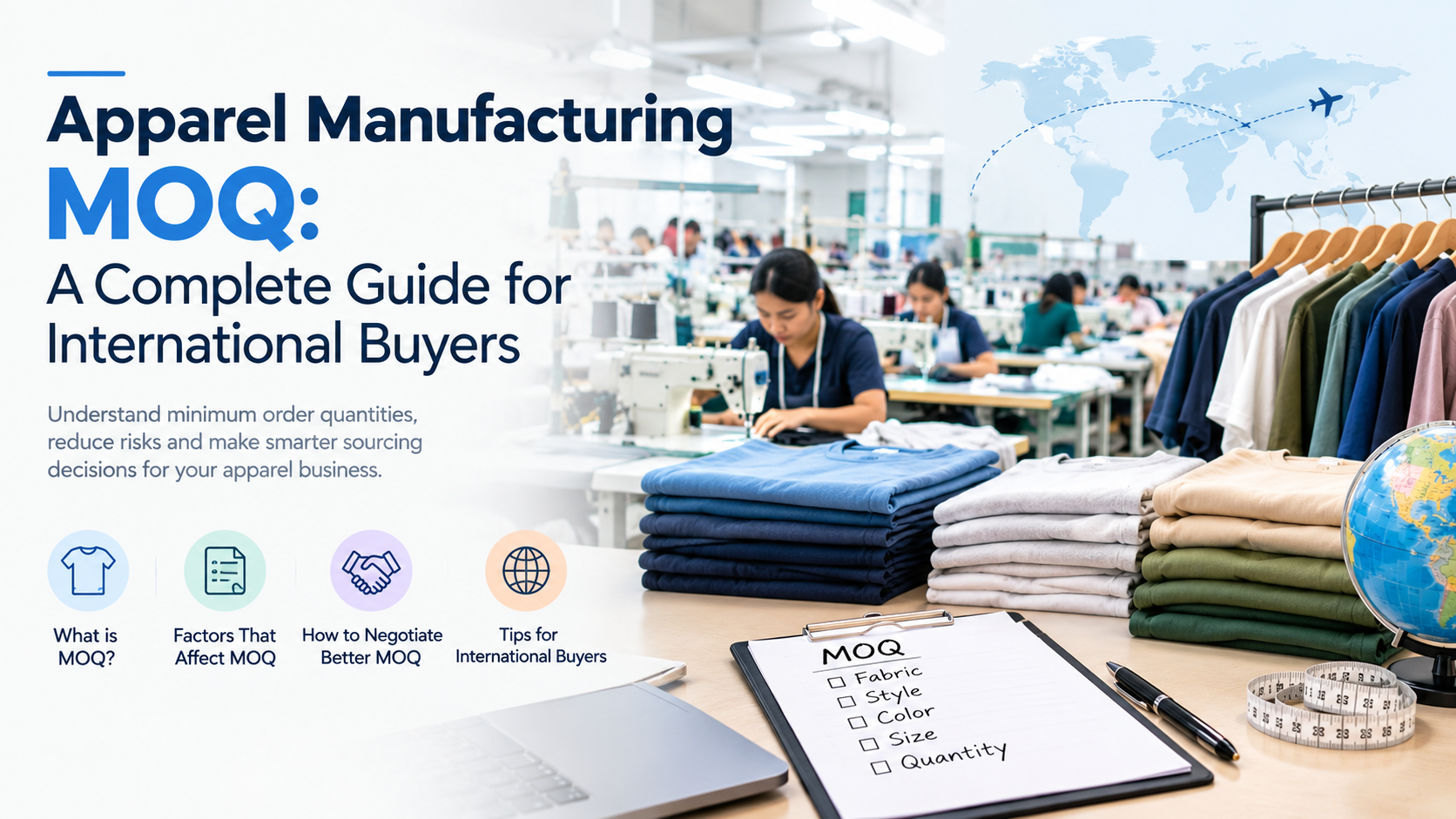
Minimum order quantity, or MOQ, is a major consideration for international clothing brands. Different manufacturers have different production requirements depending on fabric procurement, dyeing, cutting, production efficiency, and order volume.
If you are a small or emerging brand, ask about sample quantities and minimum production quantities before spending significant time on product development. If you are an established retailer, discuss whether larger order quantities can affect manufacturing costs.
MOQ can also vary depending on fabric color and customization. A manufacturer may have different requirements for standard fabrics compared with custom-dyed fabrics. Understanding these details early helps you create realistic product launch plans.
For overseas buyers, MOQ should be evaluated together with inventory planning, cash flow, shipping costs, and expected customer demand rather than considered as an isolated number.
Create a Clear Quality-Control Process
Quality control is essential when manufacturing garments internationally because the buyer may not be physically present at the production facility. A clear quality-control process helps ensure that bulk production matches the approved specifications.
Quality checks can include fabric inspection, color consistency, measurements, stitching, seam construction, print quality, embroidery, labels, trims, garment appearance, packaging, and final quantity. The exact inspection requirements should depend on the product.
Before production starts, establish acceptable tolerances for measurements and other specifications. This gives both the buyer and manufacturer a shared reference for evaluating finished goods.
For larger orders, international buyers may also consider third-party inspection services depending on their risk management requirements. The objective is not simply to identify problems after production but to establish processes that minimize defects throughout manufacturing.
Communicate Through Detailed Documentation
Communication is one of the biggest challenges in overseas manufacturing, but many problems can be reduced through proper documentation. Instead of relying entirely on messages or verbal conversations, maintain written records of product specifications, approved samples, pricing, timelines, packaging instructions, and quality requirements.
A detailed tech pack can become the central reference document for production. It may contain garment measurements, construction details, fabric composition, color references, labels, trims, artwork, stitching specifications, and packaging instructions.
When changes are made, update the documentation rather than relying on informal messages. This helps prevent an earlier version of the specification from being accidentally used during production.
For international buyers, clear documentation is particularly valuable because time-zone differences and communication delays can make quick clarification difficult.
Understand Lead Times and Production Planning
Clothing manufacturing involves multiple stages, and each stage can affect the final delivery date. Fabric sourcing, dyeing, sampling, approvals, cutting, sewing, finishing, quality inspection, packaging, and shipping all require time.
When planning an international apparel collection, avoid working backward from the final delivery date without considering these stages. Discuss the estimated timeline with your manufacturer before confirming a product launch.
A realistic production schedule should include enough time for sample revisions and potential manufacturing delays. It is also important to distinguish between production lead time and shipping time because they are separate stages.
Brands searching for a Best Clothing Manufacturer in India for Australia, for example, should consider both manufacturing timelines and international transit time when planning inventory. The same applies to US and UK buyers.
Discuss Pricing Transparently
Price should be discussed in relation to the complete product specification. A low initial quotation may not represent the final cost if additional charges are later added for custom fabrics, trims, printing, labels, packaging, sampling, or other services.
Ask what is included in the quoted price and what is charged separately. Clarify whether sampling costs, development fees, packaging, labeling, and other customization requirements are included.
International buyers should also consider freight, customs duties, taxes, insurance, payment processing, and other potential costs when calculating the final landed cost of their products.
A transparent cost structure makes it easier to compare manufacturers and build an accurate product margin.
Understand Shipping and Export Documentation
Once garments are manufactured, they need to be prepared for international shipment. Discuss the preferred shipping method, packaging requirements, documentation, estimated transit time, and responsibilities of each party.
Depending on the transaction structure and destination country, export documentation may include commercial invoices, packing lists, shipping documents, and other relevant paperwork. Buyers should confirm the requirements applicable to their shipment rather than assuming that every country follows the same process.
Brands importing into the USA, UK, Australia, or other markets should also ensure that their products comply with the relevant labeling, customs, consumer-product, and import requirements applicable to their business.
A manufacturer can help with production and export processes, but the buyer should also understand its own legal and commercial responsibilities in the destination market.
Protect Your Designs and Brand Information
Custom clothing manufacturing often requires brands to share valuable intellectual property, including original designs, technical drawings, logos, artwork, patterns, measurements, and product concepts.
Before sharing sensitive information, understand how the manufacturer handles confidential business information. Where appropriate, businesses may use contractual confidentiality arrangements and clearly define ownership of original designs, artwork, and brand assets.
It is also useful to clarify who owns CAD files, patterns, tech packs, and other development materials created specifically for your project. These details should be discussed before development begins.
For growing apparel brands, protecting product information can become increasingly important as collections expand and new designs are introduced.
Build a Long-Term Relationship With Your Manufacturer
A successful overseas manufacturing relationship is usually built over time rather than through a single order. Once a manufacturer understands your product specifications, quality expectations, preferred materials, packaging requirements, and communication process, future production can become more efficient.
Long-term relationships can also make it easier to develop new products. Instead of explaining your entire manufacturing system from the beginning for every collection, you can build upon established specifications and processes.
However, a long-term relationship should still include regular quality checks and performance reviews. Ethical sourcing is an ongoing responsibility, so brands should continue to evaluate whether manufacturing practices remain aligned with their sourcing standards.
Why Choose Echo Earth for Overseas Clothing Manufacturing?
Echo Earth works with international apparel requirements and provides manufacturing support for businesses looking to develop clothing products for overseas markets. Its capabilities can be relevant to brands exploring private-label manufacturing, OEM/ODM production, sampling, packaging, dyeing, printing, and other apparel development requirements.
For a brand searching for a Clothing Manufacturer in India for USA, the manufacturing process can be planned around the product specifications, target market, quantity, materials, and quality requirements established by the buyer. Similarly, businesses seeking a Clothing Manufacturer in India for UK or a Clothing Manufacturer in India for Australia can discuss their individual product requirements and international production needs before moving into sampling and bulk manufacturing.
Echo Earth’s approach can be particularly relevant for brands that want to develop apparel collections rather than simply purchase generic ready-made garments. Custom product development allows businesses to establish their own designs, specifications, branding, labels, packaging, and production requirements.
As with any international manufacturing relationship, buyers should review the specific materials, certifications, production standards, order quantities, timelines, and commercial terms applicable to their project before confirming an order.
Common Mistakes Overseas Buyers Should Avoid
One of the most common mistakes is choosing a manufacturer based entirely on the lowest quotation. Apparel pricing depends on many variables, and a cheaper quote may involve differences in fabric, construction, finishing, quality control, packaging, or service.
Another common mistake is starting bulk production before approving a proper sample. A digital image or basic prototype may not reveal issues related to fit, fabric behavior, stitching, or construction. Sampling provides an opportunity to identify and correct these issues.
Overseas buyers should also avoid unclear specifications. A manufacturer cannot reliably reproduce a product if important details are missing from the technical documentation. Measurements, fabric composition, color references, labels, trims, artwork, and construction details should be clearly documented.
Finally, brands should avoid treating ethical manufacturing as a one-time marketing claim. Responsible sourcing requires ongoing attention to suppliers, materials, labor practices, production conditions, documentation, and compliance.
Final Checklist for Working With an Ethical Clothing Manufacturer in India
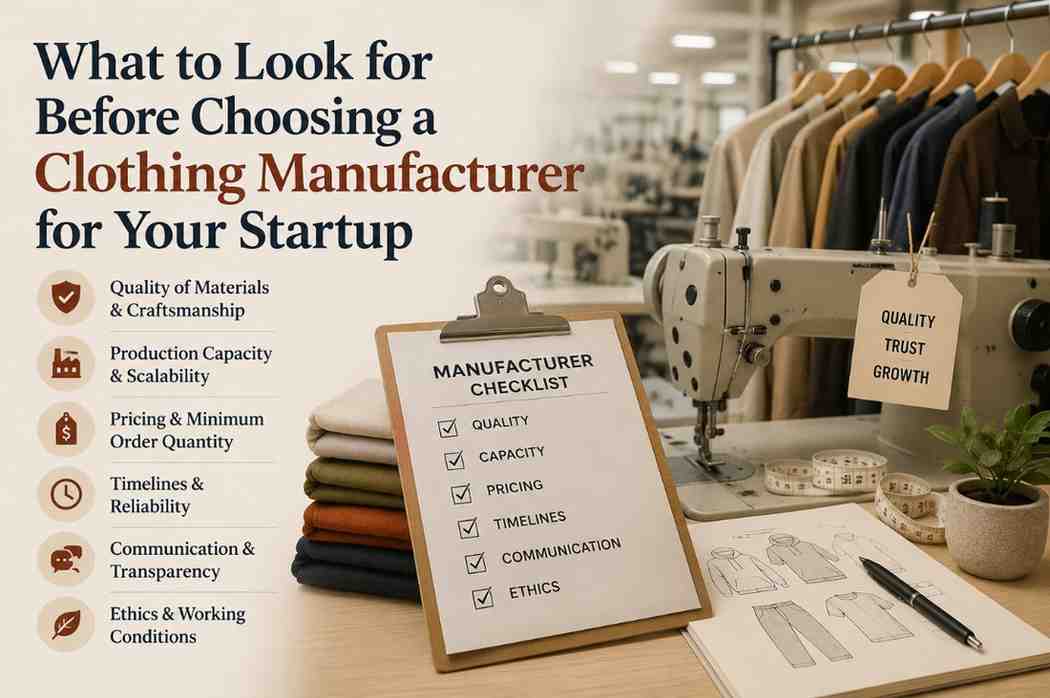
Before placing a production order, overseas brands should review their manufacturing requirements and confirm that all major details are understood by both sides. The manufacturer should understand the product design, fabric requirements, measurements, quantity, quality expectations, packaging, labeling, and delivery requirements.
It is also useful to confirm the following before production begins:
- Product specifications and approved sample are finalized.
- Fabric composition, color, GSM, and other material requirements are documented.
- Required certifications or compliance documents have been discussed.
- MOQ and pricing structure are clearly understood.
- Sampling and production timelines are confirmed.
- Quality-control procedures and acceptable tolerances are defined.
- Labels, packaging, and branding requirements are documented.
- Shipping responsibilities and export documentation are clarified.
- Payment terms and production milestones are agreed.
- Intellectual-property and confidentiality requirements are understood.
Keeping these points documented can make overseas manufacturing more organized and reduce the risk of misunderstandings.
Conclusion
Working with an ethical clothing manufacturer in India from overseas can provide international apparel brands with access to a broad manufacturing ecosystem and specialized product-development capabilities. However, successful sourcing requires careful supplier evaluation, detailed communication, proper sampling, transparent material information, quality control, realistic production planning, and an understanding of international shipping and compliance requirements.
Whether you are searching for a Clothing Manufacturer in India for USA, a Clothing Manufacturer in India for UK, or a Clothing Manufacturer in India for Australia, the right approach is to evaluate the manufacturer according to your actual product and sourcing requirements rather than relying only on generic claims. The same applies when researching the Best Clothing Manufacturer in India for USA, Top Clothing Manufacturer in India for UK, or Best Clothing Manufacturer in India for Australia. A suitable manufacturing partner should be able to communicate clearly, develop products according to agreed specifications, maintain consistent quality, and provide appropriate information about the manufacturing process.
For overseas brands, Echo Earth can be considered as an India-based apparel manufacturing partner for businesses exploring private-label, OEM/ODM, sampling, packaging, dyeing, printing, and international clothing production. By establishing clear requirements from the beginning and maintaining proper communication throughout development and production, brands can create a more structured manufacturing process and build a relationship that supports their long-term apparel business.
Ultimately, ethical clothing manufacturing is about making informed sourcing decisions and maintaining transparency throughout the product journey. When international brands combine clear product specifications with responsible supplier evaluation, documented quality standards, and ongoing communication, they can build apparel collections with greater consistency and a stronger foundation for long-term growth.