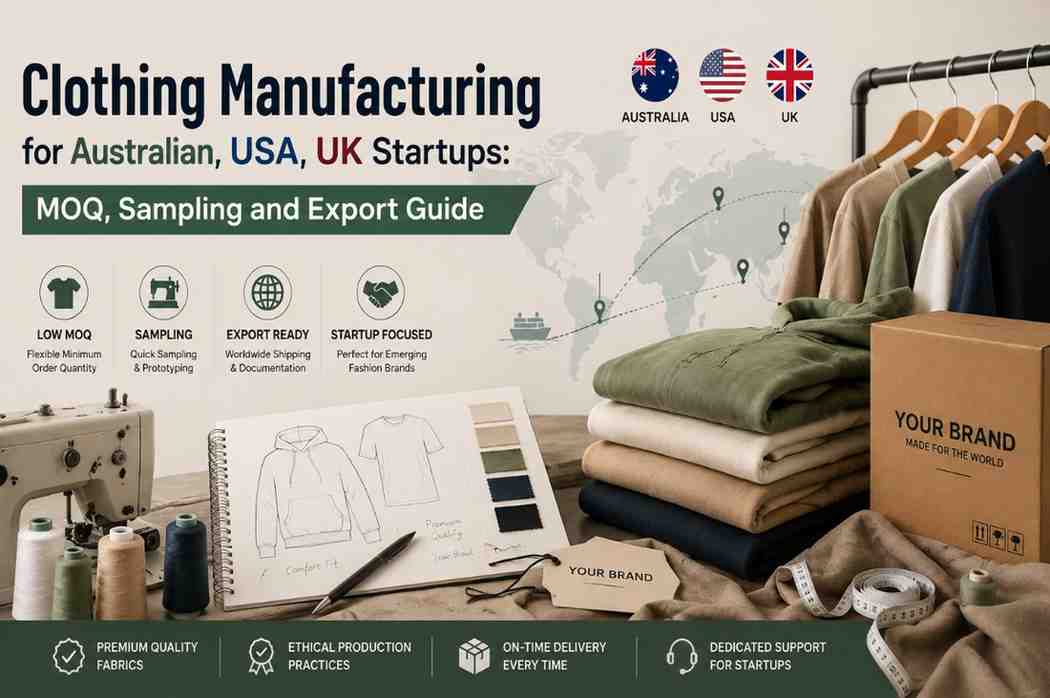

Starting a clothing brand requires careful planning, creative designs, and a manufacturing strategy that fits your budget. For new fashion entrepreneurs, ordering thousands of garments before understanding customer demand can create unnecessary financial pressure and leave valuable capital tied up in unsold inventory. This is where low minimum order quantity (MOQ) clothing manufacturing becomes an attractive option. By working with a manufacturer that accepts smaller production orders, startups can introduce their first collection, test different styles, and learn which products appeal to their target customers without committing to excessive stock. Whether you are planning a streetwear label, a casual clothing line, a private label collection, or a specialized apparel business, understanding low MOQ manufacturing can help you approach product development with greater flexibility and control.
For entrepreneurs targeting international markets, choosing the right manufacturing partner is equally important. Businesses searching for a Low MOQ Clothing Manufacturer USA, a Low MOQ Clothing Manufacturer UK, or a Low MOQ Clothing Manufacturer Australia often want more than small production quantities. They need dependable sampling, consistent garment quality, customization options, transparent pricing, and production timelines that support their launch plans. Echo Earth understands the importance of making informed sourcing decisions when developing a product-based business. Although clothing manufacturing is a separate product category, the same fundamental principles of supplier evaluation, quality verification, and clear product specifications can help entrepreneurs make better sourcing decisions. This guide explains how low MOQ clothing manufacturing works, how startups can launch without large inventory, and what to consider when selecting a manufacturer for the USA, UK, and Australian markets.
What Is Low MOQ Clothing Manufacturing?
Low MOQ clothing manufacturing refers to apparel production arrangements that allow a business to order a relatively small number of garments per style, design, colour, or production run. MOQ means minimum order quantity, and the actual minimum varies depending on the manufacturer, fabric, garment construction, printing method, customization requirements, and production process. Some suppliers may offer small batches of ready-made garments, while others support custom production with minimums that depend on the complexity of the design.
This approach is particularly useful for new fashion businesses that want to test the market before expanding their product range. Instead of investing heavily in a large collection, a startup can begin with a focused selection of T-shirts, hoodies, leggings, dresses, shirts, or other garments. Smaller orders can make it easier to evaluate customer feedback, test pricing, and refine product designs before placing repeat orders. However, low MOQ does not automatically mean lower production costs per garment. Smaller runs may have higher unit prices because setup, sampling, cutting, and development costs are spread across fewer pieces. The goal is to find a production arrangement that balances manageable inventory with commercially viable pricing.
Why Low MOQ Clothing Manufacturing Is Ideal for Startups
One of the biggest challenges for a new clothing brand is predicting what customers will buy. Even carefully researched designs may perform differently once they reach the market. A product may attract attention on social media but generate limited sales, while a simple design may become a consistent bestseller. Large production commitments make these uncertainties more expensive because unsold products occupy storage space and tie up cash that could otherwise support marketing, website development, or future product launches.
Low MOQ manufacturing provides an opportunity to introduce a smaller collection and collect real customer feedback before expanding. For example, a startup could launch a limited selection of T-shirts in a few colours, monitor which sizes and designs sell best, and use that information to plan its next production run. This approach can support more informed inventory decisions and reduce the risk associated with speculative purchasing.
Small production runs can also help brands maintain a more focused product identity. Rather than launching dozens of unrelated designs, entrepreneurs can concentrate on a clearly defined audience and gradually develop products that match its preferences. Although low MOQ cannot eliminate business risk, it gives startups more flexibility to learn, adjust, and grow.
How to Choose a Low MOQ Clothing Manufacturer USA
For entrepreneurs targeting American consumers, finding a suitable Low MOQ Clothing Manufacturer USA begins with identifying the type of production support the business actually needs. Some startups require ready-made garments with custom labels, while others need complete cut-and-sew manufacturing based on original patterns and specifications. These are different services, and not every manufacturer offers both. Clarifying your requirements before contacting suppliers can save time and help you obtain more accurate quotations.
When evaluating a US-based manufacturer, review its product categories, sample development process, customization capabilities, production capacity, and minimum order requirements. Ask whether the quoted MOQ applies per design, colour, or size combination, because this distinction can significantly affect your total order. Also clarify whether fabric sourcing, garment dyeing, screen printing, embroidery, labels, and packaging are included in the quoted price.
Domestic production may offer advantages in communication, shipping coordination, and proximity to your business, depending on the supplier’s location and capabilities. However, manufacturing costs, available fabrics, and production lead times can vary considerably. A startup should compare the complete cost of production rather than assuming that a domestic supplier is automatically the most economical option.
Entrepreneurs searching for the Best Low MOQ Clothing Manufacturer USA should prioritize product quality, reliable communication, transparent pricing, and the ability to reproduce approved designs consistently. Request samples, compare measurements, and ask how the manufacturer handles defects or production discrepancies. These checks can help you select a partner that fits your launch strategy rather than simply choosing the supplier with the lowest advertised MOQ.
Finding a Low MOQ Clothing Manufacturer UK
The UK market offers opportunities for emerging fashion brands, independent designers, online retailers, and specialist apparel businesses. For startups planning to sell to British customers, working with a Low MOQ Clothing Manufacturer UK may provide convenient communication and shipping arrangements when the supplier’s location and services align with the business. However, entrepreneurs should distinguish between UK-based manufacturers, wholesalers, print-on-demand providers, and companies that import finished garments. Each model serves a different purpose.
A business that wants to create original garments may need pattern development, fabric selection, sample creation, cutting, stitching, finishing, and quality control. A brand that wants to sell basic apparel with custom logos may need a different supplier with suitable printing, embroidery, and relabelling services. Understanding these differences makes it easier to compare suppliers according to actual requirements.
When assessing UK manufacturers, ask for a clear breakdown of MOQ, sampling charges, garment specifications, production timelines, shipping costs, and payment conditions. If your brand sells multiple sizes and colours, confirm how these variations affect the minimum order. A supplier may advertise a low MOQ but apply separate minimums to individual colours or custom fabrics.
Entrepreneurs looking for the Best Low MOQ Clothing Manufacturer UK should also consider how easily the supplier can support repeat production. A successful first collection is only the beginning; your business may need consistent sizing, matching colours, and reliable replenishment as sales increase. Reviewing these factors before placing an order can help you build a more sustainable operating model for your clothing brand.
Choosing a Low MOQ Clothing Manufacturer Australia
Australia is an important target market for fashion businesses serving customers interested in casualwear, activewear, resort clothing, streetwear, and specialized apparel. Startups searching for a Low MOQ Clothing Manufacturer Australia should first determine whether local manufacturing, offshore production, or a combination of both offers the best fit for their business requirements.
Local manufacturing can simplify certain communication and logistics arrangements, but the available product range, production capacity, and pricing depend on the individual supplier. Offshore manufacturing may provide access to a wider selection of production capabilities or fabrics, although shipping, customs procedures, and longer transit times need to be considered. The most suitable option depends on your order volume, product complexity, budget, and delivery expectations.
Before selecting a supplier, ask about sample development, fabric availability, printing or embroidery options, garment construction, quality checks, and order minimums. Australian brands selling online should also consider how production schedules align with promotional campaigns, seasonal demand, and inventory replenishment. For example, a brand preparing a summer collection should allow enough time for sampling, production, shipping, and any necessary product adjustments.
When comparing the Best Low MOQ Clothing Manufacturer Australia options, assess the complete sourcing process rather than focusing on the supplier’s location alone. Request a written quotation and confirm whether the quoted price includes custom labels, packaging, finishing, and shipping. A manufacturer that provides realistic timelines and communicates production changes clearly can help your business plan launches more confidently.
7 Steps to Launch a Clothing Brand Without Large Inventory
Launching with a small production order works best when every step is connected to a clear business objective. Instead of ordering a large number of products immediately, develop a structured plan that takes your brand from initial research to a controlled first release.
1. Define Your Target Audience and Clothing Category
Start by identifying the customers your brand intends to serve. You might focus on everyday basics, oversized streetwear, modest fashion, premium casualwear, sportswear, or another clearly defined category. Research the styles, price ranges, materials, and sizing expectations relevant to your audience. A focused collection makes it easier to communicate your brand identity and choose a manufacturer with the right expertise.
2. Develop a Small, Practical Product Range
Select a limited number of products that reflect your brand’s positioning. For example, a startup could begin with two T-shirt designs and one hoodie rather than launching an extensive collection across several categories. Keeping the initial range focused reduces the number of samples, specifications, and inventory decisions you need to manage. Make sure each product has a clear purpose and fits your intended customer profile.
3. Prepare Detailed Product Specifications
Before requesting quotations, document the details of each garment. Include measurements, fabric composition, colour references, stitching requirements, artwork, labels, and packaging expectations. If you have reference images or technical drawings, share them with shortlisted manufacturers. Clear specifications help suppliers estimate production costs and reduce the risk of misunderstandings during manufacturing.
4. Request Samples Before Bulk Production
A sample allows you to evaluate the garment before committing to the full order. Check fabric feel, fit, stitching, colour accuracy, print quality, construction, and overall appearance. Test the garment according to its intended use, including washing and wear where appropriate. If revisions are required, document the changes and approve the final sample before production begins.
5. Compare Quotations and Total Costs
Do not compare suppliers only by their per-unit price. Include sampling, labels, packaging, shipping, import duties where applicable, taxes, and other relevant expenses in your calculations. A manufacturer offering a slightly higher unit price may provide better consistency or lower additional charges. Understanding the full cost helps you establish a realistic retail price and profit margin.
6. Launch and Measure Customer Demand
Once your first order is ready, introduce the collection through your website, online marketplaces, email marketing, and relevant social media channels. Monitor product views, conversion rates, customer feedback, returns, and sales by size and colour. These results can reveal which products deserve additional investment and which designs need improvement before another production run.
7. Reorder Based on Evidence
Use sales data and customer feedback to plan replenishment instead of relying entirely on assumptions. If a particular product sells consistently, discuss repeat-order pricing, production capacity, and lead times with your manufacturer. If a design underperforms, consider adjusting its colour, fit, price, or marketing before committing to more stock. This gradual approach can help your business scale in line with actual demand.
Important Factors to Compare Before Selecting a Manufacturer
Low MOQ is only one part of a successful manufacturing relationship. A supplier that accepts a small order but produces inconsistent garments may create more problems than a supplier with a slightly higher minimum and stronger quality control. Evaluate each potential partner across several practical factors.
| Factor | What to confirm |
|---|---|
| Minimum order quantity | Whether MOQ applies per design, colour, fabric, or size |
| Product quality | Fabric composition, construction, measurements, and finishing |
| Sampling | Cost, development time, revisions, and approval process |
| Customization | Labels, embroidery, printing, patterns, and packaging |
| Pricing | Unit price, setup charges, additional fees, and shipping |
| Production timeline | Sample lead time, bulk production, and dispatch schedule |
| Quality control | Inspection procedures and handling of defective items |
| Scalability | Ability to support repeat orders and increased production |
This comparison is particularly useful when evaluating suppliers across the USA, UK, and Australia. It helps you identify which manufacturers match your business requirements and makes supplier discussions more productive. Request the same basic information from each shortlisted supplier so that your final decision is based on comparable details rather than different assumptions.
How Sustainable Clothing Manufacturing Fits a Low MOQ Strategy
For brands that want to build a sustainability-focused clothing collection, small-batch production can be one way to manage inventory carefully. Producing closer to demonstrated demand may help reduce the likelihood of unsold garments, although the environmental impact of a production model depends on several factors, including fabric selection, manufacturing processes, transportation, product durability, and waste management.
Entrepreneurs can explore materials such as organic cotton, recycled fibres, hemp, or other suitable textiles depending on the intended garment and its performance requirements. However, material claims should be verified, and certifications should be checked where they are used to support specific environmental or sourcing statements. Choosing a fabric simply because it is marketed as sustainable is not enough; businesses should understand its composition, origin, care requirements, and suitability for the product.
Ask manufacturers about fabric traceability, cutting waste, production processes, packaging options, and any documented environmental practices. Also consider garment durability, since clothing that retains its shape and function over time may better serve customers than products that require frequent replacement. By combining thoughtful material choices with realistic inventory planning, startups can develop a more responsible sourcing strategy without assuming that low MOQ alone guarantees sustainability.
Common Mistakes to Avoid When Ordering Low MOQ Clothing
One frequent mistake is assuming that a low MOQ always results in a low overall investment. Smaller batches may carry higher per-unit costs, particularly when a garment requires custom patterns, specialized fabrics, or complex finishing. Businesses should calculate total costs and realistic selling prices before confirming an order.
Another mistake is skipping the sample stage. Product photographs and digital mock-ups cannot fully communicate garment fit, fabric weight, stitching quality, or the final appearance of a print. Approving a physical sample can help identify problems before they affect an entire production run.
Startups should also avoid choosing a manufacturer without checking its production capabilities and communication practices. Confirm whether the supplier handles manufacturing directly or coordinates with other facilities, and ask who is responsible for quality checks. Written specifications, clear payment terms, and an agreed production schedule can reduce the likelihood of disputes.
Finally, do not order too many styles, colours, and sizes before understanding your market. Every variation can increase inventory complexity and make it harder to predict demand. A focused launch supported by customer research and sales tracking often provides a clearer starting point for future growth.
Conclusion
Low MOQ clothing manufacturing gives startups a practical way to introduce apparel collections without immediately committing to large inventory volumes. By starting with a focused product range, approving samples, comparing complete quotations, and measuring customer demand, entrepreneurs can make more informed production decisions while keeping inventory commitments manageable.
Whether you are looking for a Low MOQ Clothing Manufacturer USA, a Low MOQ Clothing Manufacturer UK, or a Low MOQ Clothing Manufacturer Australia, focus on the manufacturer’s actual capabilities, product quality, pricing transparency, communication, and ability to support future orders. The Best Low MOQ Clothing Manufacturer USA, Best Low MOQ Clothing Manufacturer UK, or Best Low MOQ Clothing Manufacturer Australia for your business will depend on your product requirements, budget, location, and target customers rather than a universal ranking.
For Echo Earth, this article highlights general sourcing principles that businesses can apply when evaluating suppliers and planning product development. Clothing entrepreneurs should select a manufacturer with verified apparel capabilities and an order structure that fits their business model. With careful research, clear specifications, and a measured launch strategy, new brands can build a stronger foundation for developing their collections and growing in competitive international markets.
FAQs
1. What is a low MOQ clothing manufacturer?
A low MOQ clothing manufacturer accepts relatively small production orders compared with suppliers that require large quantities. The minimum varies by garment type, fabric, customization, and production process. Startups should confirm whether the minimum applies per design, colour, or size.
2. How can I find a Low MOQ Clothing Manufacturer USA?
Research manufacturers that specialize in your clothing category, review their production capabilities, and request samples and written quotations. Compare minimum quantities, customization services, quality-control procedures, pricing, and production timelines before selecting a supplier.
3. How do I choose a Low MOQ Clothing Manufacturer UK?
Identify whether you need custom garment manufacturing, private label services, or decorated ready-made clothing. Then review samples, confirm the supplier’s production location, compare complete costs, and establish clear expectations for quality, delivery, and repeat orders.
4. What should I consider when selecting a Low MOQ Clothing Manufacturer Australia?
Consider the supplier’s garment expertise, MOQ, sample quality, customization options, delivery timelines, and total sourcing costs. Compare Australian and international manufacturing options according to your product needs, shipping arrangements, budget, and target launch date.
5. Can I start a clothing brand with a small manufacturing order?
Yes. A small first order can help you test product demand and collect customer feedback before expanding your collection. Choose a focused product range, approve samples, calculate your full costs, and use sales data to guide future production decisions.