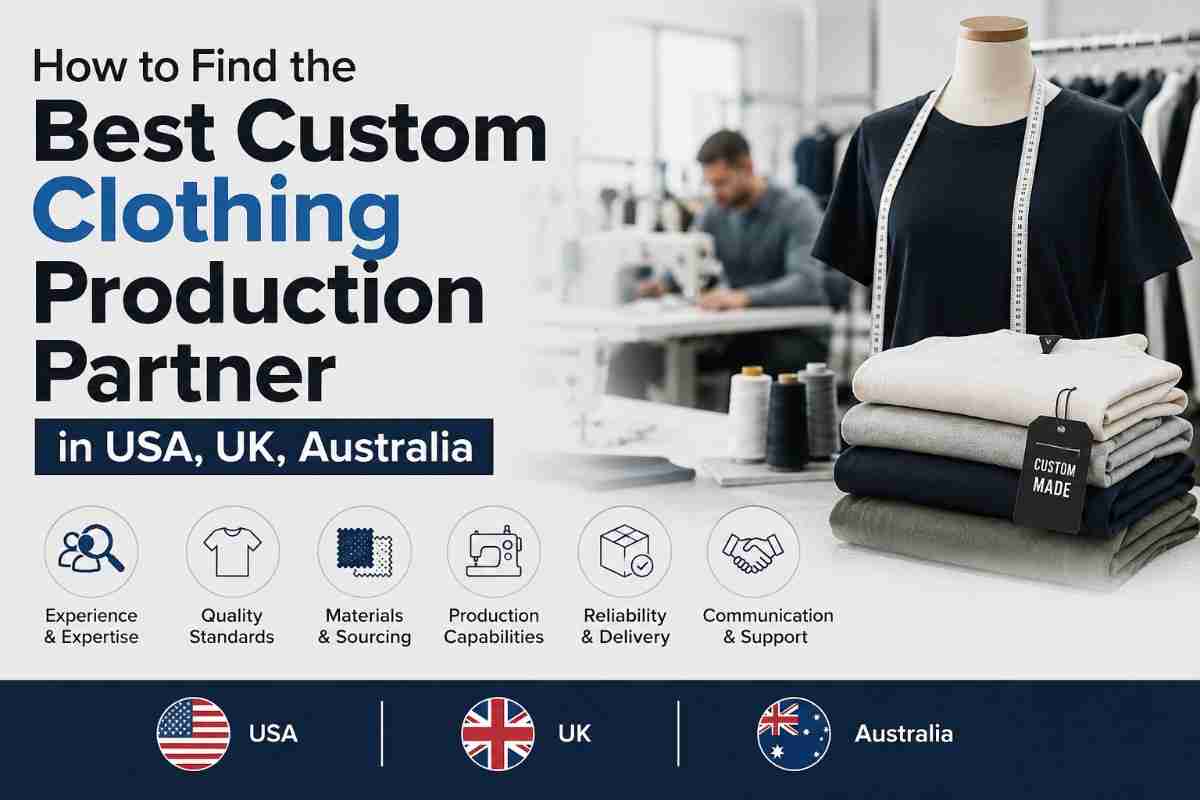

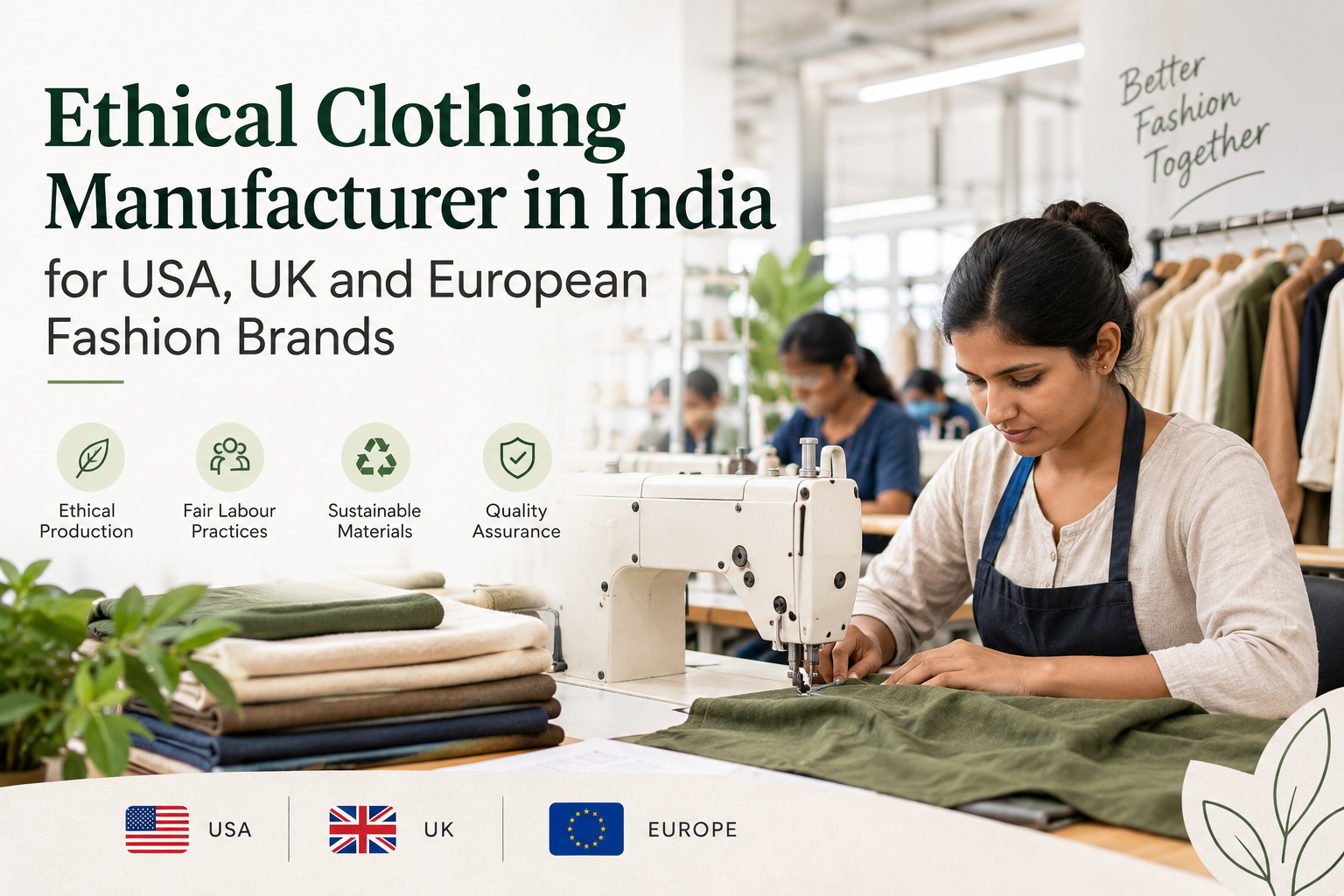
Finding the right clothing manufacturing partner is one of the most important decisions for a fashion brand entering the international market. For brands in the USA, UK, Europe and Australia, choosing a manufacturer is not only about comparing production costs. Buyers increasingly want to understand how garments are made, where fabrics come from, how workers are treated, how quality is controlled, and whether a manufacturing partner can consistently meet international requirements. This is why working with an ethical clothing manufacturer in India can be a practical option for fashion brands looking for responsible production, customization, flexible manufacturing and reliable export support.
India has a well-established apparel manufacturing ecosystem with experience across cotton garments, activewear, casualwear, resortwear, loungewear, hemp clothing, bamboo-based apparel and private-label collections. However, international buyers should not assume that every manufacturer follows the same standards. A reliable partnership requires proper evaluation of manufacturing capabilities, material sourcing, production processes, quality systems, certifications, communication and export experience. Echo Earth works with fashion brands that are looking for a dependable manufacturing partner for international clothing production, helping turn product concepts into finished garments through a structured manufacturing process.
What Is an Ethical Clothing Manufacturer in India?
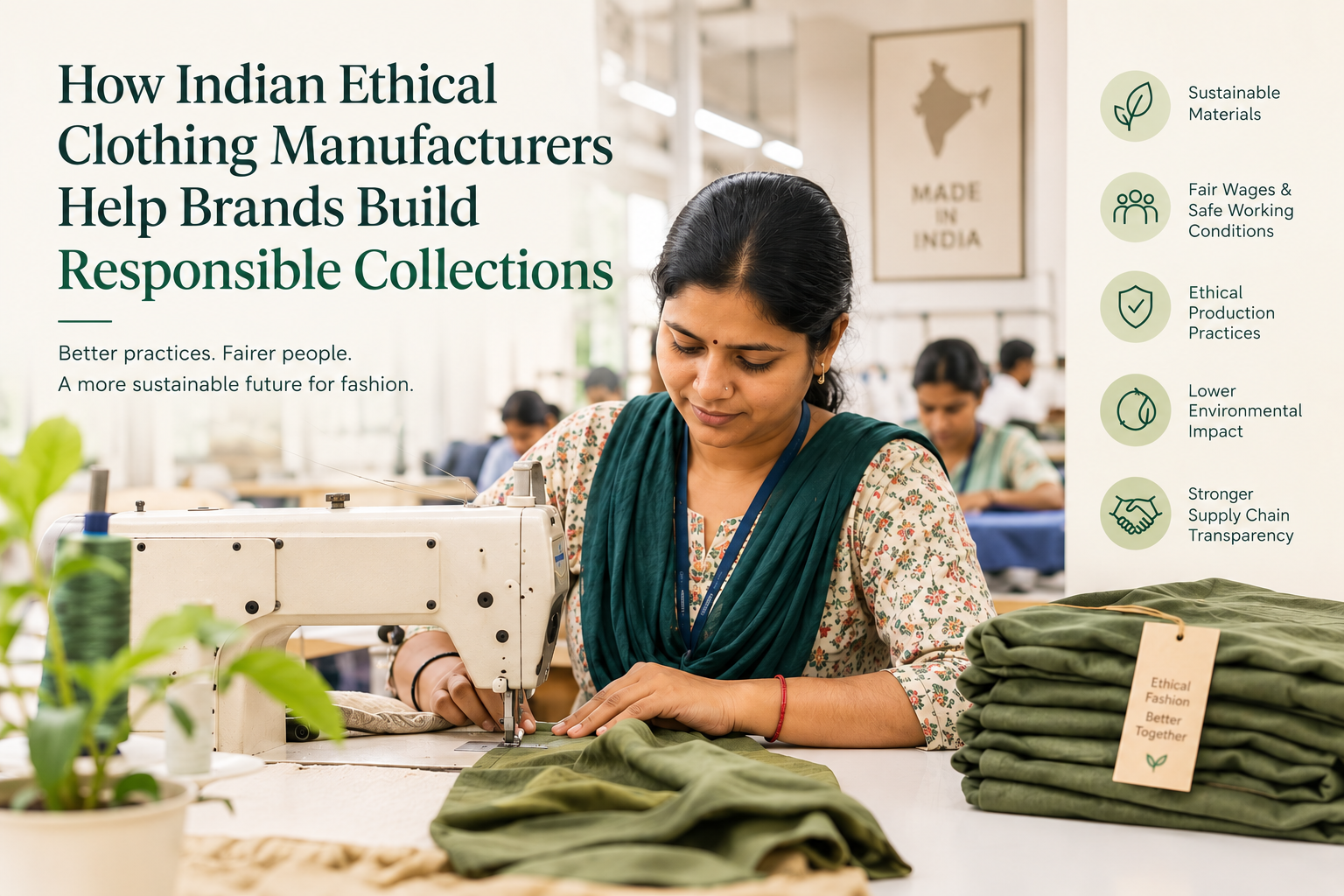
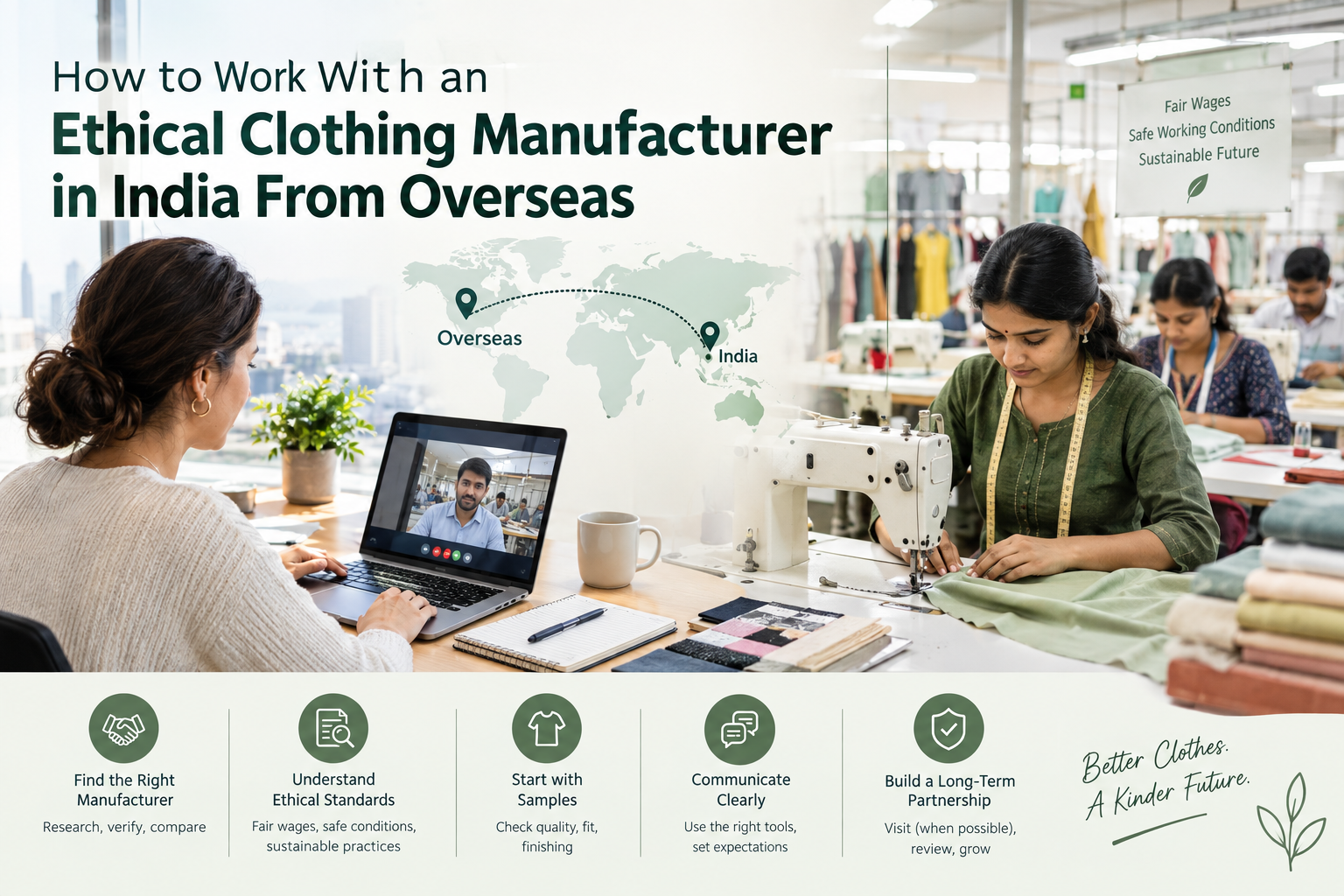
An ethical clothing manufacturer in India is a garment production company that pays attention to responsible manufacturing practices across areas such as working conditions, material sourcing, production processes, waste management, quality control and supply-chain transparency. Ethical manufacturing is broader than simply using a particular fabric. It involves looking at how the entire production process is managed and whether the manufacturer can provide buyers with meaningful information about its practices.
For an international fashion brand, this distinction is important. A manufacturer may offer organic cotton or recycled fabrics, but buyers should also evaluate the factory’s production standards, workforce practices, sourcing procedures and documentation. Ethical clothing manufacturing should therefore be viewed as a complete supply-chain approach rather than a marketing label.
For USA, UK, European and Australian brands, an ethical manufacturing partner can also make it easier to develop collections that align with their own brand values and customer expectations. The right manufacturer should be able to explain its production process clearly instead of making broad claims that cannot be verified.
Why International Fashion Brands Choose Clothing Manufacturers in India
India is an established textile and apparel production market with access to a wide range of natural and blended fabrics, garment-making skills and supporting industries. This gives international brands the opportunity to work with manufacturers that can handle different product categories and production requirements under one manufacturing ecosystem.
A major advantage for international buyers is the ability to develop customized collections. Instead of purchasing generic ready-made garments, brands can provide their own designs, measurements, tech packs, fabric preferences, labels and finishing requirements. Depending on the manufacturer, the process can include sampling, pattern development, CAD support, fabric sourcing, dyeing, printing, embroidery, stitching, finishing, packaging and export preparation.
For emerging brands, India can also be useful when they need a manufacturing partner that understands smaller and developing production programs. Established brands, meanwhile, may need a partner capable of handling repeat production and larger quantities while maintaining consistency.
The key is not simply finding a clothing manufacturer in India, but finding one whose capabilities match the brand’s product, quality expectations, order volume, timeline and target market.
Clothing Manufacturer in India for USA Fashion Brands
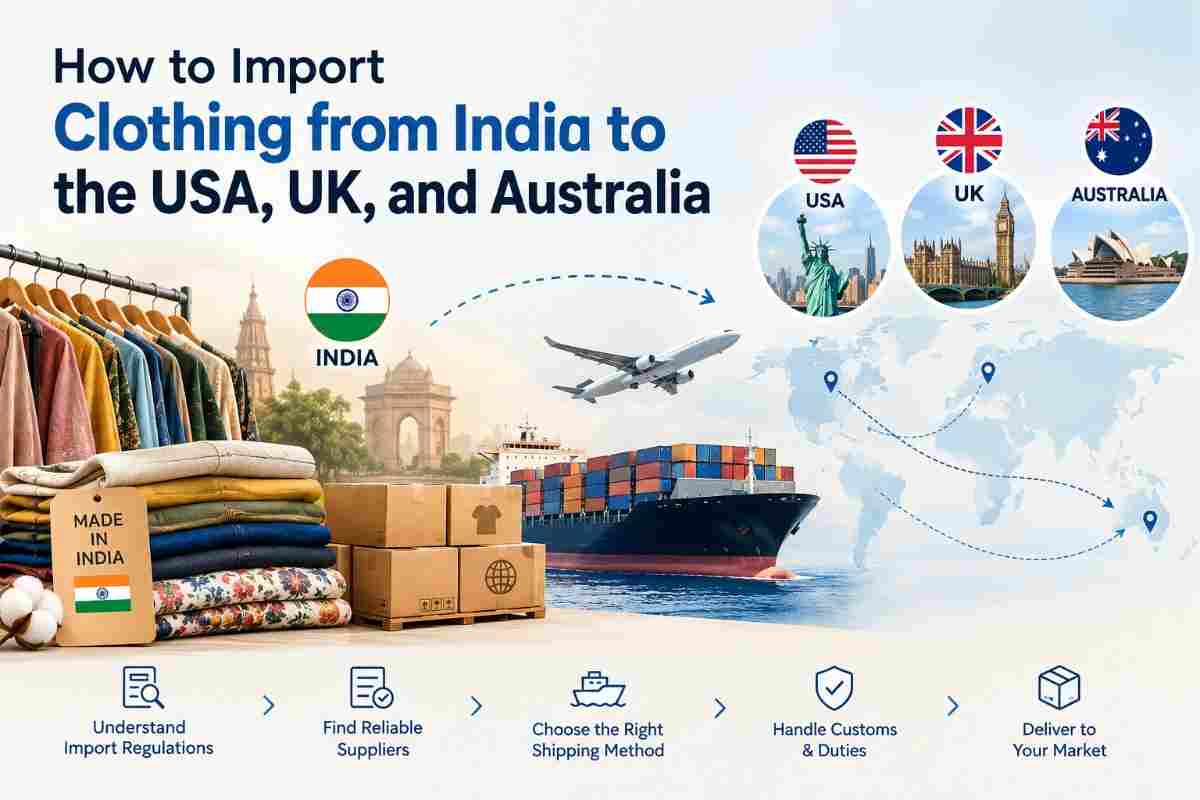
US fashion brands often work with manufacturers across different countries to develop private-label, custom and wholesale apparel collections. When choosing a clothing manufacturer in India for USA buyers, brands should look beyond the initial manufacturing quotation and evaluate the complete production process.
A suitable partner should understand specifications such as garment measurements, fabric composition, color standards, labeling requirements, packaging instructions and quality expectations. Communication is especially important because the design and production team may be working across different time zones.
For a US fashion brand, the manufacturing process may begin with a concept or technical package. The manufacturer can then review the design, clarify specifications, source or develop the required fabric, create samples and make adjustments before bulk production. This reduces the risk of receiving a final product that does not match the original design intention.
Echo Earth supports international apparel manufacturing requirements for brands that need customized production rather than one-size-fits-all garments. The focus is on creating a structured process from product development through production and export preparation.
Clothing Manufacturer in India for UK Fashion Brands
UK fashion brands often place significant importance on product quality, responsible sourcing, supply-chain transparency and consistent manufacturing. When selecting a clothing manufacturer in India for UK buyers, brands should therefore examine both the manufacturing process and the manufacturer’s ability to provide relevant documentation.
A good manufacturing relationship starts with clear specifications. The brand should communicate its desired fabric, fit, construction, color, trims, labeling, packaging and expected quantities. The manufacturer should then confirm what is achievable, identify potential production issues and provide samples before bulk manufacturing.
For UK brands, another important consideration is consistency. If a garment performs well in one production run, future orders should maintain comparable measurements, construction and finishing. Proper quality checks throughout production can help reduce variations between batches.
Working with an experienced Indian manufacturer can also give UK brands access to diverse fabric and garment-production capabilities. From everyday cotton clothing to specialized activewear and natural-fiber collections, the manufacturing partner can help develop products according to the brand’s specifications.
Clothing Manufacturer in India for Australia Fashion Brands
Australian fashion brands often operate across categories such as resortwear, casualwear, activewear, lifestyle apparel and warm-weather collections. This creates demand for fabrics, fits and garment constructions suited to different climates and consumer preferences.
When selecting a clothing manufacturer in India for Australia, brands should pay attention to fabric performance, garment construction, color consistency, sizing and finishing. These factors can be particularly important for lightweight garments, activewear and products designed for frequent use.
An international manufacturer should also be able to manage communication, sampling, production scheduling and export coordination efficiently. A clear timeline helps brands plan launches and inventory without unnecessary delays.
Echo Earth can work with international brands during different stages of product development, from fabric selection and sampling to manufacturing, finishing and packaging. This allows brands to establish their collection requirements before moving into larger production.
How to Choose the Best Clothing Manufacturer in India
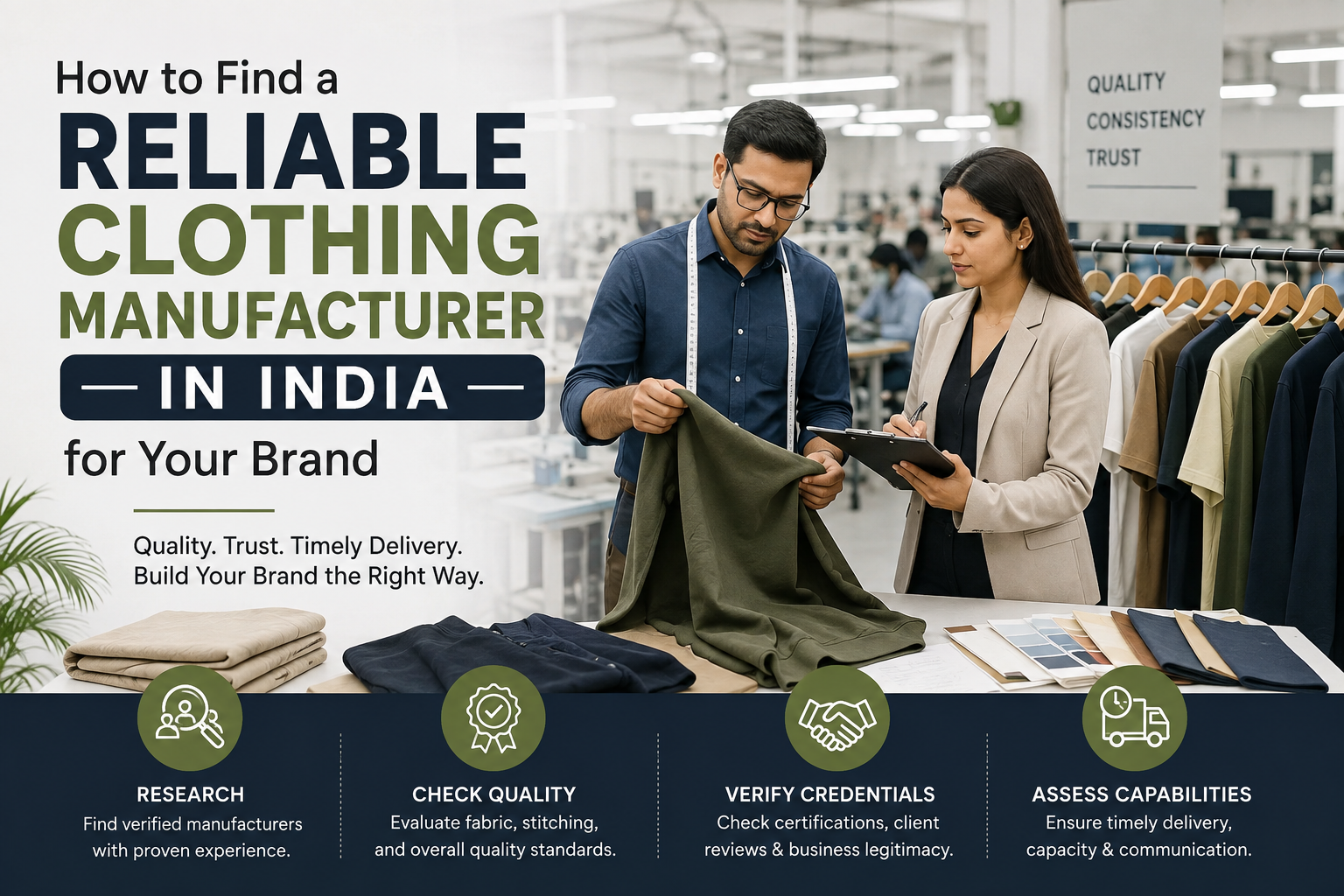
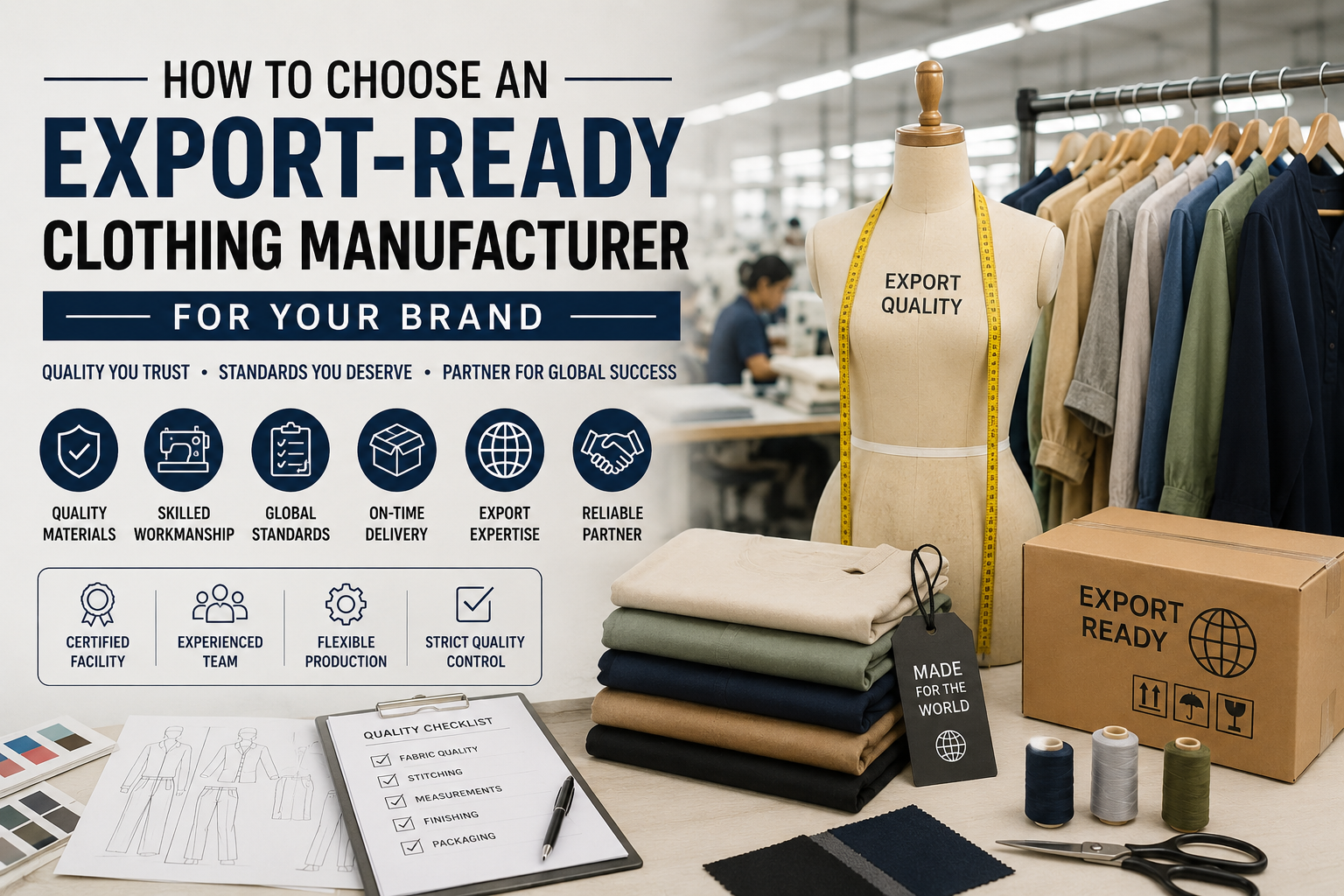
The best clothing manufacturer in India is not necessarily the manufacturer offering the lowest quotation. For an international fashion brand, the better choice is usually the manufacturing partner that provides an appropriate balance of quality, communication, manufacturing capability, production flexibility, transparency and commercial value.
Before selecting a manufacturer, brands should investigate whether the company has experience with similar products and international buyers. Look at the types of garments produced, available fabrics, customization capabilities, sampling process, quality checks and export experience.
It is also important to understand the manufacturer’s production capacity. A small fashion label may need a partner comfortable with smaller production programs, while an established retailer may require greater production capacity and repeat-order consistency.
Another important factor is communication. If a manufacturer takes too long to answer technical questions or cannot clearly explain production stages, problems may become more difficult to solve later. A responsive manufacturing partner can identify issues early and keep product development moving.
What International Buyers Should Check Before Choosing a Manufacturer
International buyers should conduct a practical evaluation before placing a production order. This does not need to be complicated, but the major manufacturing factors should be clearly understood.
First, review the manufacturer’s product expertise. A company experienced in basic cotton garments may not necessarily be the right choice for technical activewear or specialized construction.
Second, ask about fabric sourcing. Understand whether the manufacturer sources fabrics directly, works with approved suppliers or supports buyer-nominated materials.
Third, discuss sampling. Samples provide an opportunity to evaluate fit, stitching, construction, fabric behavior, color and finishing before bulk production.
Fourth, understand quality control. Ask how measurements, stitching, fabric defects, printing, embroidery, finishing and packaging are inspected during production.
Finally, clarify production timelines, MOQ, payment terms, packaging requirements and shipping responsibilities before confirming the order.
Ethical Fabric Sourcing and Material Selection
Fabric selection has a major influence on the final garment, but international buyers should consider more than the name of the material. They should understand fabric composition, weight, construction, feel, durability, color options and intended application.
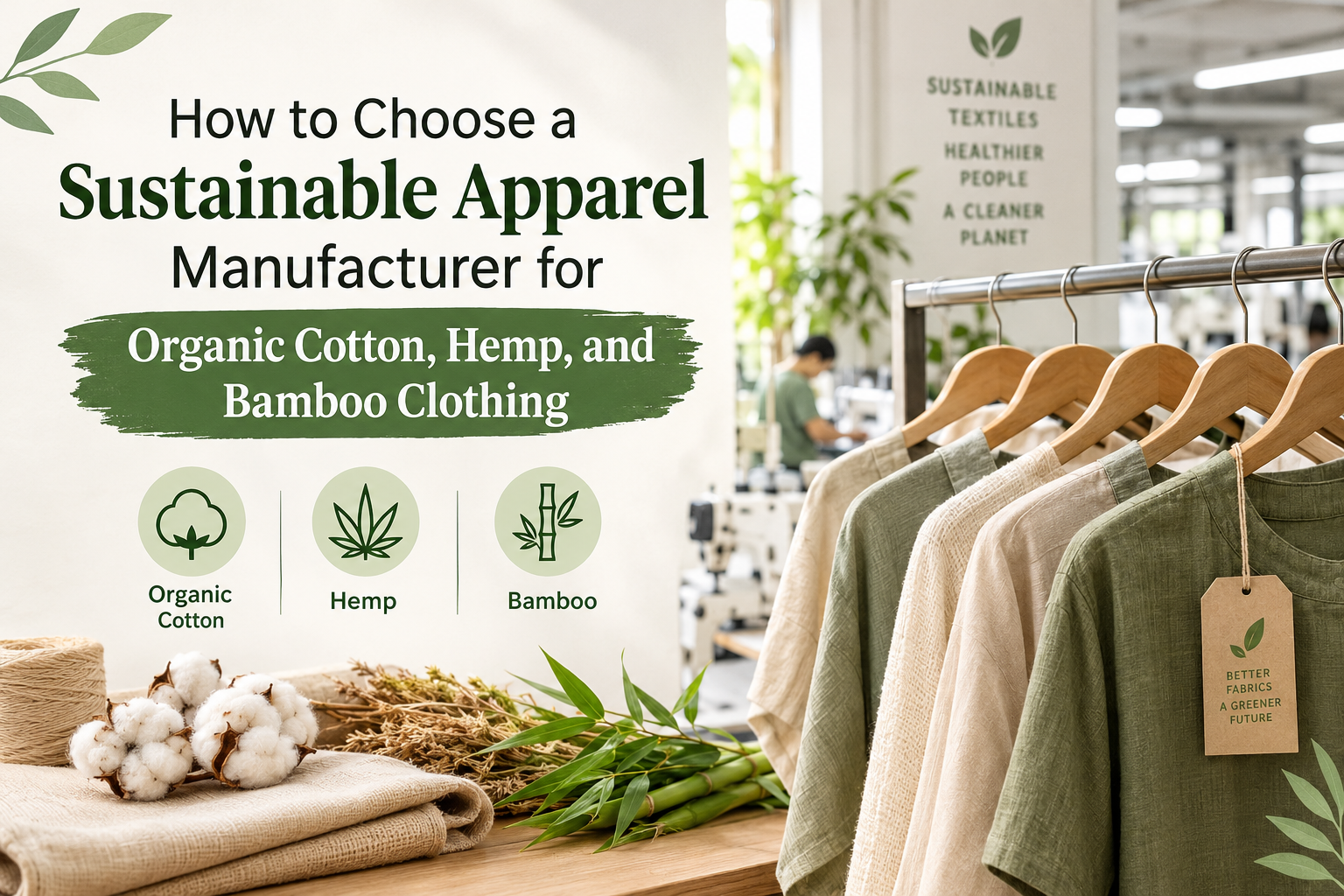
Echo Earth works with apparel categories that can include cotton, hemp, bamboo and other fabric options depending on the product requirement. Brands can discuss their preferred materials and product specifications during development to identify an appropriate manufacturing route.
For a fashion brand, material selection should always be connected to the garment’s purpose. A lightweight fabric may work well for summer apparel but may not provide the structure required for another product. Similarly, a fabric that feels appropriate during sampling must also perform consistently during bulk production.
This is why fabric approval should happen before large-scale production. International buyers should review fabric samples and, where appropriate, conduct relevant testing before finalizing the bulk order.
Private Label Clothing Manufacturing for International Brands
Private-label manufacturing allows a fashion brand to sell apparel developed under its own brand identity while working with an external production partner. The process can include customized garments, brand labels, packaging, colors, fabrics and product specifications.
For new and growing fashion brands, private-label manufacturing can provide greater control over the final product compared with simply purchasing generic wholesale apparel. Brands can build collections around their own design direction and target audience.
A capable private-label manufacturing partner should be able to understand technical specifications and translate them into production-ready garments. This may involve pattern development, sampling, revisions, labeling, finishing and packaging.
For international buyers, it is particularly important to establish ownership and approval procedures for designs, samples, labels and packaging before production begins.
Low MOQ Clothing Manufacturing in India
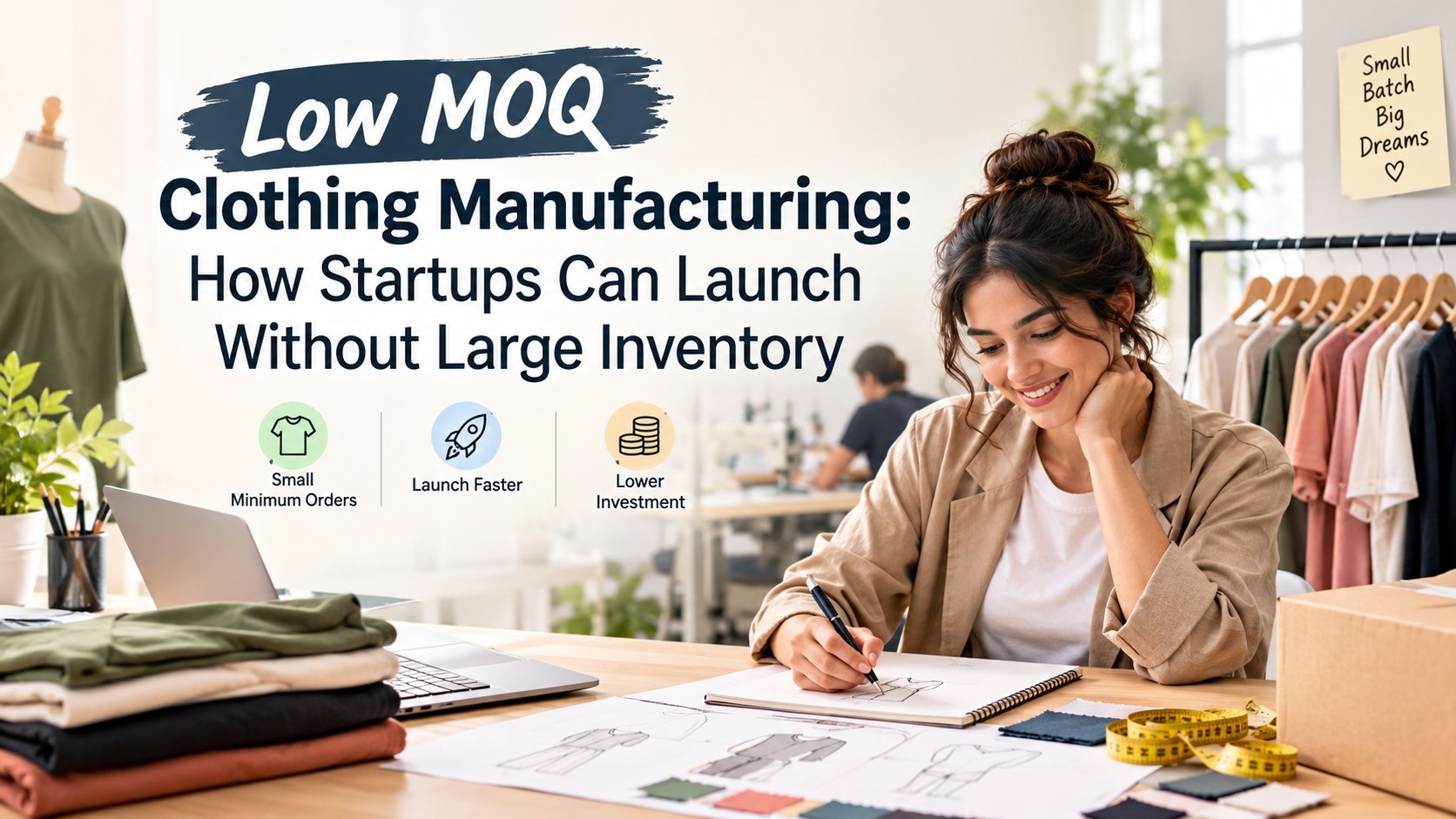
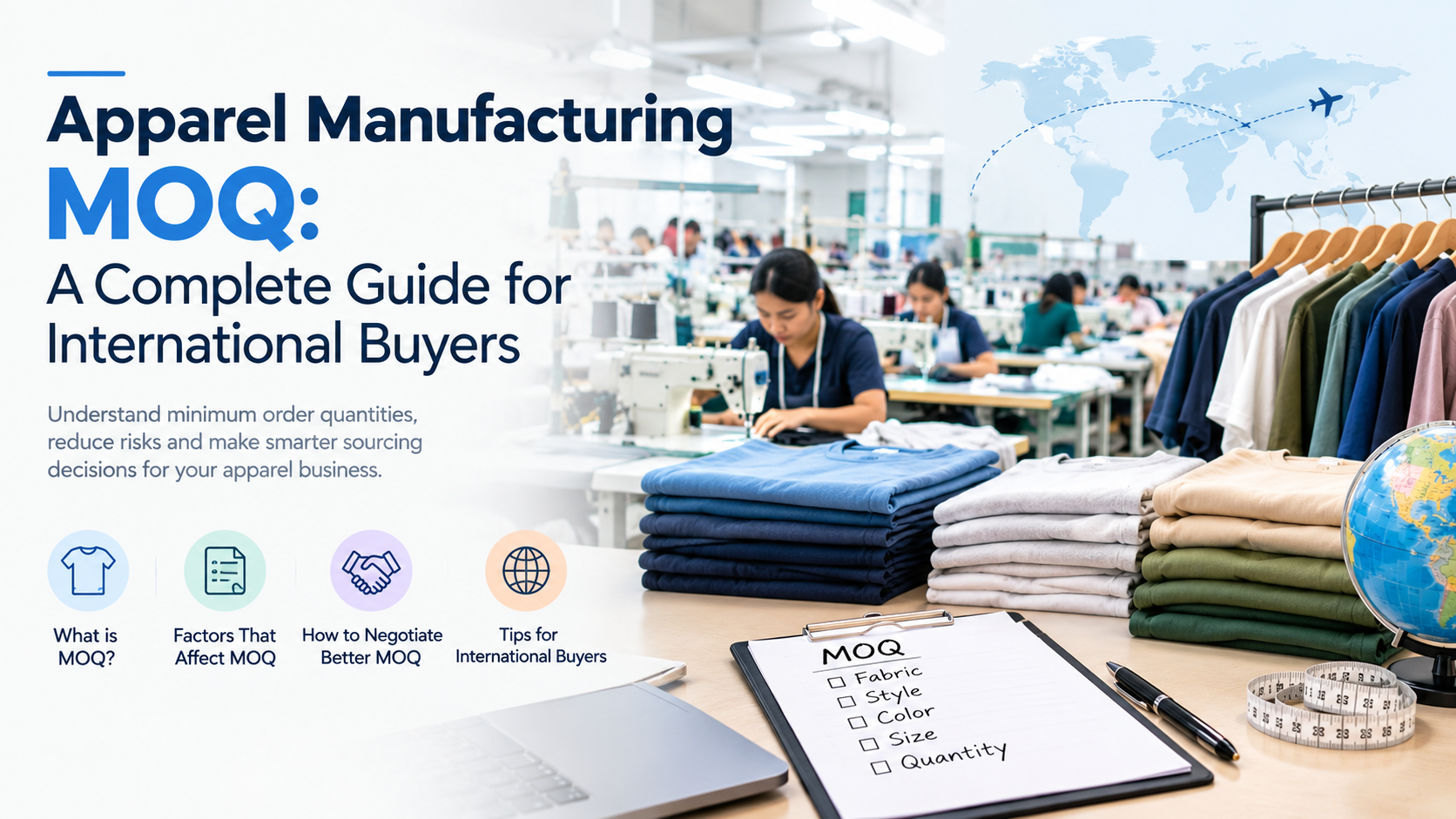
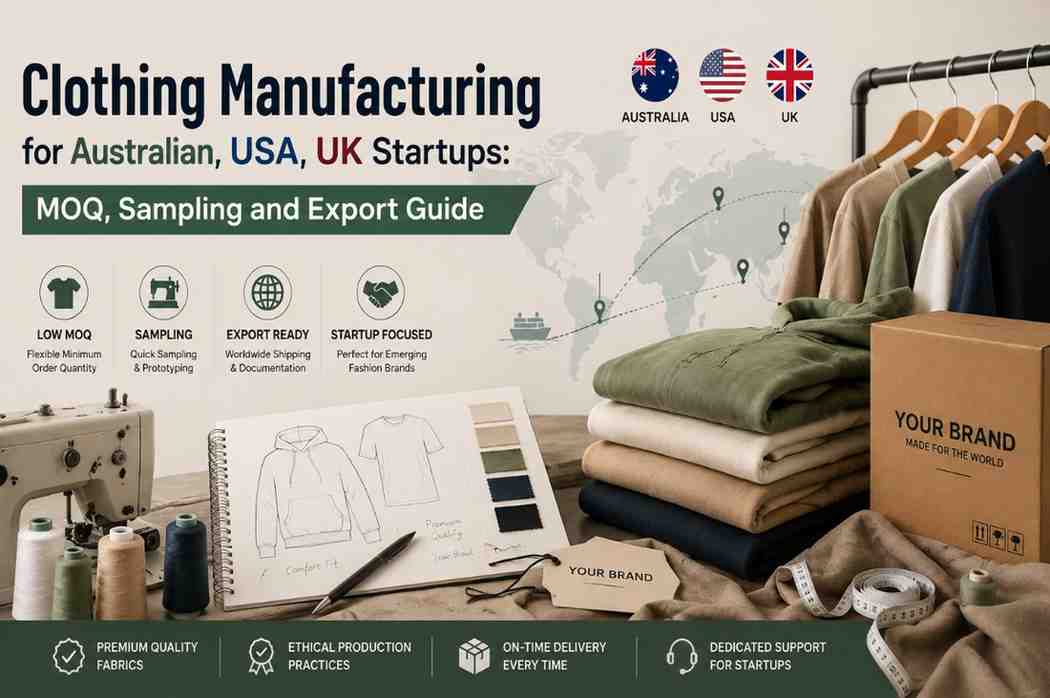
Minimum order quantity is one of the first questions asked by emerging fashion brands. A low MOQ clothing manufacturer in India can be particularly useful for startups that want to test a new collection without committing to very large quantities.
However, MOQ should not be considered separately from product complexity. A simple garment may be easier to manufacture at a smaller quantity than a highly customized garment involving special fabrics, multiple colors, complex printing or specialized construction.
Brands should ask whether MOQ applies per style, color, size or total order. They should also understand how sample development and fabric minimums may affect the final quantity.
For a growing brand, the ideal manufacturing relationship is one that can support the business at its current stage while allowing production volumes to increase as demand develops.
Sampling and Product Development
Sampling is one of the most important stages of apparel manufacturing because it transforms an idea into a physical product. A technical specification can look correct on paper but still require changes once the garment is produced.
During sampling, brands can assess fit, fabric, measurements, construction, trims, stitching, print placement and overall appearance. Feedback can then be shared with the manufacturer for revisions.
A strong sample-development process helps reduce mistakes during bulk production. International buyers should avoid treating sampling as a formality. It is the stage where many potential production problems can be identified before they become expensive bulk-order issues.
Echo Earth can support product development requirements by working through the stages needed to turn a brand’s apparel concept into a production-ready garment.
Quality Control During Garment Manufacturing
Quality control should not begin only after all garments have been produced. Effective manufacturing requires quality checks at different stages of production.
Fabric inspection can identify problems before cutting. Cutting checks can help maintain measurement consistency. Sewing inspections can identify construction or stitching issues. Finishing checks can review loose threads, pressing, labeling and final presentation. Packaging inspections can ensure products are packed according to the buyer’s instructions.
For international fashion brands, consistent quality is essential because garments are ultimately sold to customers who expect the product to match the brand’s specifications.
A manufacturer should therefore be able to explain its quality-control approach clearly and identify who is responsible for inspections at different stages.
Certifications, Compliance and Supply-Chain Transparency
Certifications can provide useful evidence about specific manufacturing or supply-chain practices, but buyers should understand what each certification actually covers. No single certificate automatically proves that every aspect of a manufacturer’s operations meets every possible ethical or environmental requirement.
International brands should ask manufacturers to provide relevant documentation where applicable and verify whether certifications are current and applicable to the specific facility or process involved.
Supply-chain transparency is also important. Brands should know where fabrics are sourced, where garments are manufactured and which processes may be performed by external suppliers.
A transparent manufacturer should be comfortable discussing these areas rather than avoiding detailed questions.
Why Communication Matters When Manufacturing From Overseas
Manufacturing internationally requires clear communication because design teams, factories and logistics partners may be located in different countries and time zones. Small misunderstandings about measurements, colors, labels or packaging can create significant problems during production.
A reliable manufacturer should be able to communicate technical information clearly and respond to questions within a reasonable timeframe. International buyers should also maintain organized documentation, including approved samples, specifications, measurements and production instructions.
For USA, UK, European and Australian brands, strong communication can make the difference between a smooth production experience and repeated revisions.
How Echo Earth Supports International Clothing Brands
Echo Earth works with fashion brands seeking apparel manufacturing support for international markets. The focus is on helping brands develop customized clothing collections through a structured production process rather than simply supplying generic garments.
Depending on the project, the manufacturing journey can include fabric selection, sampling, garment development, dyeing, printing, stitching, finishing, packaging and export preparation. The company also works with categories such as private-label apparel, activewear, hemp clothing and bamboo-based clothing according to project requirements.
For international brands, the goal is to create a practical manufacturing relationship where product specifications, quality expectations and production requirements are understood before bulk manufacturing begins.
Whether a brand is developing its first collection or expanding an existing product range, selecting a manufacturer should be based on capability, communication, quality systems and long-term suitability rather than price alone.
Final Checklist for USA, UK, European and Australian Buyers
Before choosing an ethical clothing manufacturer in India, international fashion brands should confirm the manufacturer’s experience, production capabilities, fabric options, MOQ, sampling process, quality-control system, customization options, labeling and packaging capabilities, certifications where relevant, production timelines and export experience.
It is also useful to request samples and ask detailed questions before committing to a large order. A manufacturer that provides clear answers and transparent processes is generally easier to work with than one that focuses only on providing the lowest initial quotation.
The right manufacturing partner should understand that apparel production is a long-term relationship. Product consistency, communication and the ability to grow with a brand can be more valuable than a small difference in the initial manufacturing price.
For USA, UK, European and Australian fashion brands, India can offer a strong apparel manufacturing ecosystem when the right production partner is selected. By evaluating ethical practices, material sourcing, product development, quality control, customization, MOQ and export capabilities, brands can make a more informed manufacturing decision.
Echo Earth aims to support international fashion brands with apparel manufacturing requirements through a structured approach to product development and production. If your brand is planning a new clothing collection, private-label range or custom apparel program, the manufacturing process should begin with clear specifications, realistic expectations and a partner capable of delivering them consistently.
FAQs
1. How do I choose an ethical clothing manufacturer in India?
Look for a manufacturer with relevant apparel experience, transparent production practices, reliable quality control, appropriate certifications where applicable, clear communication and international manufacturing experience. Always review samples and confirm MOQ, fabric sourcing, production timelines and customization capabilities before placing a bulk order.
2. Is India a good country for clothing manufacturing for USA and UK brands?
Yes. India has an established textile and apparel manufacturing ecosystem with access to diverse fabrics, skilled garment production and customization capabilities. International brands can work with Indian manufacturers for private-label, custom, wholesale and specialized apparel collections depending on the manufacturer’s capabilities.
3. Can Australian fashion brands manufacture clothing in India?
Yes. Australian fashion brands can work with Indian clothing manufacturers for categories such as casualwear, resortwear, activewear and lifestyle apparel. Buyers should evaluate fabric suitability, garment construction, quality control, sampling, production timelines and export coordination before selecting a manufacturing partner.
4. What should I ask an Indian clothing manufacturer before ordering?
Ask about MOQ, fabric sourcing, sampling, production capacity, quality control, customization, labeling, packaging, certifications, production timelines and export experience. It is also important to clarify payment terms, approvals and responsibilities before bulk manufacturing begins.
5. Can Echo Earth manufacture private-label clothing for international brands?
Echo Earth supports international apparel manufacturing requirements, including private-label and customized clothing projects. Depending on the product, support can include fabric selection, sampling, garment manufacturing, dyeing, printing, finishing, packaging and export preparation.