

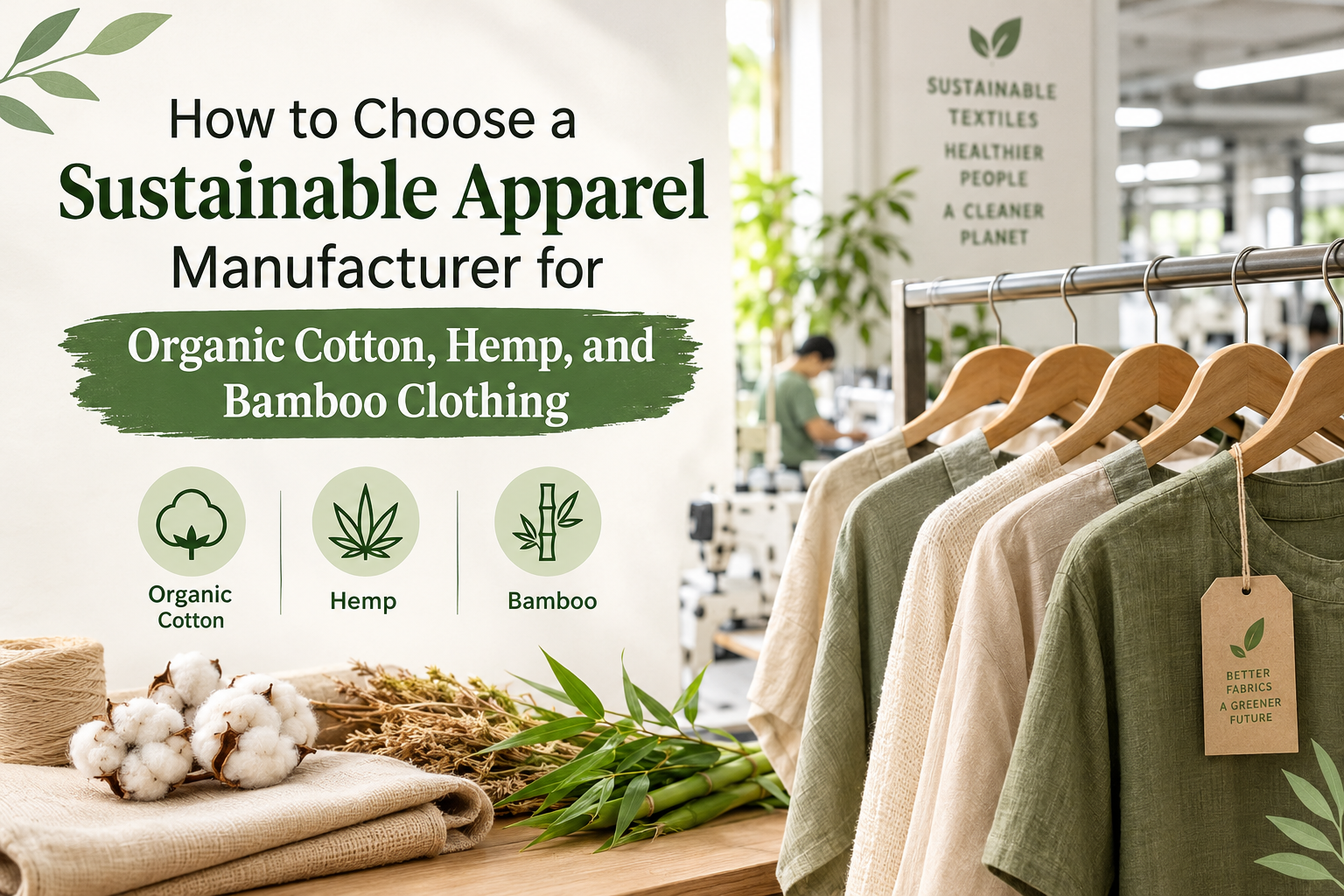
How to Choose a Sustainable Apparel Manufacturer for Organic Cotton, Hemp, and Bamboo Clothing
Choosing the right apparel manufacturing partner is an important decision for fashion brands that want to develop responsible clothing collections, maintain consistent product quality, and meet changing customer expectations. As consumers and businesses pay more attention to material sourcing, manufacturing processes, and supply chain transparency, brands are exploring alternatives such as organic cotton, hemp, and bamboo-derived fabrics. However, selecting a suitable manufacturer involves more than comparing fabric prices. Businesses must also consider production capabilities, garment construction, fabric certifications, minimum order quantities, customization options, and the supplier’s ability to meet international quality requirements. A reliable manufacturing partner can help transform an initial design concept into a finished clothing collection that reflects the brand’s identity and commercial goals. Echo Earth supports the conversation around responsible apparel sourcing by focusing on clothing manufacturing solutions for international fashion businesses. For brands developing private label collections, custom garments, or specialized fabric ranges, finding the right manufacturing partner can simplify product development and improve coordination throughout the supply chain. Whether you are looking for an organic cotton clothing manufacturer, a hemp clothing manufacturer, or a bamboo clothing manufacturer, understanding the differences between materials and evaluating a supplier’s actual capabilities can help you make informed decisions. This guide explains the key factors to consider when choosing an apparel manufacturing partner for organic cotton, hemp, and bamboo clothing, with practical insights for fashion startups, established retailers, wholesalers, and growing clothing brands. 1. Understand Your Brand’s Clothing Requirements Before contacting manufacturers, define the type of clothing you want to produce, your target customers, and the purpose of your collection. A brand specializing in everyday basics may require organic cotton T-shirts, sweatshirts, and relaxed-fit tops, while an activewear business may need stretch fabrics, performance construction, and moisture-management features. Hemp fabrics may suit selected casualwear, shirts, trousers, and outerwear, whereas bamboo-derived fabrics may be considered for soft-feel basics, loungewear, and other garments where their specific textile properties are appropriate. A clear product brief helps manufacturers assess whether they can meet your expectations. Include garment sketches, size specifications, fabric composition, colors, stitching details, finishing requirements, and estimated order quantities. Echo Earth can be considered by businesses exploring apparel manufacturing solutions for different garment categories and fabric preferences. Establishing these details at the beginning makes communication more efficient and helps prevent misunderstandings during sampling and production. 2. Choose the Right Fabric for Your Clothing Collection Fabric selection affects comfort, appearance, durability, manufacturing costs, and the overall positioning of a clothing brand. Organic cotton, hemp, and bamboo-derived textiles each have different characteristics, so the best option depends on the intended garment and how it will be used. Brands should request fabric specifications, swatches, and relevant supporting documentation before making final decisions. Organic Cotton for Everyday Apparel An experienced organic cotton clothing manufacturer can help brands source fabrics for T-shirts, polo shirts, sweatshirts, dresses, babywear, and other everyday garments. Organic cotton is produced according to applicable organic agricultural standards, although the final textile’s environmental impact also depends on processing, dyeing, transportation, and garment durability. Brands should verify relevant certification claims rather than assuming that every product described as organic has been independently certified. When evaluating organic cotton suppliers, ask about fabric weight, yarn quality, shrinkage, colorfastness, and finishing processes. These details are particularly important for brands that need consistent sizing and appearance across repeat orders. A properly specified cotton fabric can help create garments that match the brand’s intended fit, feel, and price range. Hemp for Durable and Versatile Clothing A hemp clothing manufacturer may support brands interested in developing shirts, trousers, jackets, casualwear, and blended-fabric collections. Hemp fibers are known for their strength, while the feel and drape of the finished textile depend on fiber processing, yarn construction, fabric structure, and any fibers blended with them. Some hemp fabrics have a textured appearance, while others are processed to create a softer hand feel. Brands should evaluate the finished fabric rather than relying only on the raw material name. Request samples to check softness, flexibility, breathability, shrinkage, and suitability for the planned garment. It is also important to review the actual composition of hemp blends and the evidence behind any environmental claims. This helps businesses select fabrics that meet customer expectations without making unsupported sustainability promises. Bamboo-Derived Fabrics for Soft-Feel Garments A bamboo clothing manufacturer may offer garments made using bamboo-derived textiles, including viscose or rayon made from bamboo, depending on its capabilities. These fabrics can provide a smooth, soft feel and may be suitable for selected T-shirts, underwear, loungewear, and other lightweight clothing applications. However, bamboo-derived viscose is a regenerated cellulose fiber, not simply a fabric made by mechanically turning bamboo into yarn. The manufacturing process matters when evaluating its environmental credentials. Brands should ask how the fiber is produced, whether the supplier can provide traceability or relevant certifications, and what the fabric composition actually contains. Comparing fabric performance, processing information, and garment testing provides a stronger basis for material selection than relying on a general claim that bamboo clothing is automatically sustainable. 3. Evaluate Private Label Sustainable Clothing Capabilities Private label sustainable clothing allows fashion businesses to sell garments under their own brand names while working with an external manufacturing partner. Depending on the supplier’s services, this may include fabric sourcing, custom garment development, labels, packaging, finishing, and production coordination. Private label manufacturing can be useful for businesses that want to establish a recognizable product range without investing in their own garment production facilities. Before selecting a supplier, confirm which parts of the process it manages directly and which are handled by third parties. Ask whether custom neck labels, care labels, branded packaging, specific fabric colors, and garment modifications are available. Brands should also clarify ownership of technical designs, patterns, and other intellectual property where relevant. Echo Earth can be considered by businesses looking to explore private label apparel development for international markets, subject to confirming the exact services and specifications available for each project. 4. Assess Custom Apparel Manufacturing Services Custom apparel manufacturing is particularly valuable when a brand needs garments
