

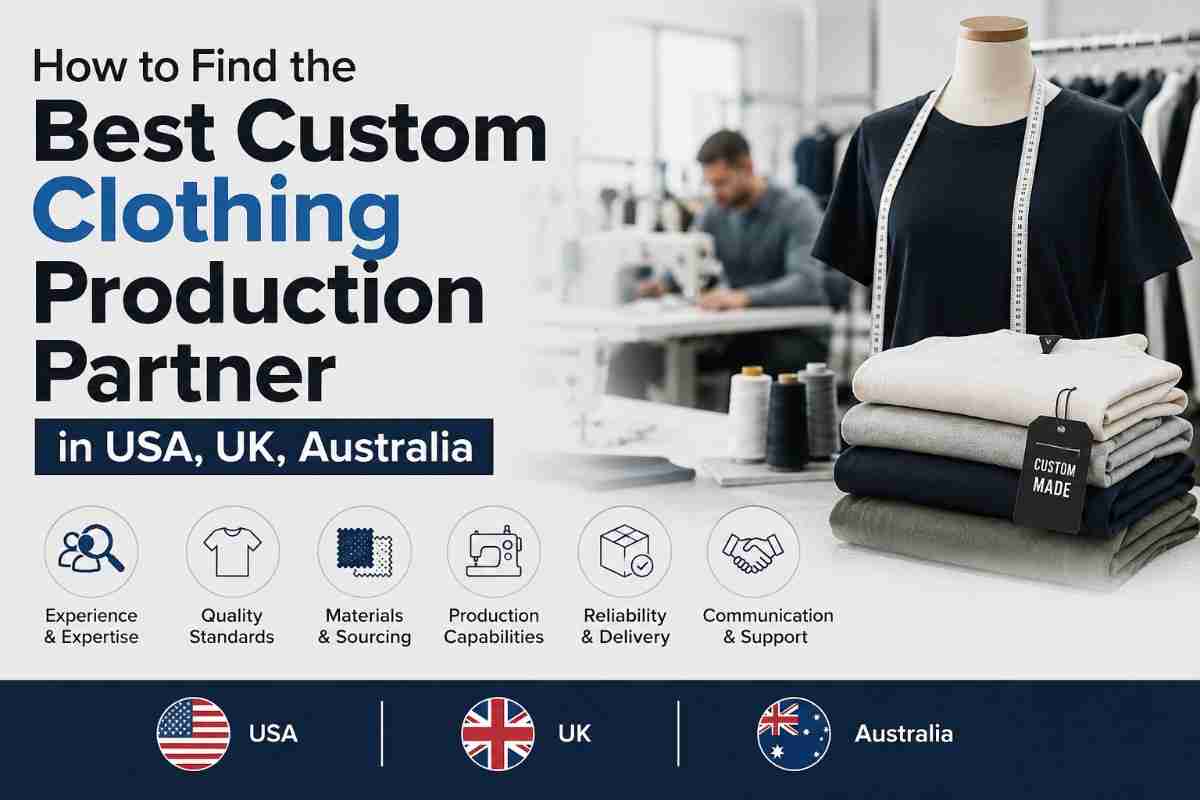
How to Find the Best Custom Clothing Production Partner in USA, UK, Australia
Finding the right clothing manufacturing partner is one of the most important decisions for a fashion brand. Whether you are launching a new collection, expanding an established label, or developing custom apparel for a specific market, the manufacturer you choose can directly influence product quality, pricing, production timelines, minimum order quantities, and customer satisfaction. Brands searching for a Custom Clothing Production Partner in USA, Custom Clothing Production Partner in UK, or Custom Clothing Production Partner in Australia should therefore evaluate more than just the quoted manufacturing price. A reliable production partner should understand your product requirements, communicate clearly, support sampling and customization, maintain consistent quality, and deliver garments according to agreed specifications. For brands that want flexibility without committing to extremely large production runs, finding a Low MOQ Clothing Manufacturer in USA, Low MOQ Clothing Manufacturer in UK, or Low MOQ Clothing Manufacturer in Australia can be particularly valuable. Low minimum order quantities allow emerging fashion businesses to test new designs, launch limited collections, manage inventory more carefully, and understand customer demand before increasing production. At Echo Earth, we support brands with custom apparel manufacturing and private label production, helping businesses develop clothing collections around their designs, materials, specifications, branding, and target markets. What Is a Custom Clothing Production Partner? A custom clothing production partner is a manufacturer or production company that works with a brand to turn its clothing concepts into finished garments. Unlike purchasing ready-made wholesale clothing, custom production allows businesses to have greater control over fabrics, colors, measurements, patterns, trims, labels, printing, embroidery, finishing, packaging, and other product details. A good production partner should be capable of supporting different stages of the apparel manufacturing process, from initial product development and fabric selection to sampling, production, quality checking, and shipment. For fashion brands in the USA, UK, and Australia, this can make it easier to develop collections that are aligned with their specific customers and brand identity. Why Choosing the Right Clothing Production Partner Matters The right manufacturer can become a long-term extension of your fashion business rather than simply a supplier. Consistent manufacturing helps brands maintain the same quality across different production batches, while effective communication reduces misunderstandings about measurements, materials, colors, construction, and finishing. The right partner can also help brands manage production more efficiently. This becomes particularly important for startups and growing businesses that may not have an internal production team. A capable manufacturer can provide guidance on fabric options, sampling, production feasibility, and garment construction while following the brand’s specifications. For brands selling internationally, production flexibility is equally important. A manufacturer that understands export-oriented apparel production can help businesses develop products for different customer markets without compromising their original design concept. 1. Understand Your Clothing Production Requirements Before searching for a Custom Clothing Production Partner in USA, Custom Clothing Production Partner in UK, or Custom Clothing Production Partner in Australia, clearly define what you want to manufacture. The more information you can provide, the easier it becomes for a manufacturer to understand your requirements and provide an accurate quotation. Start with the product category. Your requirements may include T-shirts, shirts, dresses, hoodies, sweatshirts, jackets, activewear, loungewear, sportswear, leggings, trousers, tops, uniforms, or other apparel. You should also consider fabric composition, GSM, color, size range, fit, stitching details, printing or embroidery, labels, packaging, and expected order quantities. A detailed tech pack is particularly useful because it can communicate measurements, construction details, artwork, fabric specifications, and other technical requirements. If you do not have a complete tech pack, discuss your requirements with the manufacturer to understand what information is necessary before sampling begins. 2. Look for Experience in Your Product Category Not every clothing manufacturer specializes in every type of apparel. A company experienced in basic T-shirts may not necessarily have the same expertise in technical activewear, structured jackets, premium dresses, or specialized sportswear. When evaluating a potential partner, look at its product experience and manufacturing capabilities. Ask whether it has experience producing the type of clothing you want to launch and whether it can handle your preferred fabrics and construction methods. For example, if your brand sells activewear, the manufacturer should understand stretch fabrics, performance construction, appropriate seams, elastic requirements, fit testing, and finishing. If you are developing premium casualwear, fabric quality, pattern accuracy, stitching, and finishing may receive greater attention. At Echo Earth, brands can explore custom apparel and private label production across different clothing categories, allowing product development to be tailored around the requirements of the individual brand. 3. Compare Low MOQ Options Minimum order quantity is one of the most important factors for startups and smaller fashion brands. A manufacturer with a very high MOQ may require a business to invest heavily in inventory before knowing whether a product will sell. This is why many emerging brands specifically search for a Low MOQ Clothing Manufacturer in USA, Low MOQ Clothing Manufacturer in UK, or Low MOQ Clothing Manufacturer in Australia. Low MOQ production can make it easier to test designs, introduce limited-edition products, experiment with new colors, and gradually increase quantities as demand grows. However, low MOQ should not automatically mean choosing the cheapest manufacturer. Ask what is included in the MOQ, whether different colors or sizes have separate minimums, and whether sampling and development costs are separate. Understanding the complete pricing structure is more useful than comparing one headline MOQ number. 4. Evaluate Sampling and Product Development Sampling is one of the most important stages in custom clothing production. A sample gives the brand an opportunity to assess the actual garment before moving into bulk manufacturing. A professional sampling process should allow the brand to review factors such as fabric feel, color, measurements, fit, stitching, artwork placement, labels, trims, and overall construction. Depending on the product, multiple sample revisions may be required before the final production version is approved. Brands should ask potential manufacturers how they manage sample revisions and whether production begins only after the final specifications are approved. A structured approval process can help minimize costly mistakes during
