
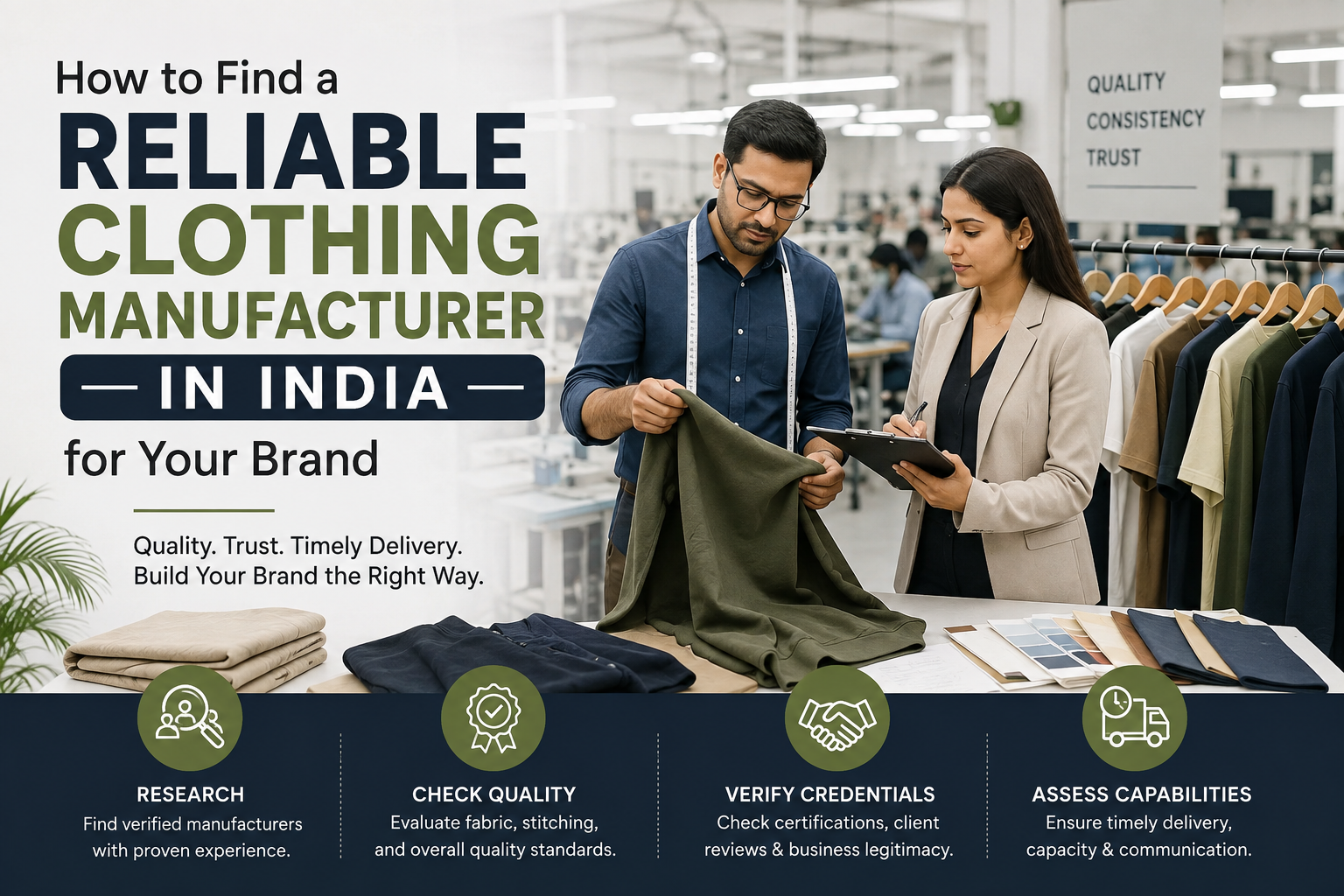
How to Find a Reliable Clothing Manufacturer in India for Your Brand
Finding the right clothing manufacturer is one of the most important decisions for any fashion brand. Whether you are launching a new collection, expanding an existing label, or looking for a dependable production partner, the manufacturer you choose can directly influence product quality, pricing, delivery timelines, customer satisfaction, and long-term growth. India has become an important apparel sourcing destination for international brands because of its textile expertise, diverse fabric capabilities, skilled workforce, and established export ecosystem. However, finding the right manufacturing partner requires more than simply searching online and comparing prices. For brands in the USA, UK, and Australia, working with an Indian clothing manufacturer can provide access to a wide range of fabrics, garment construction techniques, customization options, and production capabilities. At Echo Earth, the focus can be placed on helping international fashion businesses develop and manufacture apparel according to their specific designs, quality requirements, quantities, and market expectations. From product development and sampling to manufacturing and export support, selecting a manufacturer that understands international buyers is essential for creating a reliable supply chain. Why Choosing the Right Clothing Manufacturer Matters A clothing manufacturer is more than a company that produces garments. It becomes an important part of a brand’s supply chain and can influence almost every stage of bringing a product to market. A manufacturer must understand the brand’s designs, fabric requirements, measurements, finishing expectations, packaging instructions, and production schedule. For a new fashion business, manufacturing mistakes can be particularly expensive. Poor stitching, inconsistent sizing, incorrect fabrics, color variations, delayed shipments, or inadequate quality control can lead to customer complaints and unnecessary costs. A reliable production partner, on the other hand, can help maintain consistency from the first sample through bulk manufacturing. International buyers should therefore evaluate manufacturers based on their overall capabilities rather than choosing solely according to the lowest quotation. Production expertise, communication, quality control, customization, minimum order quantities, sampling procedures, and export experience all deserve attention before entering into a long-term partnership. Why Consider India for Clothing Manufacturing? India has a long-established textile and apparel industry covering everything from fiber and yarn production to fabric processing, garment manufacturing, printing, dyeing, embroidery, and finishing. This broad ecosystem gives international fashion brands access to different manufacturing possibilities under one sourcing market. Indian manufacturers can work with a wide variety of materials and garment categories, including cotton, linen, denim, rayon, viscose, blends, and other fabrics depending on the supplier’s capabilities. Different regions of India also have specialized textile and garment clusters, creating opportunities for brands with specific production requirements. For overseas buyers, another advantage is the potential to develop customized products rather than purchasing only ready-made garments. A manufacturer may work from technical packs, sketches, reference samples, measurement charts, fabric specifications, and branding guidelines to create products aligned with a particular fashion label. However, India is a large manufacturing market, and capabilities vary considerably between suppliers. This is why proper supplier evaluation remains essential. How to Find a Reliable Clothing Manufacturer in India The first step is to define exactly what you need from a manufacturing partner. Before contacting suppliers, prepare information about your product category, estimated order quantity, target price range, preferred fabrics, sizes, colors, branding requirements, packaging, and expected delivery schedule. For example, a brand launching a collection of organic cotton casualwear will have different requirements from a company developing premium occasionwear. Similarly, a startup with a small initial order may need a manufacturer willing to support lower MOQs, while an established retailer may require large-scale production capacity. Once the requirements are clear, create a shortlist of manufacturers that appear capable of producing your specific products. Review their website, manufacturing information, product portfolio, certifications where relevant, export experience, and communication process. Do not rely only on photographs. Ask detailed questions about production capabilities and request samples where appropriate. A sample provides much more useful information about stitching, measurements, fabric quality, finishing, construction, and overall workmanship than a website gallery alone. Check the Manufacturer’s Product Expertise Not every clothing manufacturer is experienced in every category. Some specialize in knitwear, while others focus on woven garments, activewear, children’s clothing, workwear, dresses, shirts, or premium fashion. Before choosing a supplier, make sure their capabilities match your product requirements. For example, if your collection includes detailed embroidery, custom printing, specialized washes, or complex garment construction, ask whether these processes are handled in-house or through approved production partners. Understanding the manufacturing workflow can help you assess both quality control and production timelines. A manufacturer with relevant experience is more likely to understand common production challenges and recommend practical solutions during product development. Review Sampling and Product Development Sampling is one of the most important stages of apparel production. It allows a brand and manufacturer to confirm that the design works before bulk manufacturing begins. A professional sampling process may involve several stages. The first sample establishes the basic interpretation of the design. Subsequent revisions can address measurements, fabric behavior, stitching, trims, fit, colors, or construction details. International brands should not rush this stage simply to start bulk production sooner. A carefully approved sample can reduce costly mistakes later. For Echo Earth, the product development approach can be positioned around understanding the buyer’s specifications before moving toward production. This is especially valuable for overseas brands that may not have an in-house technical team located in India. Evaluate Fabric and Material Options Fabric selection can significantly influence the final appearance, comfort, durability, price, and positioning of a garment. A reliable manufacturer should be able to explain available fabric options and their practical characteristics. For example, different cotton constructions can vary in weight, texture, drape, breathability, and shrinkage. Linen, viscose, denim, and blended materials also have different manufacturing considerations. Brands should provide clear specifications wherever possible, including fabric composition, GSM, weave or knit type, color requirements, finishing, and performance expectations. If a brand markets specific material attributes, the manufacturer should be able to provide appropriate documentation or testing information where required. This helps ensure that marketing claims match the actual product. For international
