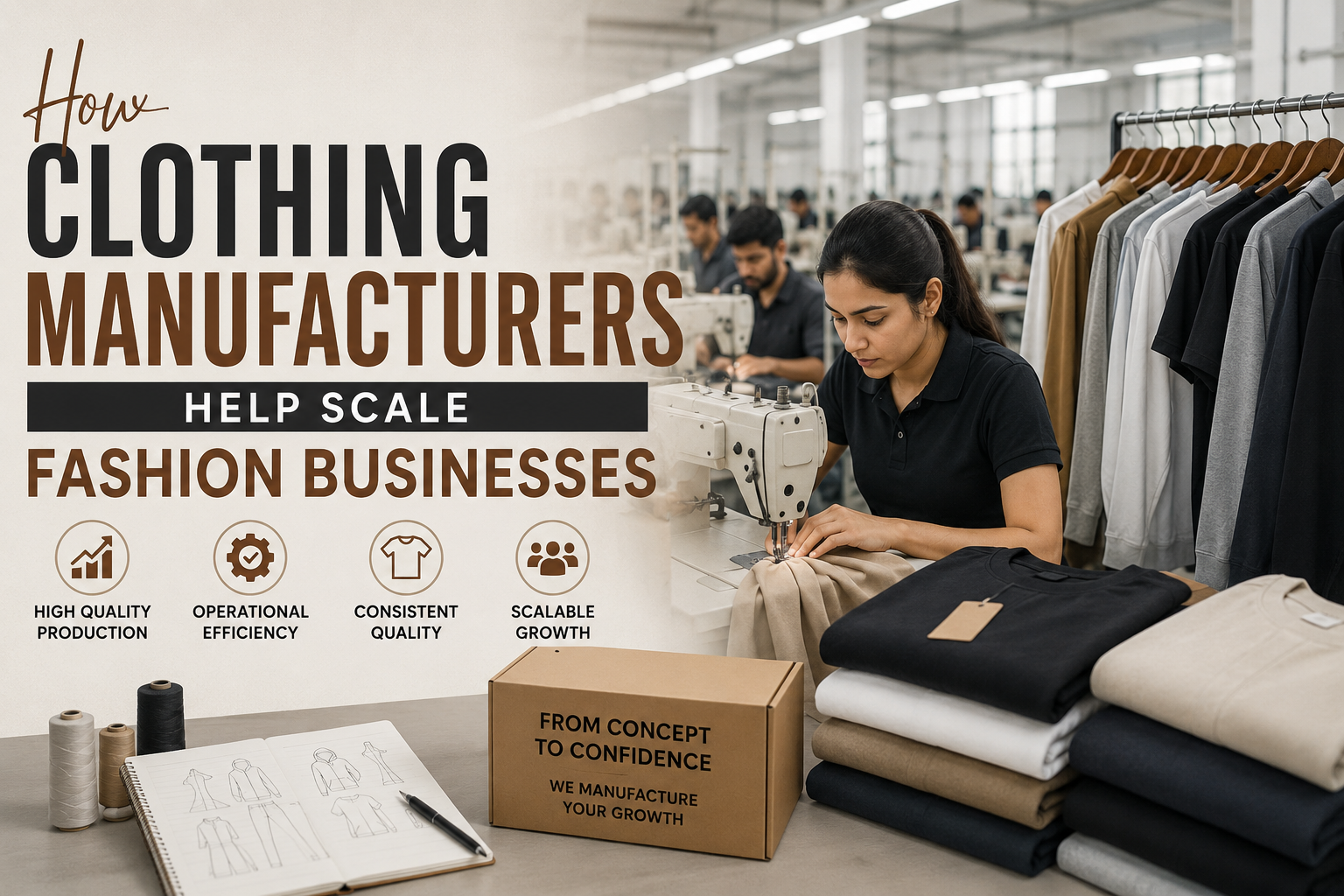
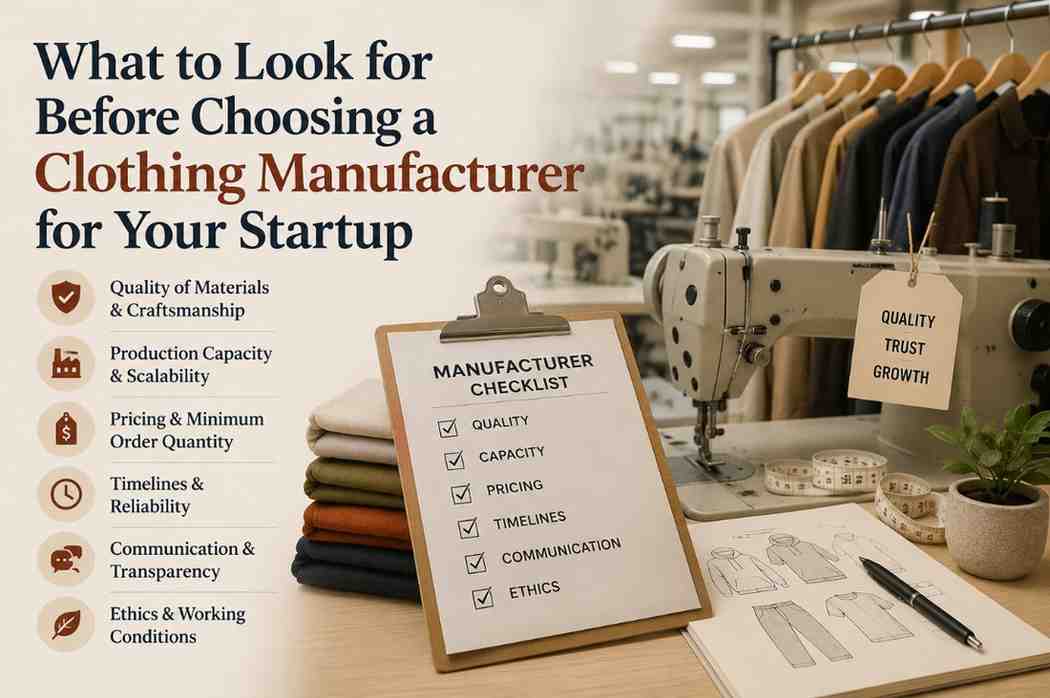
Finding the right clothing manufacturer is one of the most important decisions for any fashion brand. Whether you are launching a new collection, expanding an existing label, or looking for a dependable production partner, the manufacturer you choose can directly influence product quality, pricing, delivery timelines, customer satisfaction, and long-term growth. India has become an important apparel sourcing destination for international brands because of its textile expertise, diverse fabric capabilities, skilled workforce, and established export ecosystem. However, finding the right manufacturing partner requires more than simply searching online and comparing prices.
For brands in the USA, UK, and Australia, working with an Indian clothing manufacturer can provide access to a wide range of fabrics, garment construction techniques, customization options, and production capabilities. At Echo Earth, the focus can be placed on helping international fashion businesses develop and manufacture apparel according to their specific designs, quality requirements, quantities, and market expectations. From product development and sampling to manufacturing and export support, selecting a manufacturer that understands international buyers is essential for creating a reliable supply chain.
Why Choosing the Right Clothing Manufacturer Matters
A clothing manufacturer is more than a company that produces garments. It becomes an important part of a brand’s supply chain and can influence almost every stage of bringing a product to market. A manufacturer must understand the brand’s designs, fabric requirements, measurements, finishing expectations, packaging instructions, and production schedule.
For a new fashion business, manufacturing mistakes can be particularly expensive. Poor stitching, inconsistent sizing, incorrect fabrics, color variations, delayed shipments, or inadequate quality control can lead to customer complaints and unnecessary costs. A reliable production partner, on the other hand, can help maintain consistency from the first sample through bulk manufacturing.
International buyers should therefore evaluate manufacturers based on their overall capabilities rather than choosing solely according to the lowest quotation. Production expertise, communication, quality control, customization, minimum order quantities, sampling procedures, and export experience all deserve attention before entering into a long-term partnership.
Why Consider India for Clothing Manufacturing?
India has a long-established textile and apparel industry covering everything from fiber and yarn production to fabric processing, garment manufacturing, printing, dyeing, embroidery, and finishing. This broad ecosystem gives international fashion brands access to different manufacturing possibilities under one sourcing market.
Indian manufacturers can work with a wide variety of materials and garment categories, including cotton, linen, denim, rayon, viscose, blends, and other fabrics depending on the supplier’s capabilities. Different regions of India also have specialized textile and garment clusters, creating opportunities for brands with specific production requirements.
For overseas buyers, another advantage is the potential to develop customized products rather than purchasing only ready-made garments. A manufacturer may work from technical packs, sketches, reference samples, measurement charts, fabric specifications, and branding guidelines to create products aligned with a particular fashion label.
However, India is a large manufacturing market, and capabilities vary considerably between suppliers. This is why proper supplier evaluation remains essential.
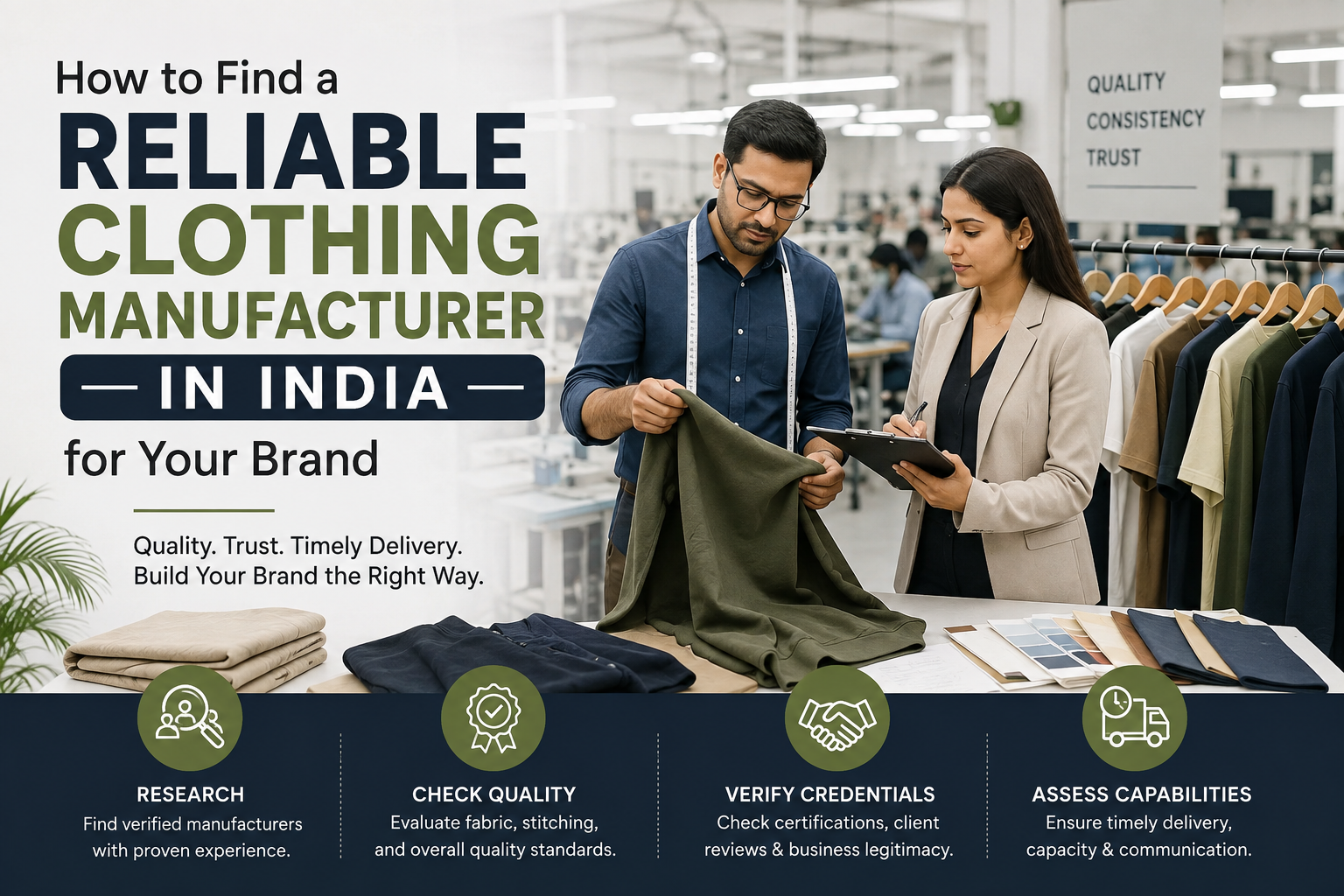
How to Find a Reliable Clothing Manufacturer in India
The first step is to define exactly what you need from a manufacturing partner. Before contacting suppliers, prepare information about your product category, estimated order quantity, target price range, preferred fabrics, sizes, colors, branding requirements, packaging, and expected delivery schedule.
For example, a brand launching a collection of organic cotton casualwear will have different requirements from a company developing premium occasionwear. Similarly, a startup with a small initial order may need a manufacturer willing to support lower MOQs, while an established retailer may require large-scale production capacity.
Once the requirements are clear, create a shortlist of manufacturers that appear capable of producing your specific products. Review their website, manufacturing information, product portfolio, certifications where relevant, export experience, and communication process.
Do not rely only on photographs. Ask detailed questions about production capabilities and request samples where appropriate. A sample provides much more useful information about stitching, measurements, fabric quality, finishing, construction, and overall workmanship than a website gallery alone.
Check the Manufacturer’s Product Expertise
Not every clothing manufacturer is experienced in every category. Some specialize in knitwear, while others focus on woven garments, activewear, children’s clothing, workwear, dresses, shirts, or premium fashion.
Before choosing a supplier, make sure their capabilities match your product requirements.
For example, if your collection includes detailed embroidery, custom printing, specialized washes, or complex garment construction, ask whether these processes are handled in-house or through approved production partners. Understanding the manufacturing workflow can help you assess both quality control and production timelines.
A manufacturer with relevant experience is more likely to understand common production challenges and recommend practical solutions during product development.
Review Sampling and Product Development
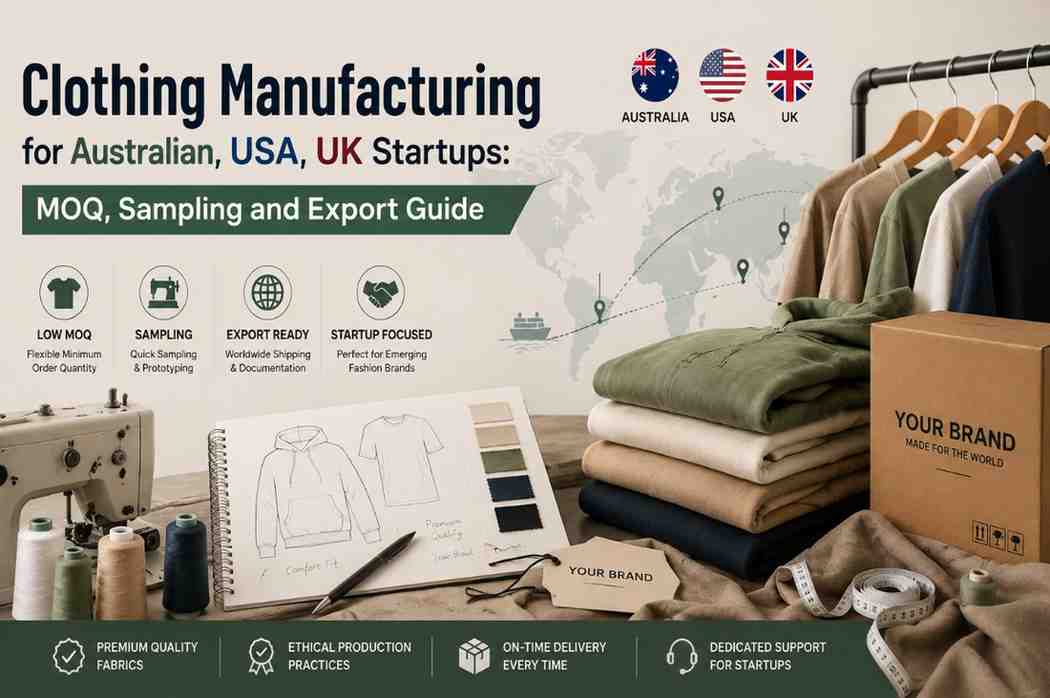
Sampling is one of the most important stages of apparel production. It allows a brand and manufacturer to confirm that the design works before bulk manufacturing begins.
A professional sampling process may involve several stages. The first sample establishes the basic interpretation of the design. Subsequent revisions can address measurements, fabric behavior, stitching, trims, fit, colors, or construction details.
International brands should not rush this stage simply to start bulk production sooner. A carefully approved sample can reduce costly mistakes later.
For Echo Earth, the product development approach can be positioned around understanding the buyer’s specifications before moving toward production. This is especially valuable for overseas brands that may not have an in-house technical team located in India.
Evaluate Fabric and Material Options
Fabric selection can significantly influence the final appearance, comfort, durability, price, and positioning of a garment.
A reliable manufacturer should be able to explain available fabric options and their practical characteristics. For example, different cotton constructions can vary in weight, texture, drape, breathability, and shrinkage. Linen, viscose, denim, and blended materials also have different manufacturing considerations.
Brands should provide clear specifications wherever possible, including fabric composition, GSM, weave or knit type, color requirements, finishing, and performance expectations.
If a brand markets specific material attributes, the manufacturer should be able to provide appropriate documentation or testing information where required. This helps ensure that marketing claims match the actual product.
For international brands, accurate material information is particularly important because labeling and product requirements can differ between markets.
Assess Manufacturing Quality Control
Quality control should not be treated as something that happens only after garments have been manufactured. Strong quality management begins during product development and continues throughout production.
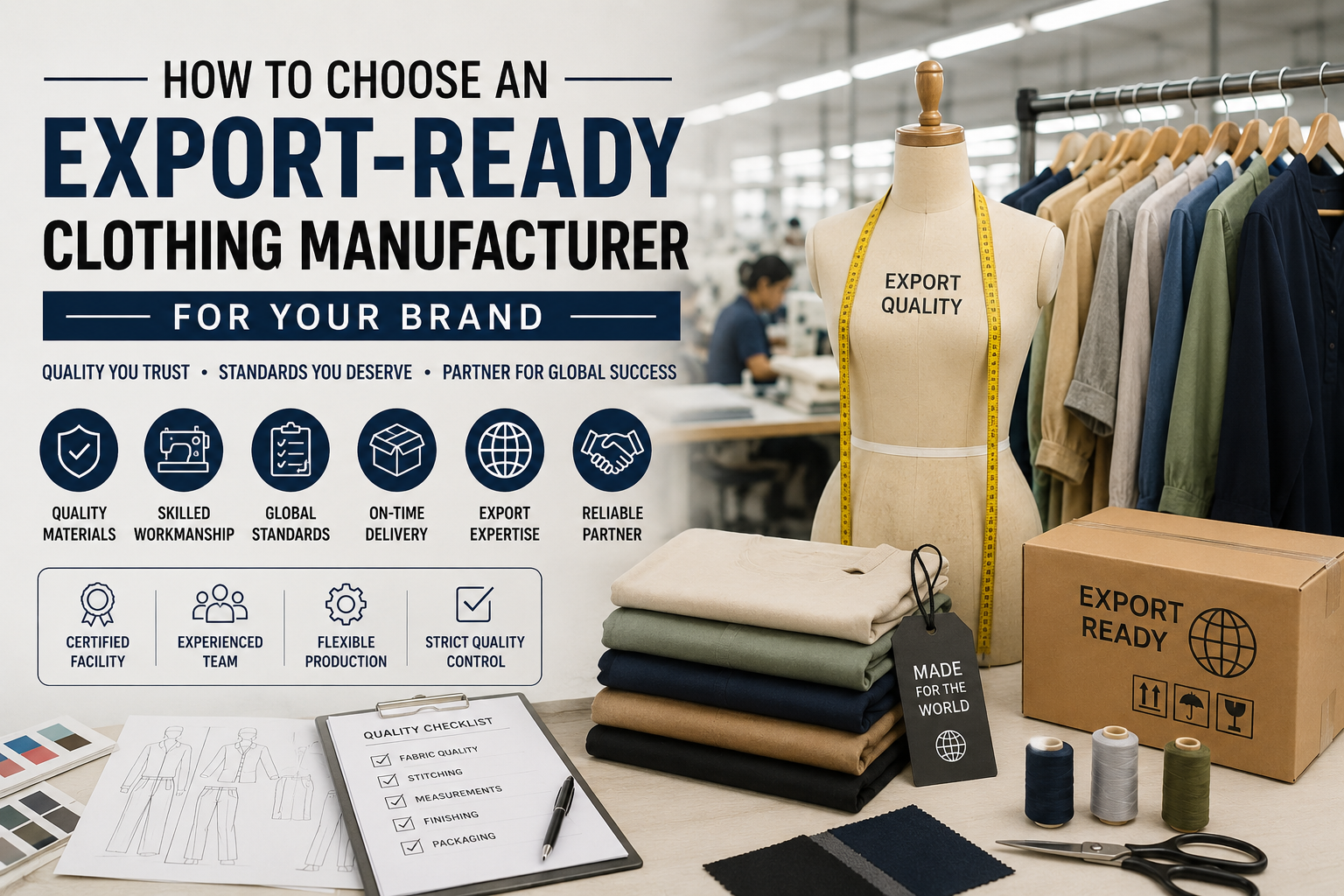
A manufacturer should have a clear process for checking materials, cutting, sewing, measurements, finishing, pressing, labeling, packaging, and final products.
For larger orders, brands may establish inspection criteria before production begins. This can include acceptable measurement tolerances, stitching standards, fabric defects, color consistency, print placement, embroidery quality, and packaging requirements.
The objective is simple: the finished garments should consistently match the approved sample and agreed specifications.
A manufacturer that welcomes clear quality standards and inspection procedures demonstrates a stronger understanding of international buyer expectations.
Understand MOQ Before Placing an Order
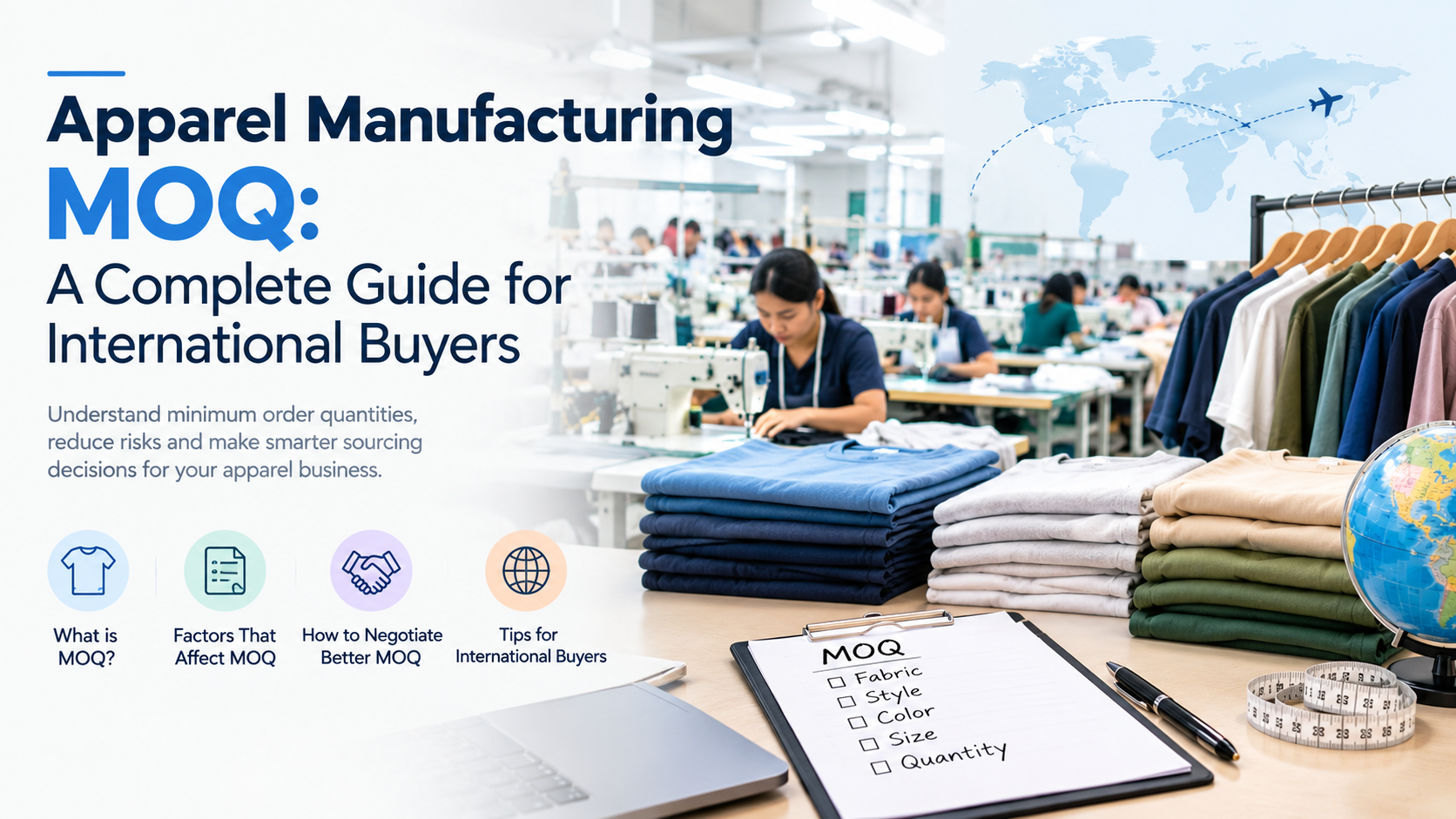
Minimum Order Quantity, commonly called MOQ, is another major consideration when choosing a manufacturer.
A small fashion startup may not want to purchase thousands of pieces of a new design before testing customer demand. An established brand may have completely different requirements.
Instead of automatically choosing the manufacturer with the lowest MOQ, consider the relationship between MOQ, production economics, fabric availability, customization, and your expected sales volume.
Ask whether the MOQ applies per style, color, size, fabric, or total order. Clarifying this before sampling and production can prevent misunderstandings later.
A flexible manufacturer can be particularly useful for growing brands because production requirements may change as the business develops.
Check Export Experience for Your Target Market
A manufacturer producing garments for the domestic market may not automatically be the best choice for an international brand.
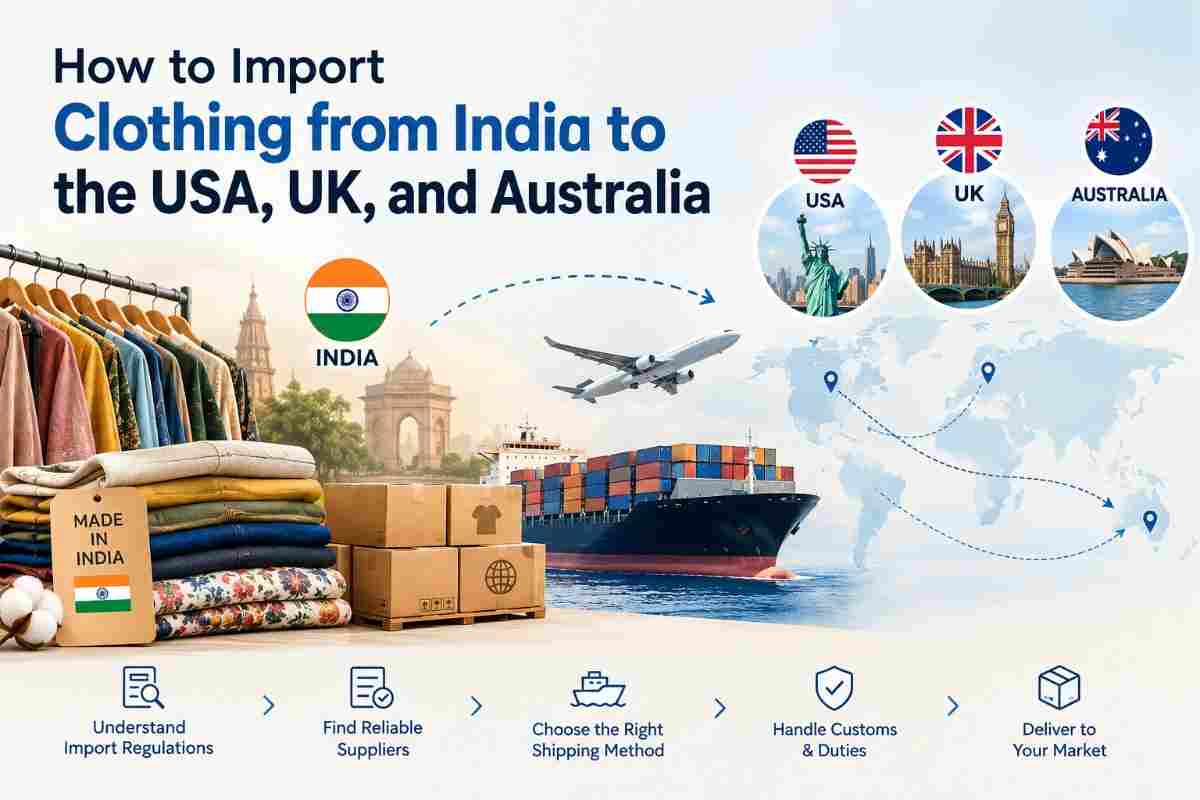
If your target customers are in the United States, look for experience with U.S. buyers and export processes. If you are targeting British fashion businesses, ask about experience with UK buyers. Australian brands may have different logistical and product expectations.
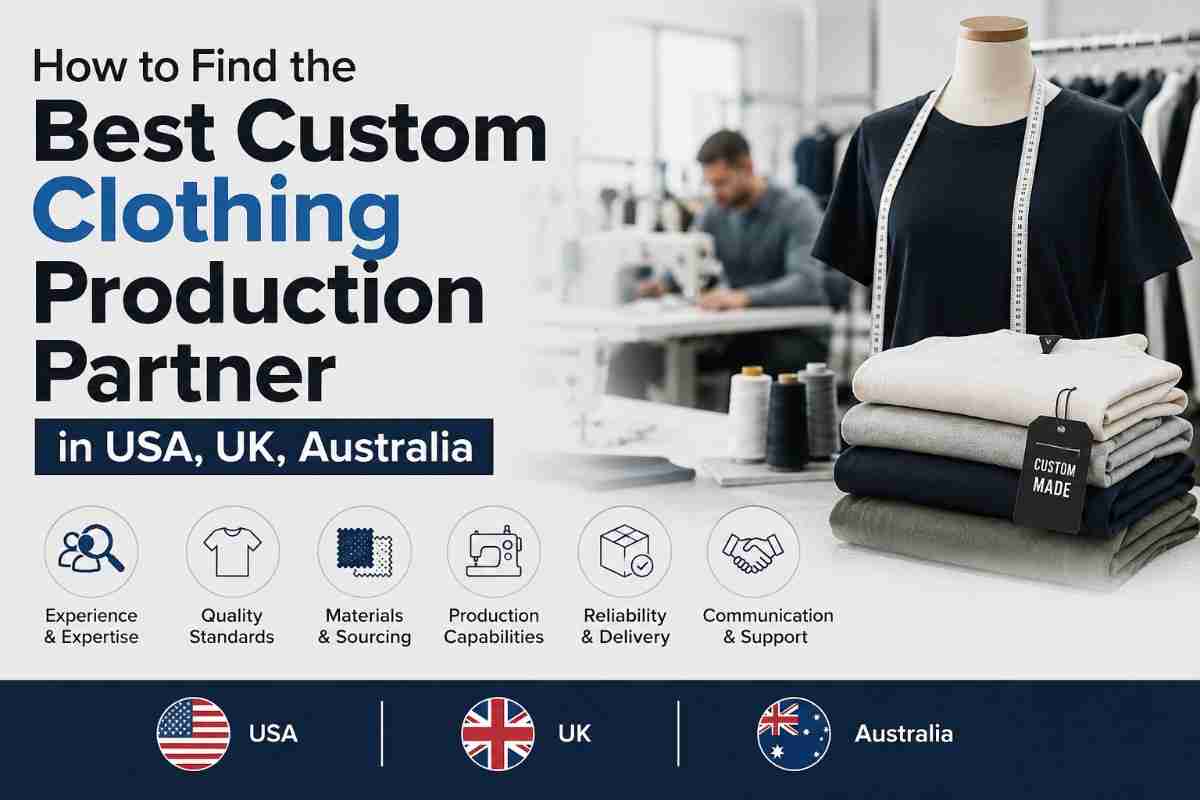
This is where an Apparel Export Manufacturer USA, Apparel Export Manufacturer UK, or Apparel Export Manufacturer Australia search can be useful as an initial starting point—but buyers should then verify the manufacturer’s actual export capabilities.
A capable export partner should understand documentation, packaging, shipping coordination, commercial invoices, packing lists, and other relevant export processes.
Choosing an Apparel Export Manufacturer USA
For a U.S. fashion brand, supplier evaluation should focus on product quality, production consistency, communication, lead times, and the manufacturer’s ability to meet the specifications agreed with the buyer.
U.S. brands may range from independent designers and startup labels to established retailers. Their manufacturing requirements can therefore vary significantly.
A good Indian manufacturing partner should be able to work from clear technical specifications and maintain communication throughout sampling and production. Brands should also discuss labeling, packaging, shipping arrangements, and product documentation before confirming an order.
Rather than searching only for an Apparel Export Manufacturer USA, buyers should identify a manufacturing partner in India with demonstrated experience serving international customers and the specific garment category they require.
Choosing an Apparel Export Manufacturer UK
UK fashion brands often require reliable product consistency, clear communication, accurate labeling, and dependable delivery planning.
When evaluating an Indian supplier, UK buyers should request detailed information about fabric composition, sizing, production timelines, packaging, and export documentation. It is also important to agree on product specifications before manufacturing begins.
For brands operating seasonal collections, production scheduling can be especially important. A manufacturer should provide realistic timelines rather than promising delivery dates without considering sampling, material procurement, production, finishing, inspection, and shipping.
An experienced Apparel Export Manufacturer UK partner can help make the sourcing process more structured, but buyers should always conduct their own supplier due diligence.
Choosing an Apparel Export Manufacturer Australia
Australian fashion brands have access to a diverse consumer market and may require products suitable for different climates, lifestyles, and fashion categories.
For this reason, fabric selection can be particularly important. Lightweight cottons, linen, breathable blends, casualwear, resortwear, activewear, and other categories may have different material and construction requirements.
Australian buyers looking for an Apparel Export Manufacturer Australia should evaluate whether the supplier has experience producing the desired product category and whether the manufacturer can maintain quality across repeat orders.
Communication around measurements, fabric specifications, packaging, and shipping should be established before production begins.
What Makes Echo Earth a Potential Manufacturing Partner?
At Echo Earth, the manufacturing proposition can be built around supporting international brands through the apparel development and production journey. Rather than treating manufacturing as a simple bulk-production transaction, the focus can be on understanding the buyer’s requirements and converting those requirements into finished garments.
This can include product development, fabric sourcing, sampling, customized manufacturing, branding, finishing, quality checks, packaging, and export coordination depending on the buyer’s project.
For overseas brands, having these stages coordinated through an experienced apparel partner can simplify communication and reduce the number of separate suppliers involved in product development.
Echo Earth’s offering can be particularly relevant for brands looking for customized apparel rather than generic ready-made products. A buyer can provide design specifications, references, measurements, fabric preferences, branding elements, and other requirements so that the manufacturing process is aligned with the intended collection.
Best Clothing Manufacturer Manufacturer Australia: What Should Buyers Consider?
The search term Best Clothing Manufacturer Manufacturer Australia may reflect buyers looking for manufacturing support for an Australian fashion brand. However, the “best” manufacturer is not necessarily the largest company or the supplier offering the lowest price.
The right manufacturer depends on the brand’s specific requirements.
A startup may prioritize low MOQ, sampling support, customization, and flexible communication. A growing fashion label may prioritize repeat production, quality consistency, and supply-chain reliability. A large retailer may require significant production capacity and detailed compliance processes.
Therefore, Australian brands should compare manufacturers based on their own product requirements rather than relying solely on generic rankings.
Best Clothing Manufacturer Manufacturer USA: How to Compare Suppliers
The same principle applies to searches such as Clothing Manufacturer Manufacturer USA. A brand should assess the manufacturer’s actual capabilities before deciding whether the supplier is suitable.
Consider product expertise, manufacturing capacity, sampling, MOQ, fabric sourcing, customization, quality control, communication, export experience, packaging, and delivery planning.
A manufacturer that provides clear answers to these questions is generally easier to work with than one that focuses exclusively on quoting a low price.
Why Communication Is Critical in International Apparel Manufacturing
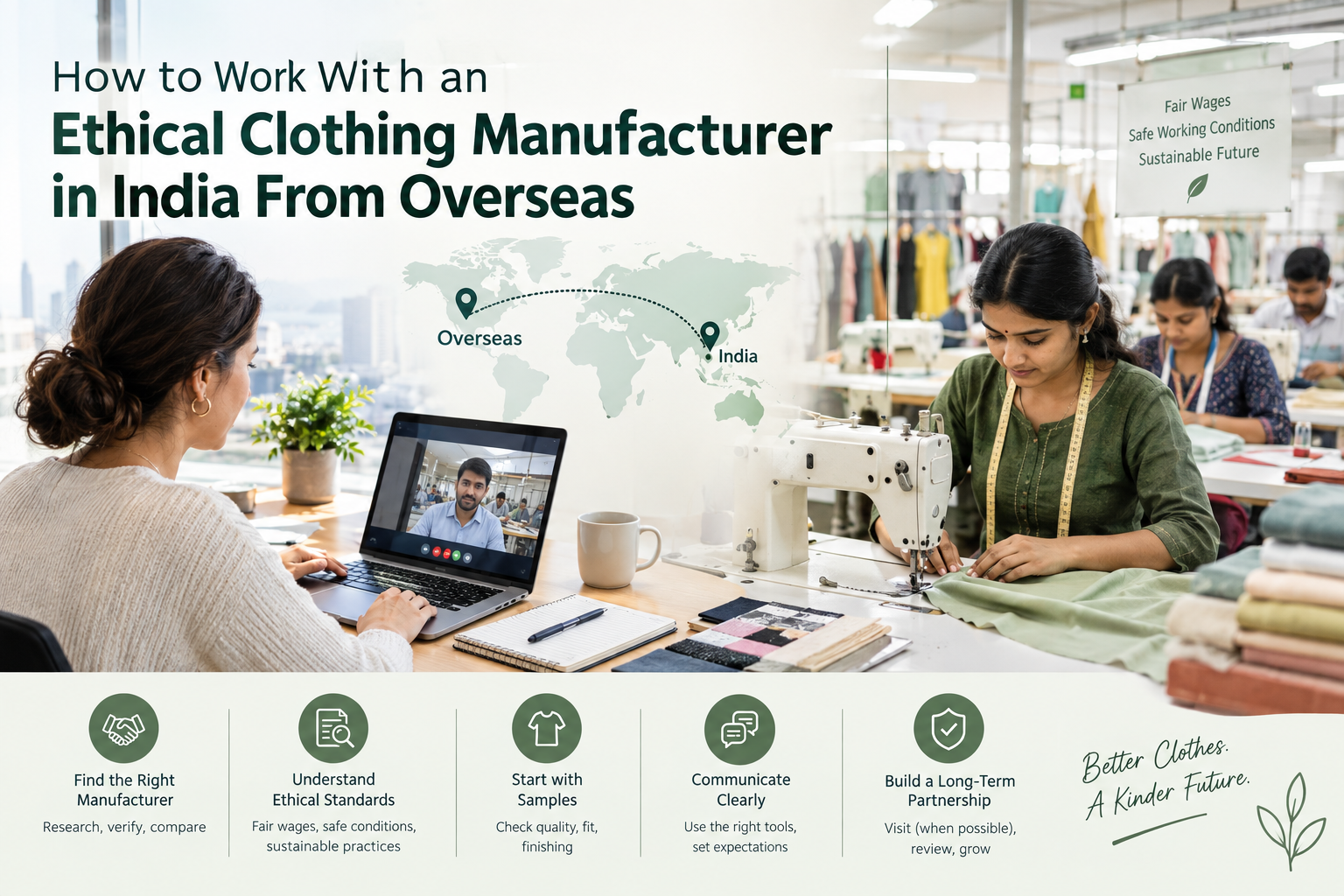
Communication becomes even more important when the buyer and manufacturer operate in different countries.
Design specifications can easily be misunderstood if instructions are incomplete. Small differences in measurements, stitching, fabric weight, colors, trims, or finishing can affect the final garment.
The solution is to establish a structured communication process.
Technical packs, measurement charts, approved samples, fabric swatches, reference images, written specifications, and production approvals can all help reduce ambiguity.
At Echo Earth, an international buyer-focused approach can help ensure that key product requirements are discussed before production moves forward.
Avoid Choosing a Manufacturer Based Only on Price
Price is naturally important, but it should not be the only deciding factor.
A low manufacturing quote may exclude certain costs or reflect differences in fabric quality, finishing, packaging, quality control, or production standards.
Instead of asking only, “Who is cheapest?” buyers should ask, “Which supplier offers the best overall value for my product requirements?”
The lowest-cost garment is not necessarily the most profitable garment if it results in returns, quality complaints, missed delivery windows, or inconsistent repeat orders.
Long-term apparel sourcing works best when quality, cost, communication, and reliability are balanced.
Building a Long-Term Manufacturing Relationship
Once a manufacturer has successfully completed sampling and initial production, the relationship can become more valuable over time.
As the supplier learns a brand’s preferred measurements, fabrics, construction methods, packaging requirements, and quality standards, future orders can become easier to manage.
Long-term relationships can also support better production planning. A brand can share seasonal forecasts or upcoming collections, while the manufacturer can prepare for fabric sourcing and production capacity.
This is particularly useful for growing fashion businesses that want to establish a dependable supply chain instead of repeatedly searching for new suppliers.
Conclusion
Finding a reliable clothing manufacturer in India requires research, communication, product testing, and proper due diligence. International brands should evaluate suppliers based on manufacturing expertise, fabric capabilities, sampling, MOQ, quality control, customization, communication, export experience, and delivery planning rather than choosing solely according to price.
For fashion businesses in the USA, UK, and Australia, India can offer access to a broad apparel manufacturing ecosystem and experienced textile supply chains. The right manufacturing partner can help transform designs into finished products while supporting consistent quality and scalable production.
For brands exploring international apparel sourcing, Echo Earth can position itself as a manufacturing partner focused on customized apparel development, production, and export support. Whether the requirement is a new fashion collection, private-label apparel, customized garments, or repeat production, the foundation should always be clear specifications, approved samples, transparent communication, and dependable quality.
Ultimately, the best clothing manufacturer is the one that understands your brand, meets your product requirements, communicates clearly, maintains consistent quality, and can grow with your business. By taking the time to evaluate these factors before placing an order, fashion brands can build a stronger supply chain and create better products for customers in the USA, UK, Australia, and other international markets.
FAQs
1. How do I find a reliable clothing manufacturer in India?
Start by defining your product requirements, then shortlist manufacturers with relevant garment expertise and export experience. Review their manufacturing capabilities, request samples, discuss MOQ and production timelines, and establish clear quality specifications before placing a bulk order.
2. Why should international brands consider Indian clothing manufacturers?
India has an established textile and apparel ecosystem with capabilities across fabrics, garment manufacturing, embroidery, printing, dyeing, finishing, and customization. This makes India a potential sourcing destination for brands looking for customized apparel production.
3. What should I ask an apparel export manufacturer before placing an order?
Ask about MOQ, sampling, fabric sourcing, production capacity, quality control, customization, lead times, packaging, export documentation, shipping arrangements, and previous experience with international buyers. Written specifications should be agreed upon before bulk production.
4. Can Echo Earth manufacture private-label clothing?
Echo Earth can be positioned to support private-label and customized apparel requirements depending on the product, design, quantity, materials, and production specifications. International brands can discuss their specific requirements to determine the appropriate manufacturing process.
5. How important is sampling before bulk clothing production?
Sampling is extremely important because it allows the buyer to review the garment’s construction, fit, fabric, measurements, finishing, and overall appearance before committing to bulk production. Approving a detailed pre-production sample can help reduce manufacturing errors.
6. What is MOQ in apparel manufacturing?
MOQ means Minimum Order Quantity. It refers to the minimum quantity a manufacturer requires for a particular production order. MOQ can vary depending on the manufacturer, product, fabric, customization, colors, and production requirements.
7. Can Indian apparel manufacturers export clothing to the USA, UK and Australia?
Yes, Indian apparel manufacturers and exporters serve international markets, but individual suppliers have different export capabilities. Buyers should confirm the manufacturer’s experience, documentation process, shipping arrangements, and ability to meet the requirements of their target market before placing an order.