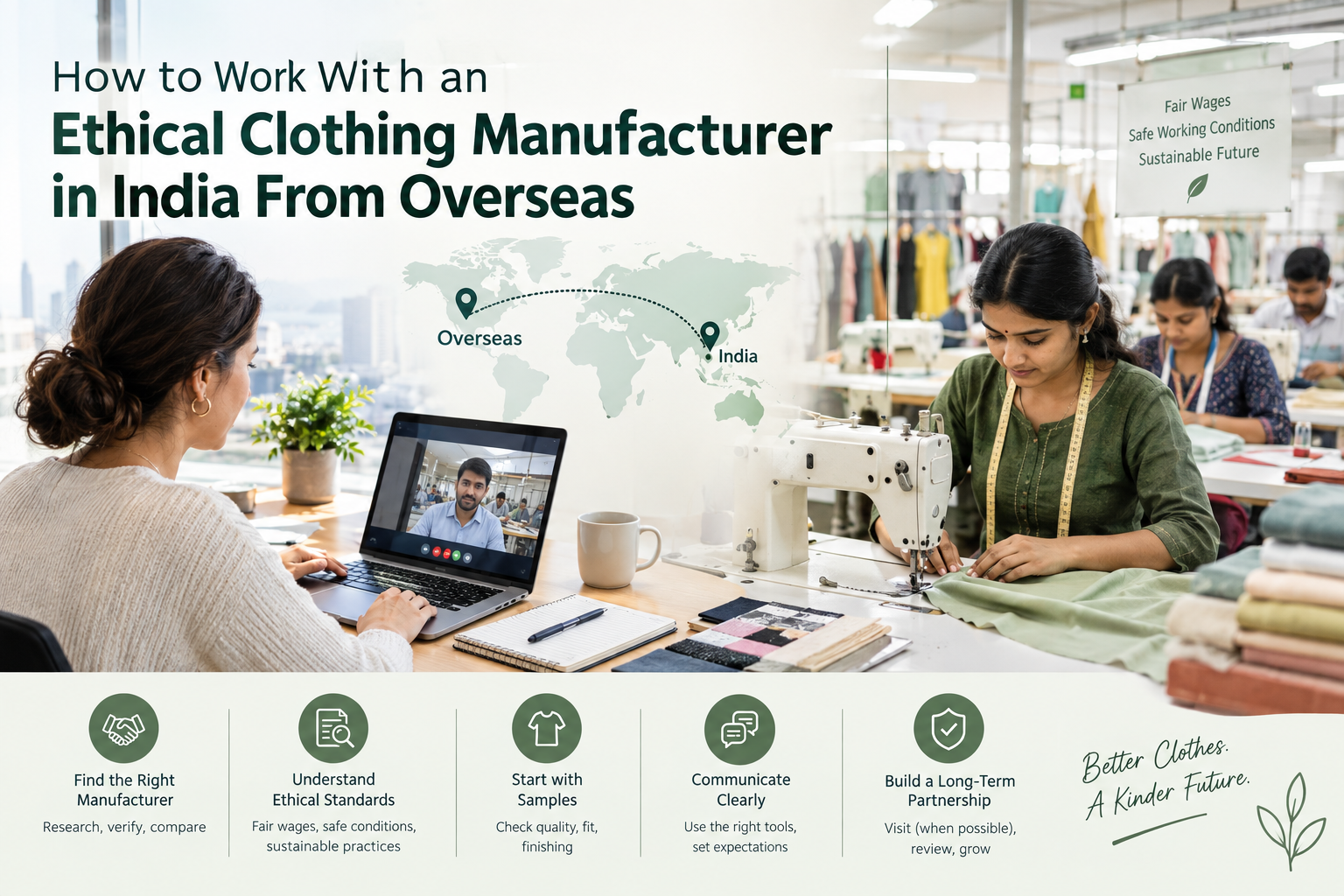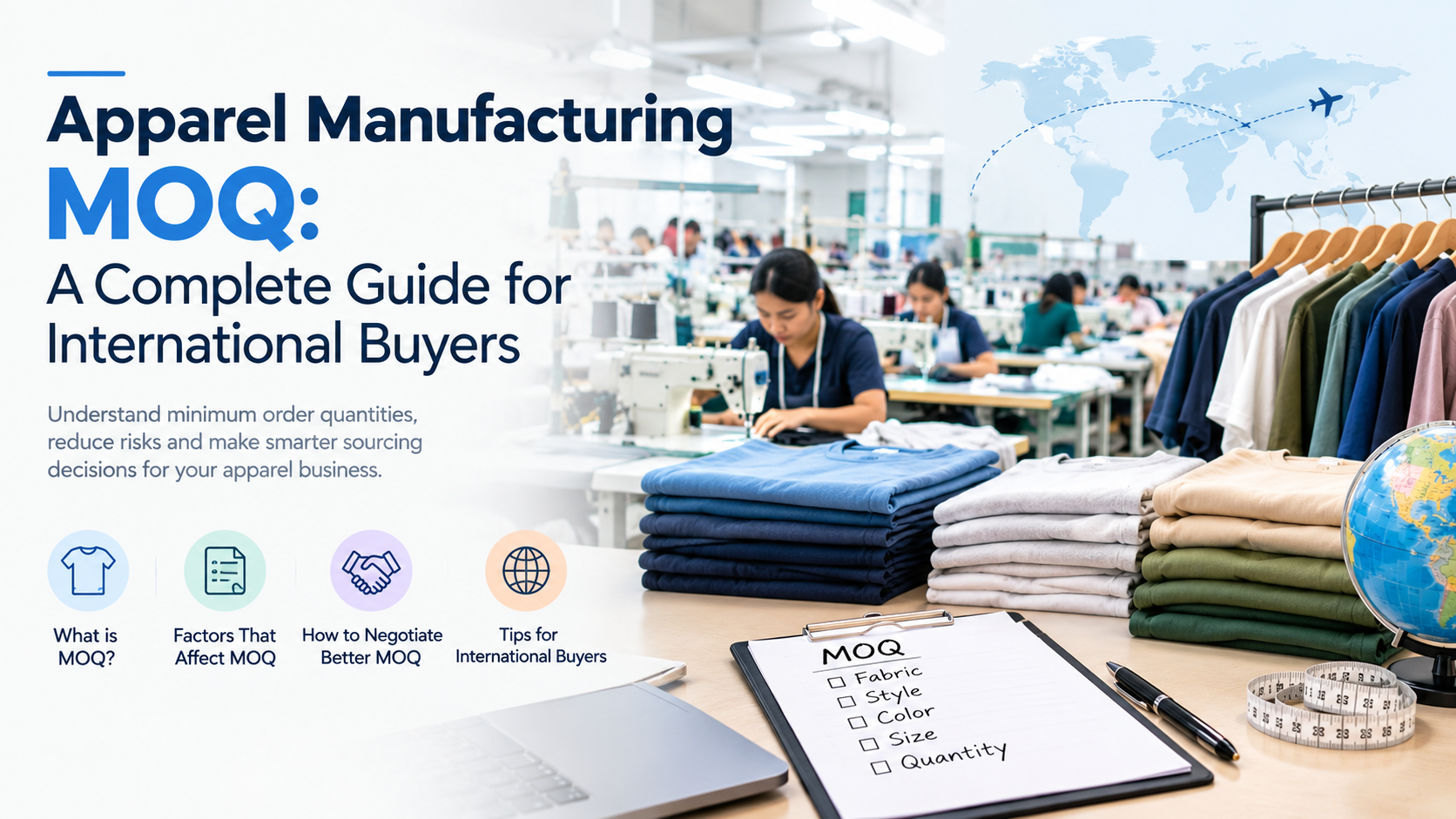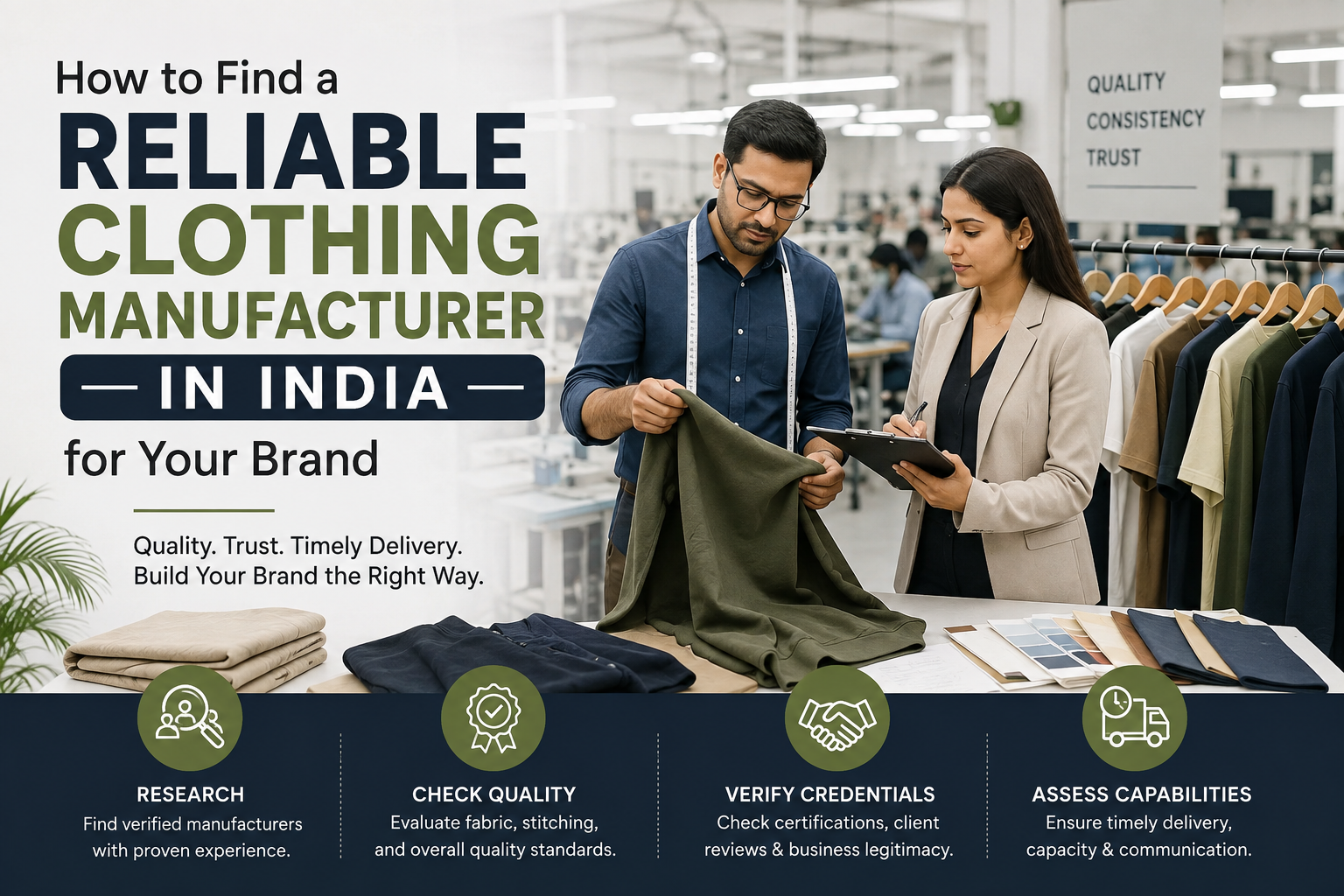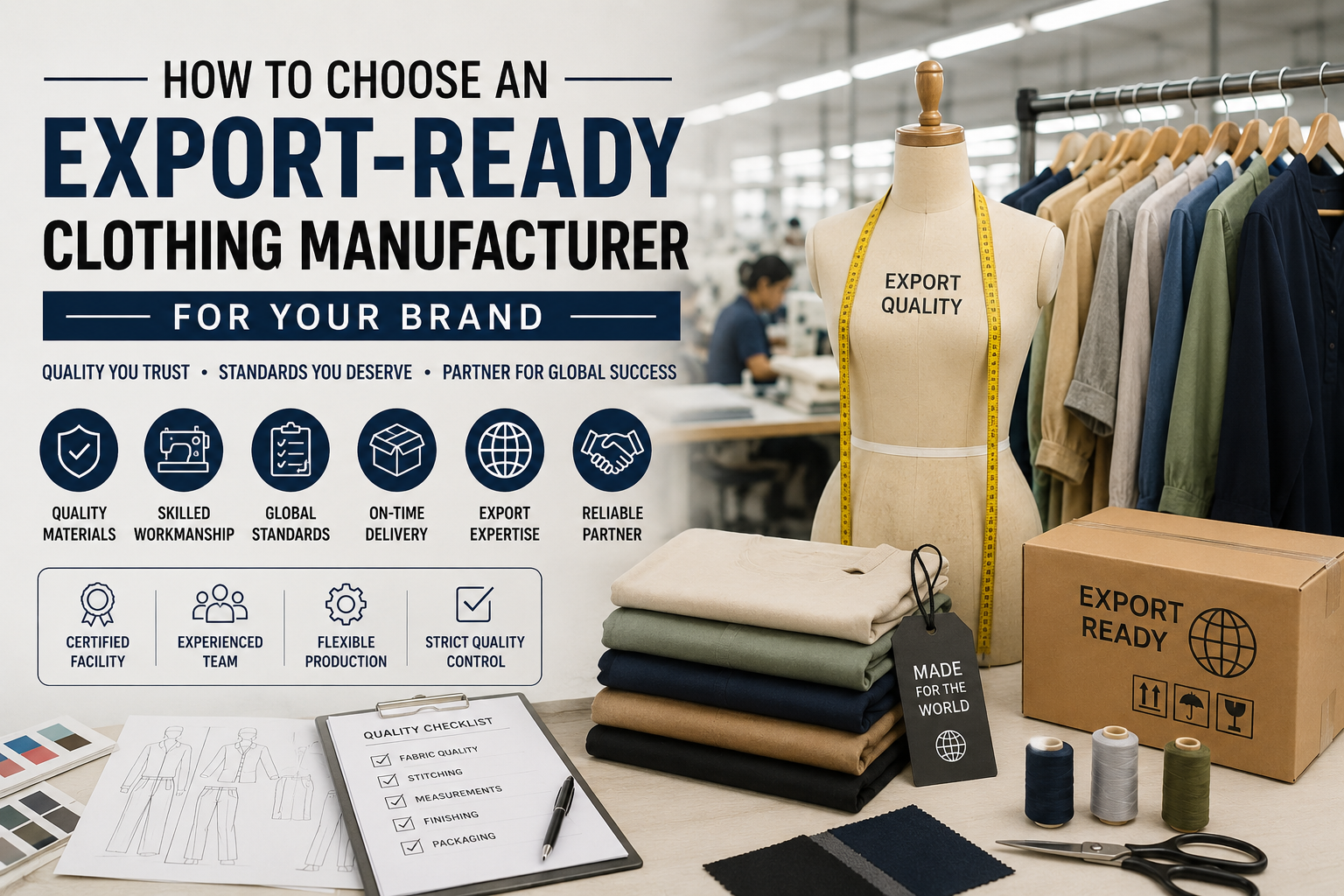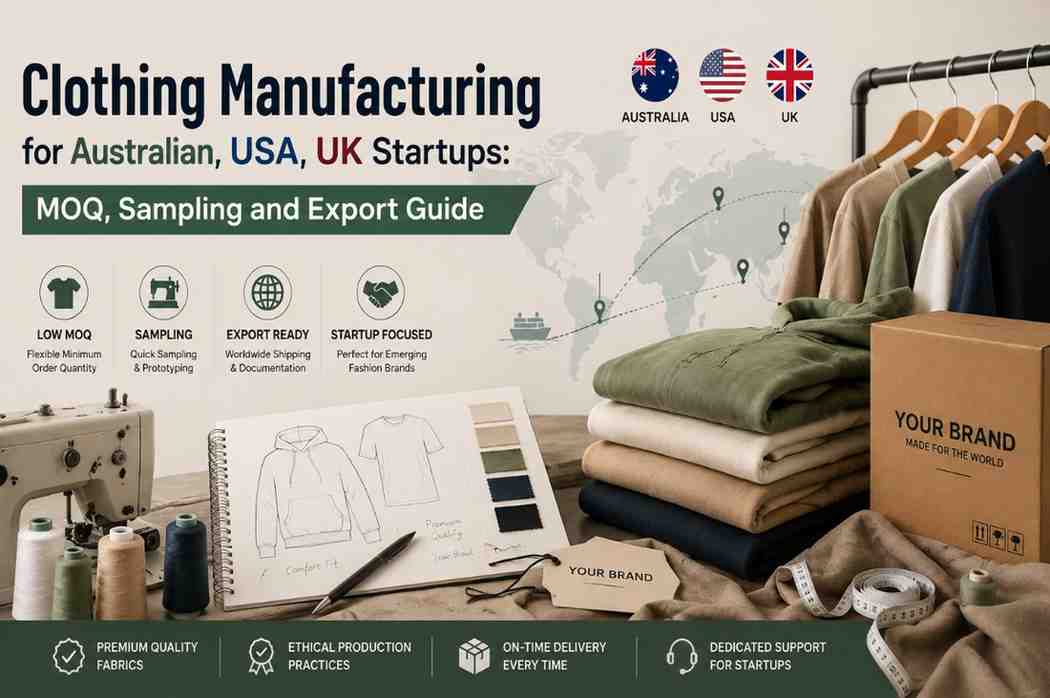

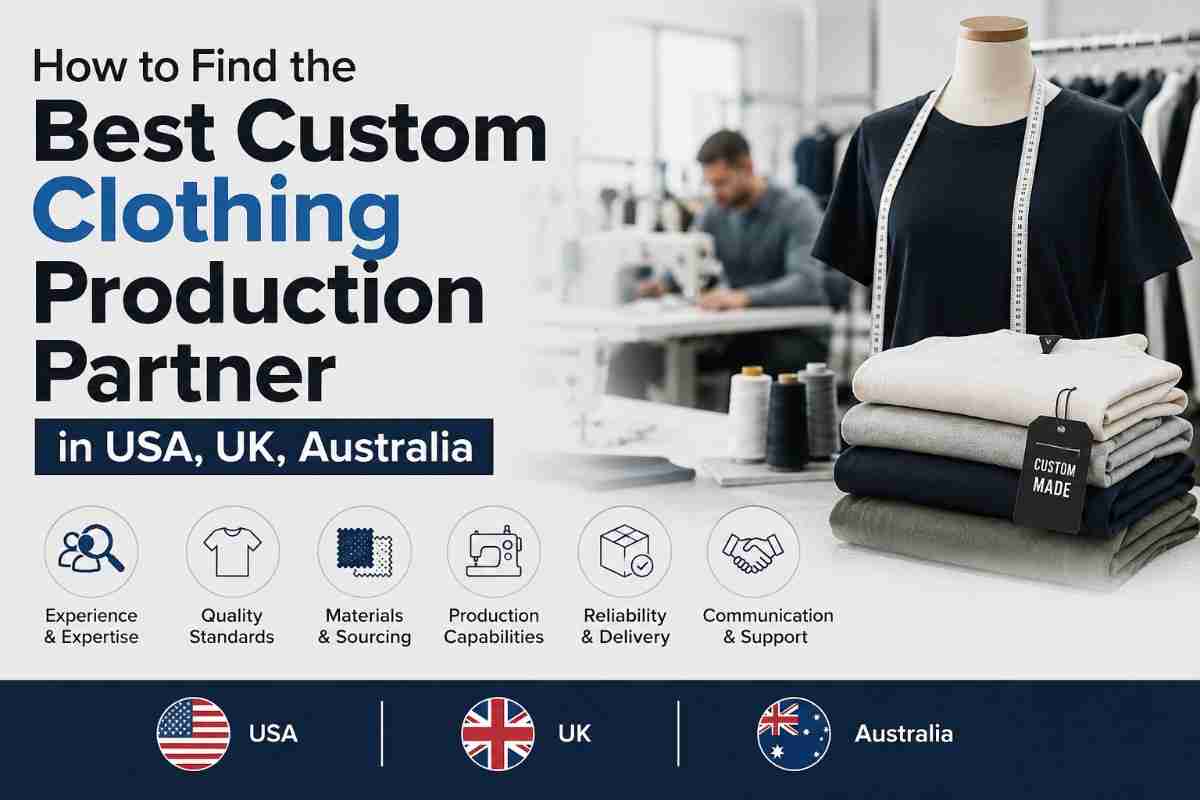
Finding the right clothing manufacturing partner is one of the most important decisions for a fashion brand. Whether you are launching a new collection, expanding an established label, or developing custom apparel for a specific market, the manufacturer you choose can directly influence product quality, pricing, production timelines, minimum order quantities, and customer satisfaction. Brands searching for a Custom Clothing Production Partner in USA, Custom Clothing Production Partner in UK, or Custom Clothing Production Partner in Australia should therefore evaluate more than just the quoted manufacturing price. A reliable production partner should understand your product requirements, communicate clearly, support sampling and customization, maintain consistent quality, and deliver garments according to agreed specifications.
For brands that want flexibility without committing to extremely large production runs, finding a Low MOQ Clothing Manufacturer in USA, Low MOQ Clothing Manufacturer in UK, or Low MOQ Clothing Manufacturer in Australia can be particularly valuable. Low minimum order quantities allow emerging fashion businesses to test new designs, launch limited collections, manage inventory more carefully, and understand customer demand before increasing production. At Echo Earth, we support brands with custom apparel manufacturing and private label production, helping businesses develop clothing collections around their designs, materials, specifications, branding, and target markets.
What Is a Custom Clothing Production Partner?
A custom clothing production partner is a manufacturer or production company that works with a brand to turn its clothing concepts into finished garments. Unlike purchasing ready-made wholesale clothing, custom production allows businesses to have greater control over fabrics, colors, measurements, patterns, trims, labels, printing, embroidery, finishing, packaging, and other product details.
A good production partner should be capable of supporting different stages of the apparel manufacturing process, from initial product development and fabric selection to sampling, production, quality checking, and shipment. For fashion brands in the USA, UK, and Australia, this can make it easier to develop collections that are aligned with their specific customers and brand identity.
Why Choosing the Right Clothing Production Partner Matters
The right manufacturer can become a long-term extension of your fashion business rather than simply a supplier. Consistent manufacturing helps brands maintain the same quality across different production batches, while effective communication reduces misunderstandings about measurements, materials, colors, construction, and finishing.
The right partner can also help brands manage production more efficiently. This becomes particularly important for startups and growing businesses that may not have an internal production team. A capable manufacturer can provide guidance on fabric options, sampling, production feasibility, and garment construction while following the brand’s specifications.
For brands selling internationally, production flexibility is equally important. A manufacturer that understands export-oriented apparel production can help businesses develop products for different customer markets without compromising their original design concept.
1. Understand Your Clothing Production Requirements
Before searching for a Custom Clothing Production Partner in USA, Custom Clothing Production Partner in UK, or Custom Clothing Production Partner in Australia, clearly define what you want to manufacture. The more information you can provide, the easier it becomes for a manufacturer to understand your requirements and provide an accurate quotation.
Start with the product category. Your requirements may include T-shirts, shirts, dresses, hoodies, sweatshirts, jackets, activewear, loungewear, sportswear, leggings, trousers, tops, uniforms, or other apparel. You should also consider fabric composition, GSM, color, size range, fit, stitching details, printing or embroidery, labels, packaging, and expected order quantities.
A detailed tech pack is particularly useful because it can communicate measurements, construction details, artwork, fabric specifications, and other technical requirements. If you do not have a complete tech pack, discuss your requirements with the manufacturer to understand what information is necessary before sampling begins.
2. Look for Experience in Your Product Category
Not every clothing manufacturer specializes in every type of apparel. A company experienced in basic T-shirts may not necessarily have the same expertise in technical activewear, structured jackets, premium dresses, or specialized sportswear.
When evaluating a potential partner, look at its product experience and manufacturing capabilities. Ask whether it has experience producing the type of clothing you want to launch and whether it can handle your preferred fabrics and construction methods.
For example, if your brand sells activewear, the manufacturer should understand stretch fabrics, performance construction, appropriate seams, elastic requirements, fit testing, and finishing. If you are developing premium casualwear, fabric quality, pattern accuracy, stitching, and finishing may receive greater attention.
At Echo Earth, brands can explore custom apparel and private label production across different clothing categories, allowing product development to be tailored around the requirements of the individual brand.
3. Compare Low MOQ Options
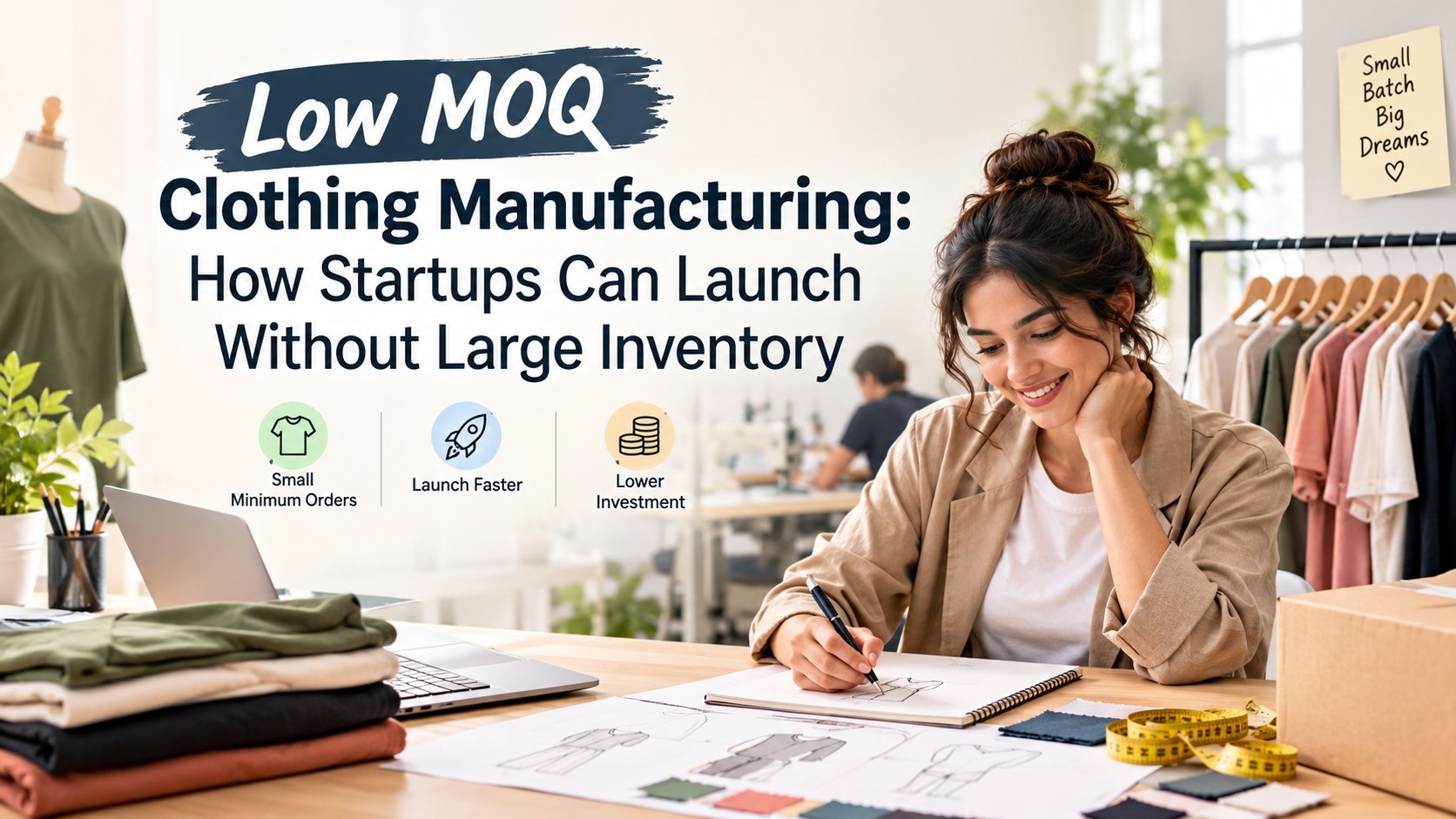
Minimum order quantity is one of the most important factors for startups and smaller fashion brands. A manufacturer with a very high MOQ may require a business to invest heavily in inventory before knowing whether a product will sell.
This is why many emerging brands specifically search for a Low MOQ Clothing Manufacturer in USA, Low MOQ Clothing Manufacturer in UK, or Low MOQ Clothing Manufacturer in Australia. Low MOQ production can make it easier to test designs, introduce limited-edition products, experiment with new colors, and gradually increase quantities as demand grows.
However, low MOQ should not automatically mean choosing the cheapest manufacturer. Ask what is included in the MOQ, whether different colors or sizes have separate minimums, and whether sampling and development costs are separate. Understanding the complete pricing structure is more useful than comparing one headline MOQ number.
4. Evaluate Sampling and Product Development
Sampling is one of the most important stages in custom clothing production. A sample gives the brand an opportunity to assess the actual garment before moving into bulk manufacturing.
A professional sampling process should allow the brand to review factors such as fabric feel, color, measurements, fit, stitching, artwork placement, labels, trims, and overall construction. Depending on the product, multiple sample revisions may be required before the final production version is approved.
Brands should ask potential manufacturers how they manage sample revisions and whether production begins only after the final specifications are approved. A structured approval process can help minimize costly mistakes during bulk production.
5. Check Fabric and Material Capabilities
Fabric has a major influence on the appearance, comfort, durability, and performance of a garment. Therefore, choosing a clothing production partner should also involve evaluating its material capabilities.
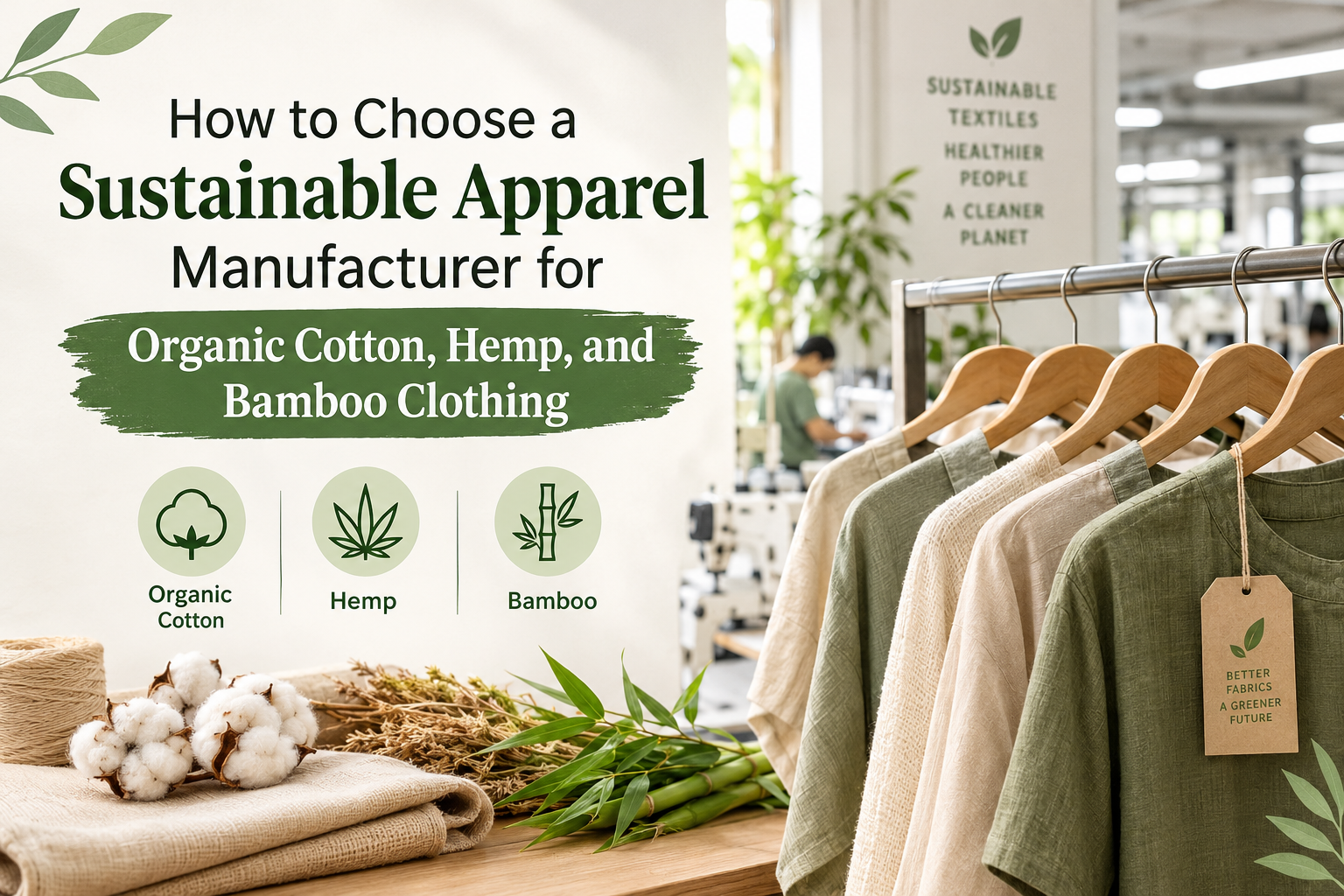
Brands should communicate their preferred fabric composition and performance requirements clearly. Depending on the collection, this could include cotton, organic cotton, linen, hemp blends, bamboo-based fabrics, recycled fibers, polyester blends, fleece, jersey, rib fabrics, or performance textiles.
For example, an activewear brand may need stretch, moisture management, recovery, and durability, while a casualwear brand may prioritize softness, breathability, drape, and comfort.
Echo Earth can support brands developing custom clothing collections with material and product requirements tailored to their designs and market positioning.
6. Review Quality Control Procedures
Quality control should never be treated as an optional step. Even a well-designed garment can create customer complaints if production is inconsistent.
Ask a potential manufacturer how quality is checked during sampling and bulk production. Important checks can include measurements, stitching, seams, fabric defects, color consistency, print placement, embroidery quality, labels, trims, and overall garment construction.
A reliable production partner should have a process for identifying defects before finished garments reach the customer. For international brands, consistent quality control is particularly important because returning or replacing defective products can become expensive and time-consuming.
7. Assess Communication and Transparency
Communication is one of the most overlooked factors when choosing a manufacturing partner. A manufacturer may have excellent machinery and competitive pricing, but poor communication can create serious production problems.
Your production partner should be able to communicate clearly about sampling, material availability, pricing, MOQs, production schedules, revisions, quality issues, and shipping arrangements. They should also ask questions when your specifications are unclear rather than making assumptions.
For brands in the USA, UK, and Australia working with international manufacturing partners, communication becomes even more important because product development may involve multiple rounds of feedback. Clear documentation, approved samples, measurements, and written specifications can reduce confusion throughout the production process.
8. Consider Private Label Manufacturing
Private label production is a practical option for businesses that want to sell clothing under their own brand identity. Instead of marketing garments under the manufacturer’s name, the finished products are developed and branded for the fashion business.
A Private Label Clothing USA strategy can help American brands build collections around their own branding, while businesses targeting Britain can explore Private Label Clothing UK solutions and Australian brands can consider Private Label Clothing Australia production.
Private label services can include custom garments, branded labels, hangtags, packaging, customized colors, prints, embroidery, and other brand-specific details. The exact services vary by manufacturer, so businesses should confirm what is available before placing an order.
9. Compare Pricing Beyond the Garment Cost
Price is important, but the lowest unit cost does not necessarily represent the best manufacturing deal. Brands should calculate the complete production cost, including sampling, fabric, trims, printing, embroidery, labels, packaging, quality control, shipping, and other applicable expenses.
A manufacturer offering a slightly higher unit price may provide better quality, communication, consistency, and production support, resulting in lower problems over the long term.
When comparing manufacturers, request a detailed quotation based on the same specifications. Comparing different fabric compositions, quantities, designs, or finishing requirements can produce misleading price differences.
10. Check Production Capacity and Scalability
Your initial production requirements may be small, but your brand could grow significantly over time. Choosing a manufacturing partner that can scale with your business can therefore be beneficial.
A Low MOQ Clothing Manufacturer in USA, UK, or Australia can help a startup begin with manageable quantities, but the manufacturer should ideally also have the ability to support larger orders when demand increases.
Ask about production capacity, lead times, seasonal demand, and the process for increasing order quantities. A scalable production relationship can help a fashion brand move from product testing to larger commercial collections without constantly changing suppliers.
Custom Clothing Production for USA Brands
Brands targeting American customers often need clothing that reflects their own fit preferences, sizing requirements, branding, and market positioning. A Custom Clothing Production Partner in USA can help brands develop garments around these requirements.
For businesses manufacturing internationally, it is important to work with a supplier that understands the brand’s specifications and can maintain consistency across production batches. Custom product development can include fabric selection, pattern development, sample approval, branding, printing, embroidery, and packaging.
Brands should also consider whether their manufacturing partner can support future collection expansion rather than only producing a single product.
Custom Clothing Production for UK Brands
UK fashion brands often operate across different segments, from independent labels and streetwear brands to premium clothing and activewear companies. A Custom Clothing Production Partner in UK should therefore be evaluated based on product specialization, quality standards, customization capabilities, communication, and production flexibility.
For brands seeking Private Label Clothing UK, it is useful to identify a manufacturing partner that understands the importance of consistent branding across labels, packaging, garment construction, and product presentation.
Smaller brands can also benefit from discussing low MOQ production, allowing them to launch limited collections before committing to larger inventory volumes.
Custom Clothing Production for Australian Brands
Australian clothing brands can have diverse product requirements, particularly across activewear, casualwear, resortwear, lifestyle clothing, and everyday essentials. A Custom Clothing Production Partner in Australia should be able to work according to the brand’s specific fabric, fit, design, and branding requirements.
For smaller labels, a Low MOQ Clothing Manufacturer in Australia can make it easier to test new designs without overcommitting to large inventory quantities. Private labeling can also help Australian brands create a distinctive identity through custom labels, packaging, colors, and garment details.
Why Echo Earth Can Be a Production Partner for Growing Brands
Echo Earth works with brands looking for custom apparel manufacturing and private label clothing production. Instead of relying on one standard garment model, brands can develop products around their own specifications, designs, fabrics, branding, and target customer.
Our apparel production approach can support businesses developing products such as activewear, casualwear, T-shirts, tops, hoodies, dresses, loungewear, and other custom clothing categories. For brands entering a new market, testing a collection, or expanding an existing product range, customized manufacturing can provide greater control over the final product.
The objective should not simply be to find a supplier that can manufacture clothing. The stronger goal is to build a production relationship that supports product quality, customization, communication, consistency, and long-term brand growth.
Questions to Ask Before Choosing a Clothing Manufacturer
Before confirming a manufacturing partner, brands should ask about MOQ, sampling, fabric sourcing, customization, private labeling, production timelines, quality control, packaging, and shipping. It is also important to confirm whether the manufacturer has experience with your specific garment category.
Ask for product samples where possible and review the actual construction rather than relying only on photographs. Check measurements, fabric, stitching, finishing, labels, and overall quality. If the manufacturer communicates clearly and provides straightforward answers, it can be a positive indication of how the production relationship may work.
Final Thoughts
Finding the best Custom Clothing Production Partner in USA, Custom Clothing Production Partner in UK, or Custom Clothing Production Partner in Australia requires more research than simply comparing manufacturing prices. Brands should consider product expertise, customization, sampling, fabric capabilities, MOQ, quality control, communication, private labeling, production capacity, and scalability.
For emerging brands, working with a Low MOQ Clothing Manufacturer in USA, UK, or Australia can provide greater flexibility while products are being tested. For established businesses, a dependable production partner can support larger collections, private label development, and long-term product expansion.
Whether your business needs Private Label Clothing USA, Private Label Clothing UK, or Private Label Clothing Australia, the ideal manufacturing relationship should be based on transparent communication, consistent quality, reliable production, and a clear understanding of your brand’s requirements. Echo Earth helps brands move from clothing concepts to customized finished products by combining apparel manufacturing capabilities with product-focused development and private label support.
FAQs
1. What should I look for in a custom clothing production partner?
Look for experience with your product category, reliable quality control, flexible MOQs, sampling support, fabric capabilities, customization options, clear communication, private labeling, and dependable production timelines. A good partner should understand your specifications and be able to maintain product consistency as your brand grows and your production requirements increase.
2. Is a low MOQ clothing manufacturer suitable for startups?
Yes. A Low MOQ Clothing Manufacturer can be particularly useful for startups because it allows brands to test designs and customer demand without purchasing excessive inventory. However, businesses should compare quality, sampling, pricing, customization, and production capabilities alongside MOQ rather than selecting a supplier based only on the smallest minimum order.
3. Can Echo Earth manufacture private label clothing?
Yes, Echo Earth supports brands with custom apparel and private label clothing production. Depending on the product requirements, private label development can include customized garments, branding, labels, packaging, fabrics, colors, prints, embroidery, and other product details. Brands can develop clothing according to their own specifications and market positioning.
4. How does custom clothing manufacturing work?
Custom clothing production generally starts with the product concept and specifications, followed by fabric selection, pattern development, sampling, revisions, final approval, bulk manufacturing, quality inspection, and finishing or packaging. The exact process can vary depending on the garment, customization requirements, order quantity, and manufacturer’s capabilities.
5. Can small fashion brands work with private label manufacturers?
Yes. Small and emerging fashion brands can use private label manufacturing to develop products under their own brand identity without establishing an entire manufacturing facility. Working with a suitable low MOQ or flexible production partner can make it easier to test collections, build a recognizable product range, and increase order volumes as the business develops.
6. What products can be developed through custom clothing manufacturing?
Custom clothing manufacturing can cover a broad range of apparel, including T-shirts, shirts, dresses, hoodies, sweatshirts, activewear, sportswear, leggings, trousers, loungewear, jackets, tops, and lifestyle clothing. Product availability depends on the manufacturer’s capabilities, but custom production generally allows brands to control fabric, fit, colors, construction, and branding.
7. How can I choose between manufacturers in the USA, UK, and Australia?
Compare manufacturers according to product expertise, MOQ, quality, customization, sampling, pricing, lead times, communication, and scalability. The best option depends on your business model and target market. If you plan to sell internationally, consider a production partner that has experience supporting export-oriented brands and maintaining consistent specifications.