
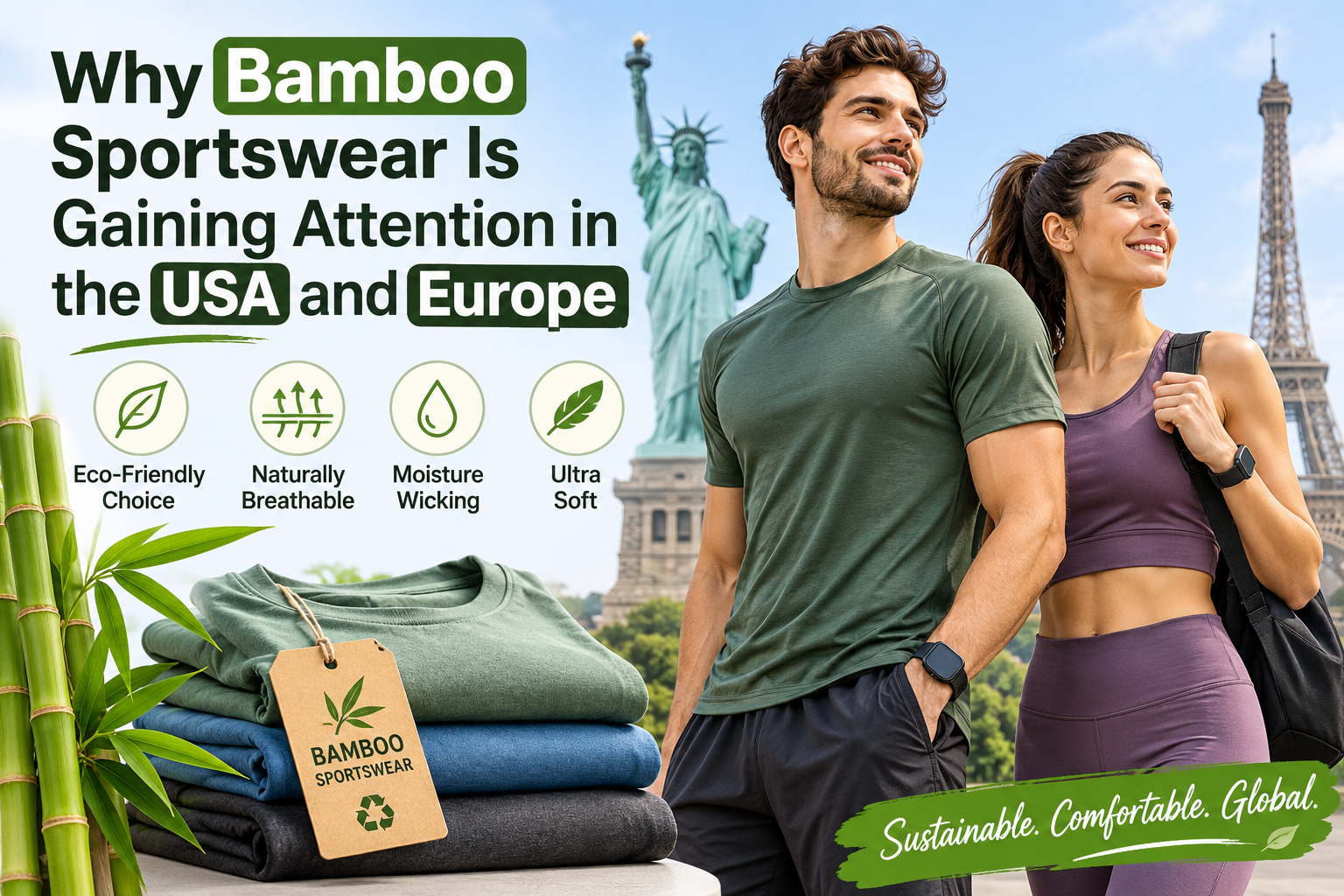
The global activewear industry is experiencing a significant transformation as consumers increasingly look for clothing that combines comfort, performance, durability, and responsible material choices. Sportswear is no longer limited to gyms and fitness studios; it has become an essential part of everyday wardrobes, supporting activities such as yoga, running, walking, cycling, travelling, and casual outings. Along with changing lifestyles, consumers in the USA and Europe are paying greater attention to fabric composition, manufacturing processes, product quality, and the overall experience of wearing activewear. Bamboo-based fabrics are gaining attention in this evolving market because of their soft texture, breathable feel, moisture-management properties, and versatility in clothing applications. As brands explore alternatives to conventional textile materials, bamboo sportswear is becoming an interesting option for developing contemporary activewear collections.
Echo Earth understands the changing requirements of the international apparel industry, particularly the growing demand for thoughtfully developed sportswear and activewear collections. As a manufacturer serving export-focused apparel requirements, Echo Earth recognises the importance of combining suitable fabric selection, functional designs, quality manufacturing, and customisation opportunities. Brands looking for a Bamboo Activewear Manufacturer USA or a Bamboo Clothing Manufacturer USA are increasingly interested in sourcing partners who understand international market expectations. Similarly, businesses searching for Bamboo Activewear Wholesale USA, Bamboo Activewear Manufacturer Europe, and Bamboo Clothing Manufacturer Europe want manufacturing solutions that support their product development and business growth. Bamboo-based sportswear offers an opportunity to explore new fabric possibilities while creating comfortable clothing for modern consumers.
Understanding Bamboo Sportswear and Its Growing Popularity
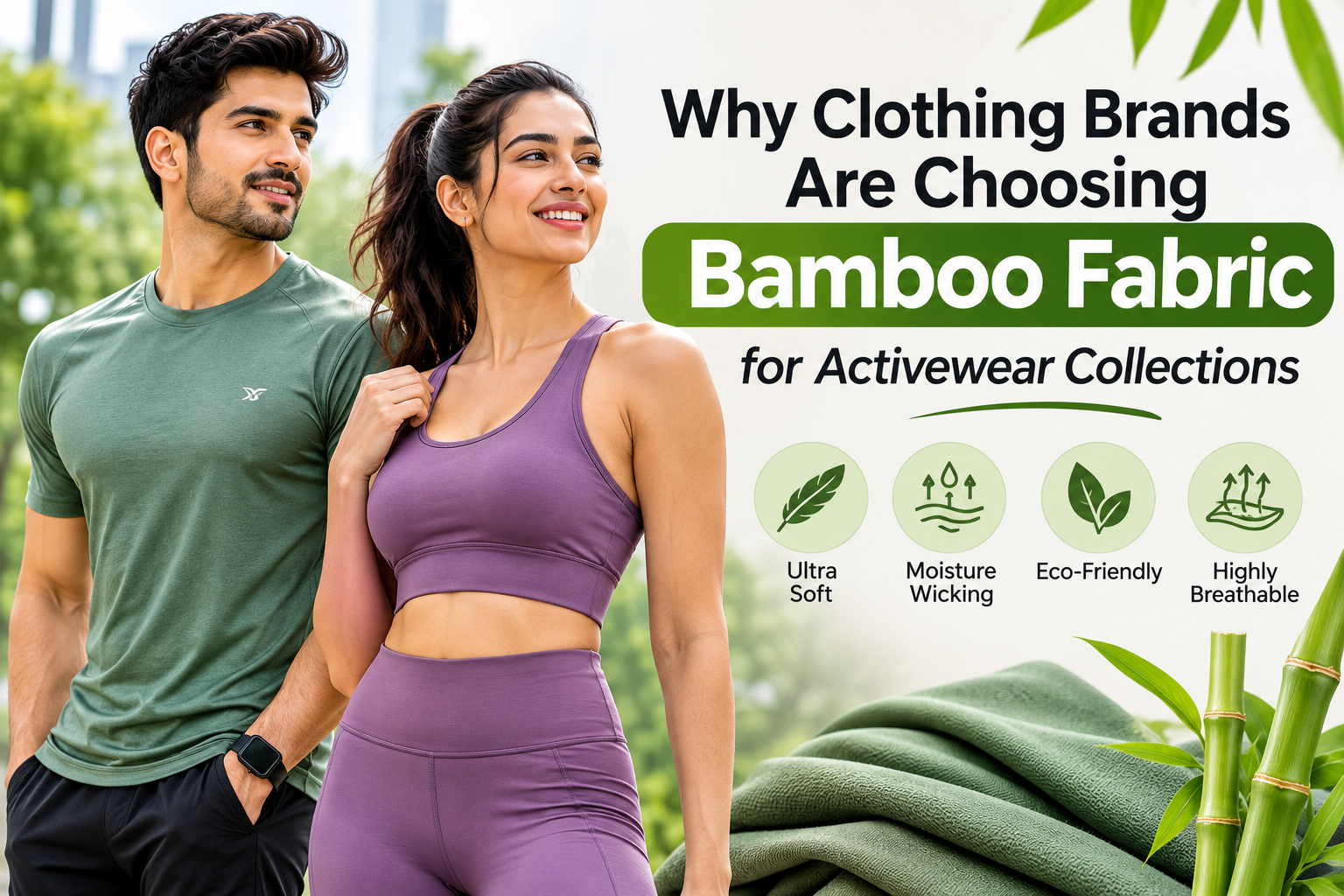
Bamboo sportswear refers to activewear and fitness clothing manufactured using bamboo-derived textile fibres, most commonly bamboo viscose or bamboo rayon. These fabrics are produced by processing bamboo pulp into regenerated cellulose fibres, which are then spun into yarn and converted into fabric. Depending on the manufacturing process and fabric construction, bamboo-based textiles can offer a soft surface, smooth drape, and comfortable feel against the skin.
The popularity of bamboo sportswear is increasing because modern consumers are exploring different fabric options for their everyday and fitness clothing. Traditional activewear frequently uses polyester, nylon, and elastane blends because of their stretch, durability, and performance characteristics. Bamboo-based fabrics introduce another option, particularly for brands interested in softness, comfort, and material variety.
Bamboo fabric is not automatically suitable for every high-intensity sportswear application. Its performance depends on fibre processing, fabric construction, GSM, knitting techniques, and the percentage of other fibres used in a blend. For example, combining bamboo-derived fibres with elastane can help develop stretchable leggings, fitted tops, and comfortable training garments.
For apparel brands, understanding these fabric characteristics is essential when developing collections for different activities and customer requirements.
Why Bamboo Activewear Is Gaining Attention in the USA
The USA has a large and diverse activewear market supported by fitness culture, athleisure trends, outdoor activities, and growing interest in comfortable everyday clothing. Consumers purchase activewear for different purposes, including gym workouts, yoga sessions, running, sports training, and casual styling. This creates opportunities for apparel brands to introduce products that offer a balance of comfort, appearance, and functional performance.
Bamboo Activewear USA is becoming an interesting category for brands exploring different textile materials. The soft feel of bamboo-derived fabrics makes them suitable for clothing designed for everyday movement and low-to-moderate intensity activities. Bamboo-based leggings, yoga tops, sports bras, T-shirts, and lounge-activewear combinations can appeal to consumers who prioritise comfort and a smooth fabric feel.
American consumers also have access to a wide variety of activewear brands, making product differentiation important. Brands can explore fabric innovation, distinctive designs, colour combinations, and well-developed fits to create recognisable collections. Bamboo-based textiles can become part of this product strategy when their properties match the intended use.
For businesses entering this market, working with an experienced manufacturing partner can simplify fabric selection, sampling, product development, and bulk production. A suitable manufacturing process helps brands maintain consistency while developing collections for the competitive American activewear market.
The Growing Demand for Bamboo Activewear Manufacturer USA
Choosing the right Bamboo Activewear Manufacturer USA is an important step for brands planning to introduce bamboo-based fitness and sportswear collections. Manufacturing involves much more than stitching garments together. It includes fabric sourcing, material testing, pattern development, sample creation, garment construction, finishing, and quality inspection.
A professional manufacturing partner should understand the requirements of different activewear categories. Yoga leggings require suitable stretch and recovery, while sports T-shirts need appropriate fabric weight, breathability, and comfort. Sports bras require careful attention to support, construction, fit, and fabric performance. These requirements influence material selection and production techniques.
For international brands, low minimum order quantities can also be an important consideration. Emerging businesses may want to test a new collection before committing to large production volumes. Established brands may require larger orders with consistent specifications across multiple styles.
Echo Earth focuses on export-oriented apparel manufacturing requirements, including material selection, sampling, product development, and customisation. Brands evaluating manufacturing partners should consider:
-
Fabric composition and available material blends.
-
Custom designs, patterns, and size specifications.
-
Sampling and product development capabilities.
-
Production consistency and quality inspection.
-
Minimum order quantities and delivery coordination.
Selecting the right manufacturer helps brands translate their product ideas into garments that match their target market and customer expectations.
Why Brands Look for a Bamboo Clothing Manufacturer USA
The demand for a reliable Bamboo Clothing Manufacturer USA is connected to the growing interest in comfortable clothing that can be worn across different settings. Bamboo-derived textiles are not limited to sportswear; they can also be used in casual T-shirts, loungewear, leggings, tops, sleepwear, and everyday essentials.
For clothing brands, this versatility creates opportunities to develop coordinated collections using similar fabric families. For example, a brand can introduce bamboo-based everyday T-shirts alongside yoga clothing and comfortable lounge sets. This approach helps maintain a consistent product identity while serving multiple customer requirements.
However, successful clothing manufacturing requires attention to the technical properties of each fabric. Brands should evaluate shrinkage, colourfastness, pilling resistance, stretch recovery, stitching quality, and washing performance. These factors influence how garments look and feel after repeated use.
An experienced clothing manufacturing partner can help businesses understand suitable fabric compositions and garment construction methods. Echo Earth recognises that international apparel brands need manufacturing solutions that combine design flexibility with dependable production standards.
Bamboo Activewear Wholesale USA: Opportunities for Growing Brands
Wholesale purchasing is an important part of the apparel business because it allows retailers, distributors, and fashion brands to source garments in larger quantities. Bamboo Activewear Wholesale USA represents an opportunity for businesses interested in developing collections around bamboo-based fabrics and contemporary activewear designs.
Wholesale sourcing can help brands expand their product ranges without managing every stage of garment production independently. Depending on the manufacturing arrangement, businesses can explore ready designs, custom-developed products, private-label garments, and coordinated collections.
For retailers, product variety is particularly important. Customers may look for leggings, sports bras, cycling shorts, fitted tops, oversized T-shirts, and comfortable jackets. Offering multiple styles, colours, and sizes helps brands address different customer preferences.
When evaluating wholesale manufacturing opportunities, businesses should focus on more than the quoted unit price. Fabric quality, construction, size consistency, packaging, order quantities, and production timelines also influence the overall value of a wholesale partnership.
Echo Earth understands the requirements of export-oriented apparel sourcing and the importance of developing products according to brand specifications. A structured wholesale manufacturing approach can help businesses plan inventory and introduce new activewear collections with greater confidence.
Why Bamboo Activewear Manufacturer Europe Is an Important Search for Apparel Brands
Europe represents an important market for fashion and sportswear, with consumers purchasing activewear for fitness, outdoor recreation, travel, and everyday use. Countries such as Germany, France, the Netherlands, Italy, Spain, and the United Kingdom have diverse apparel markets, each with different customer preferences and fashion trends.
Brands looking for a Bamboo Activewear Manufacturer Europe often want manufacturing partners who can support fabric innovation, custom product development, and international quality expectations. The choice of manufacturer can influence everything from fabric consistency to garment finishing and delivery coordination.
European consumers also show interest in textile transparency, product durability, and environmental considerations. This makes it important for brands to provide accurate information about the materials used in their garments. Bamboo-derived fabrics may be suitable for selected activewear applications, but environmental claims should reflect the actual fibre processing, energy consumption, chemical management, and supply chain practices.
Manufacturers supporting European apparel brands should understand garment specifications, labelling requirements, packaging expectations, and applicable market regulations. Businesses importing clothing into European markets should also review relevant requirements concerning textile composition, chemical safety, product traceability, and other applicable compliance obligations.
Echo Earth recognises the importance of developing export-ready apparel products that align with the requirements of international brands.
Choosing the Right Bamboo Clothing Manufacturer Europe
Finding a suitable Bamboo Clothing Manufacturer Europe requires a clear understanding of product requirements, manufacturing capabilities, and quality expectations. European apparel brands often develop collections around specific customer groups, including fitness enthusiasts, yoga practitioners, outdoor consumers, and everyday athleisure shoppers.
A manufacturing partner should be able to support different garment categories and provide guidance on suitable fabric compositions. For instance, a lightweight bamboo-derived fabric may be appropriate for relaxed-fit tops, while stretch-blended fabric may be more suitable for fitted leggings and training garments.
Sampling is another important stage. Before beginning bulk production, brands should evaluate garment measurements, stitching, fabric feel, colour accuracy, and overall fit. Wear testing and washing tests can also help identify potential issues before products reach customers.
A well-organised manufacturing process generally includes design discussions, technical specifications, fabric selection, pattern development, sampling, approval, bulk production, and final quality inspection.
For brands expanding into European markets, clear communication and consistent documentation can make the manufacturing relationship more efficient. Echo Earth supports the importance of a structured development process for apparel businesses seeking customised export manufacturing solutions.
Bamboo Activewear Wholesale Europe for Retailers and Private Labels
The demand for Bamboo Activewear Wholesale Europe creates opportunities for retailers, independent fashion labels, sportswear businesses, and online stores looking to expand their product collections. Wholesale manufacturing can help businesses develop a range of activewear products that reflect their brand positioning and customer expectations.
Private-label manufacturing is particularly useful for businesses that want to sell garments under their own brand identity. Instead of simply purchasing generic clothing, brands can work with manufacturing partners to develop custom designs, labels, colours, measurements, and packaging.
A private-label bamboo activewear collection may include leggings, yoga pants, sports bras, fitted T-shirts, crop tops, shorts, and comfortable training layers. Brands can also develop coordinated sets to create a more complete product range.
When sourcing wholesale activewear for European markets, businesses should consider the following factors:
-
Fabric composition, GSM, stretch, and recovery.
-
Product development and customisation options.
-
Size grading and measurement consistency.
-
Labelling, packaging, and compliance requirements.
-
Bulk production capacity and delivery schedules.
These considerations help businesses select products that match their intended customer base. Echo Earth understands the importance of custom manufacturing and export-focused production for apparel brands developing collections for international markets.
Key Fabric Properties That Make Bamboo Suitable for Activewear
Fabric performance is one of the most important considerations when developing sportswear. Bamboo-derived textiles are gaining attention because of their soft texture, moisture absorption, and comfortable feel. However, the actual performance of a garment depends on the fabric construction and fibre blend.
Softness and Comfort: Bamboo-derived viscose fabrics are often valued for their smooth texture. This can make them suitable for garments worn close to the skin, including yoga tops, casual leggings, and comfortable everyday sportswear.
Moisture Absorption: Certain bamboo-derived fabrics can absorb moisture effectively. This characteristic can support comfort during everyday activities, although moisture absorption should not be confused with rapid moisture wicking or quick drying.
Breathability: Fabric structure and construction influence airflow and thermal comfort. Lightweight bamboo-based fabrics may be appropriate for selected clothing applications where softness and comfort are priorities.
Stretch and Flexibility: Bamboo fibres are not inherently as elastic as elastane. Manufacturers often use fibre blends containing elastane or other stretch fibres to create activewear that allows movement and maintains its shape.
Fabric Versatility: Bamboo-derived textiles can be developed in different weights and fabric structures. This gives designers opportunities to create everything from lightweight tops to comfortable everyday clothing.
For high-intensity training, brands should conduct performance testing to determine whether the selected fabric provides sufficient durability, stretch recovery, abrasion resistance, and drying performance.
Popular Bamboo Sportswear Products for Modern Apparel Collections
One reason bamboo-based textiles are attracting interest is their ability to support different clothing categories. Brands can explore a variety of products depending on their target customers, fabric specifications, and intended activities.
Bamboo Activewear Leggings: Leggings are an important part of modern activewear collections. Stretch-blended bamboo-derived fabrics can be considered for yoga leggings, casual fitness clothing, and everyday athleisure products. Fit, opacity, waistband construction, and recovery should be carefully evaluated.
Bamboo Sports Bras: Sports bras require appropriate support, fabric strength, and secure construction. Bamboo-derived blends can be explored for selected low-impact designs, depending on the required stretch and support level.
Bamboo Activewear T-Shirts: Comfortable T-shirts are versatile products suitable for walking, travelling, casual workouts, and everyday styling. Their success depends on fabric weight, fit, stitching, and durability.
Bamboo Yoga Tops: Yoga tops can be designed using soft, stretchable materials that support comfortable movement. Different necklines, sleeve lengths, and silhouettes provide opportunities for product differentiation.
Bamboo Cycling Shorts: Stretch-blended fabrics can be used to develop cycling shorts and fitted sportswear. Brands should evaluate fabric recovery, friction resistance, opacity, and comfort before production.
By developing multiple product categories, brands can create coordinated collections that appeal to consumers looking for functional and comfortable clothing.
Why Low MOQ and Custom Manufacturing Matter for International Brands
Low minimum order quantity (MOQ) manufacturing has become an important consideration for emerging apparel brands. New businesses often want to introduce products, evaluate customer responses, and understand market demand before investing in large inventory volumes.
For brands developing bamboo sportswear, low MOQ options can make it easier to experiment with different fabric compositions, colours, fits, and product categories. Instead of launching a large collection immediately, businesses can begin with selected styles and gradually expand based on customer feedback.
Custom manufacturing provides another advantage because brands can develop products according to their own design specifications. This includes fabric selection, garment measurements, stitching details, labels, trims, and packaging. Such flexibility helps businesses create a distinctive identity in competitive sportswear markets.
Echo Earth understands the importance of low MOQ and customised manufacturing requirements for international apparel businesses. Through a structured product development approach, brands can explore their ideas, evaluate samples, and plan production according to their business needs.
Sustainability Considerations in Bamboo Sportswear Manufacturing
Bamboo is often discussed in conversations about sustainable textiles, but it is important to understand how bamboo-derived fabrics are manufactured. The environmental performance of a textile depends on the complete production process rather than simply the original plant material.
Most commercially available bamboo clothing uses regenerated cellulose fibres, particularly bamboo viscose or rayon. Producing these fibres involves processing bamboo pulp through chemical and mechanical stages. Conventional viscose production can involve chemicals that require appropriate recovery, treatment, and management systems.
Brands should therefore ask manufacturers about fibre identification, processing methods, chemical management, energy consumption, wastewater treatment, and relevant certifications. They should also avoid describing every bamboo garment as automatically biodegradable or environmentally harmless without supporting evidence.
Responsible manufacturing involves evaluating the entire supply chain, from raw material processing to dyeing, finishing, stitching, packaging, and transportation. Durable garment construction also matters because clothing that remains usable for longer may reduce the need for frequent replacement.
For Echo Earth, sustainability-related product development should be approached through material transparency, responsible manufacturing considerations, and clear communication with international buyers.
How to Select the Right Bamboo Activewear Manufacturing Partner
Selecting the right manufacturing partner can influence product quality, customer satisfaction, and business growth. Whether a brand is targeting the USA or Europe, it should evaluate manufacturers according to their technical capabilities and ability to meet specific product requirements.
The first step is to define the intended product category. A yoga collection may require different fabric specifications from a running or high-intensity training collection. Brands should communicate their expectations regarding fabric composition, stretch, GSM, garment fit, stitching, and durability.
The next step is to review samples. Sampling helps businesses assess the actual product rather than relying entirely on photographs or fabric descriptions. Brands should check measurements, seam construction, colour consistency, washing performance, and overall comfort.
It is also important to understand production capacity, MOQ, customisation options, quality-control procedures, packaging, and delivery timelines. For international orders, businesses should discuss shipping arrangements and relevant documentation in advance.
Echo Earth believes that successful apparel manufacturing begins with understanding the brand’s requirements and developing products that match the intended market. A transparent manufacturing relationship can help brands build collections with greater consistency and confidence.
The Future of Bamboo Activewear in the USA and Europe
The future of bamboo activewear will be influenced by changing consumer expectations, improvements in textile processing, and the continued growth of the global athleisure market. Consumers are increasingly interested in clothing that offers comfort, versatility, and clear information about material composition.
In the USA, the combination of fitness culture and casual fashion continues to create opportunities for new activewear designs. In Europe, textile transparency, product durability, and environmental considerations remain important topics for apparel businesses and consumers.
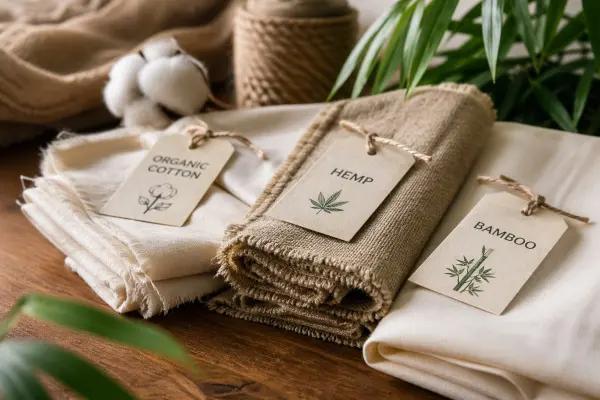
As brands explore new materials, bamboo-derived textiles may become part of broader fabric portfolios that also include organic cotton, recycled fibres, and performance-oriented blends. The most suitable material will depend on the intended activity, garment construction, and customer requirements.
Manufacturers will continue to play an important role in translating these material developments into finished products. Businesses that prioritise fabric testing, consistent production, customisation, and transparent communication can create stronger activewear collections for international markets.
Echo Earth aims to support the evolving needs of export-oriented apparel brands through manufacturing-focused product development and an understanding of international clothing requirements.
Conclusion
Bamboo sportswear is gaining attention in the USA and Europe because modern consumers and apparel brands are exploring fabric options that combine softness, comfort, versatility, and different material characteristics. From yoga leggings and sports bras to T-shirts, cycling shorts, and everyday athleisure clothing, bamboo-derived textiles offer possibilities for developing contemporary apparel collections.
For businesses planning to enter this category, finding a suitable Bamboo Activewear Manufacturer USA, Bamboo Clothing Manufacturer USA, or Bamboo Activewear Wholesale USA partner can support product development and sourcing requirements. Similarly, brands targeting European customers can explore opportunities with a Bamboo Activewear Manufacturer Europe, Bamboo Clothing Manufacturer Europe, and Bamboo Activewear Wholesale Europe.
Echo Earth understands the importance of custom apparel development, fabric selection, quality manufacturing, and export-focused production. By combining thoughtful product development with clear material information and consistent manufacturing standards, apparel brands can create collections that respond to changing market expectations in the USA and Europe.
FAQs
1. Why is bamboo sportswear becoming popular in the USA and Europe?
Bamboo sportswear is gaining attention because bamboo-derived fabrics are often valued for their soft texture, moisture absorption, and comfortable feel. These properties make selected fabric blends suitable for yoga clothing, casual activewear, and everyday athleisure collections.
2. What does a Bamboo Activewear Manufacturer USA provide?
A Bamboo Activewear Manufacturer USA can support fabric sourcing, sampling, custom designs, garment development, and bulk production of bamboo-based activewear, depending on its manufacturing capabilities.
3. How do I find a Bamboo Clothing Manufacturer USA?
Look for manufacturers offering suitable fabric options, customisation, sample development, consistent quality inspection, transparent MOQ requirements, and export support. Always review product samples before confirming bulk orders.
4. Is Bamboo Activewear Wholesale USA suitable for private-label brands?
Yes. Wholesale manufacturing can support private-label brands by providing opportunities to develop custom leggings, sports bras, T-shirts, yoga tops, and other garments with personalised labels and specifications.
5. What should I consider when choosing Bamboo Activewear USA products?
Consider fabric composition, GSM, stretch, moisture absorption, drying performance, durability, colourfastness, and garment fit. The fabric should match the intended activity and performance requirements.