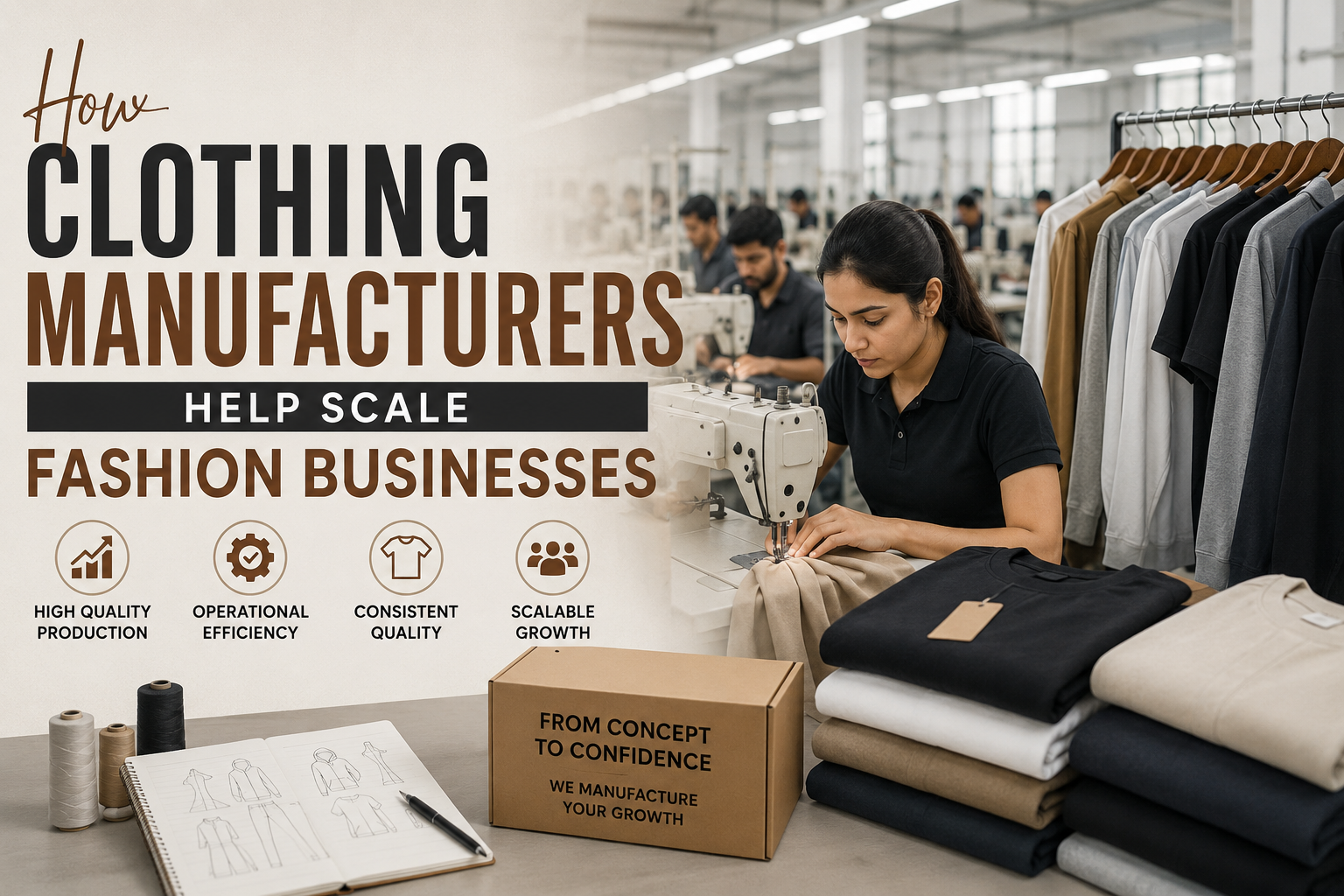

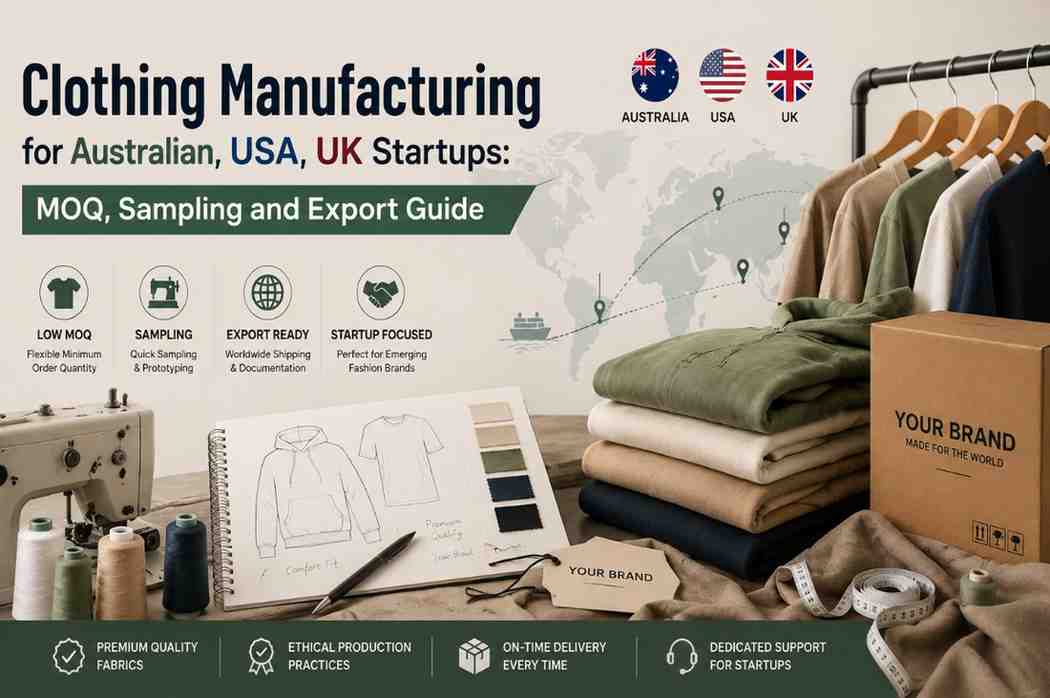
Starting a clothing brand in Australia, the USA, the UK, or Europe can be an exciting opportunity, but turning a fashion concept into a reliable product line requires much more than creating attractive designs. New fashion brands need to make important decisions about fabrics, product development, samples, minimum order quantities, production timelines, packaging, quality control, shipping, and export processes. For a startup, choosing the right manufacturing partner at an early stage can have a direct impact on product quality, inventory investment, launch timelines, and the ability to scale the brand. This is why finding a dependable Clothing Manufacturer for Startups should be treated as an important part of the business strategy rather than simply looking for the lowest production price.
For Australian, USA, and UK fashion startups, working with an experienced overseas manufacturer can provide access to different manufacturing capabilities, fabric options, production expertise, and private label services. However, international sourcing also requires clear communication and careful planning. Startups need to understand MOQ requirements, sampling procedures, production timelines, packaging specifications, quality expectations, and export arrangements before committing to bulk production. Echo Earth focuses on supporting apparel brands through manufacturing-oriented solutions, and its approach can be particularly relevant to growing brands that need a structured path from product development and sampling to production and international delivery. The goal should be to create a manufacturing relationship that supports both the startup’s immediate collection and its future growth.
Why Clothing Manufacturing Matters for Startups
A startup clothing brand typically operates with different requirements from an established fashion company. Large brands may already have predictable sales volumes, established supply chains, and long-term production agreements, while a new brand is often testing its first collection and learning how customers respond to different products.
This makes flexibility especially important.
A startup may not want to commit to a very large quantity before validating its designs. At the same time, it needs a manufacturer capable of maintaining consistent quality when the brand begins increasing its order volume. The ideal manufacturing relationship should therefore provide a practical path from initial development to repeat production.
A professional Clothing Manufacturer for Startups can support this process by helping brands move from design concepts to samples and eventually to bulk manufacturing. The exact services available will vary between manufacturers, so startups should clarify what is included before beginning a project.
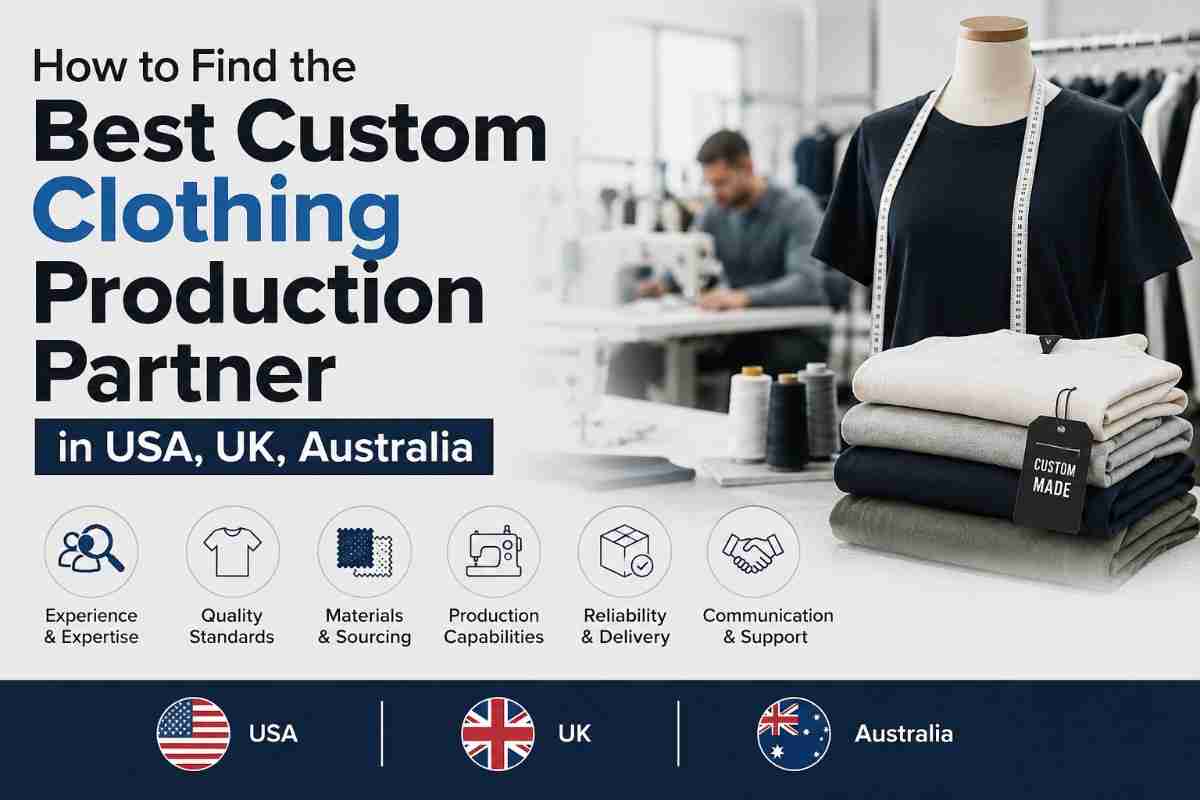
Choosing a Clothing Manufacturer for Australian Startups
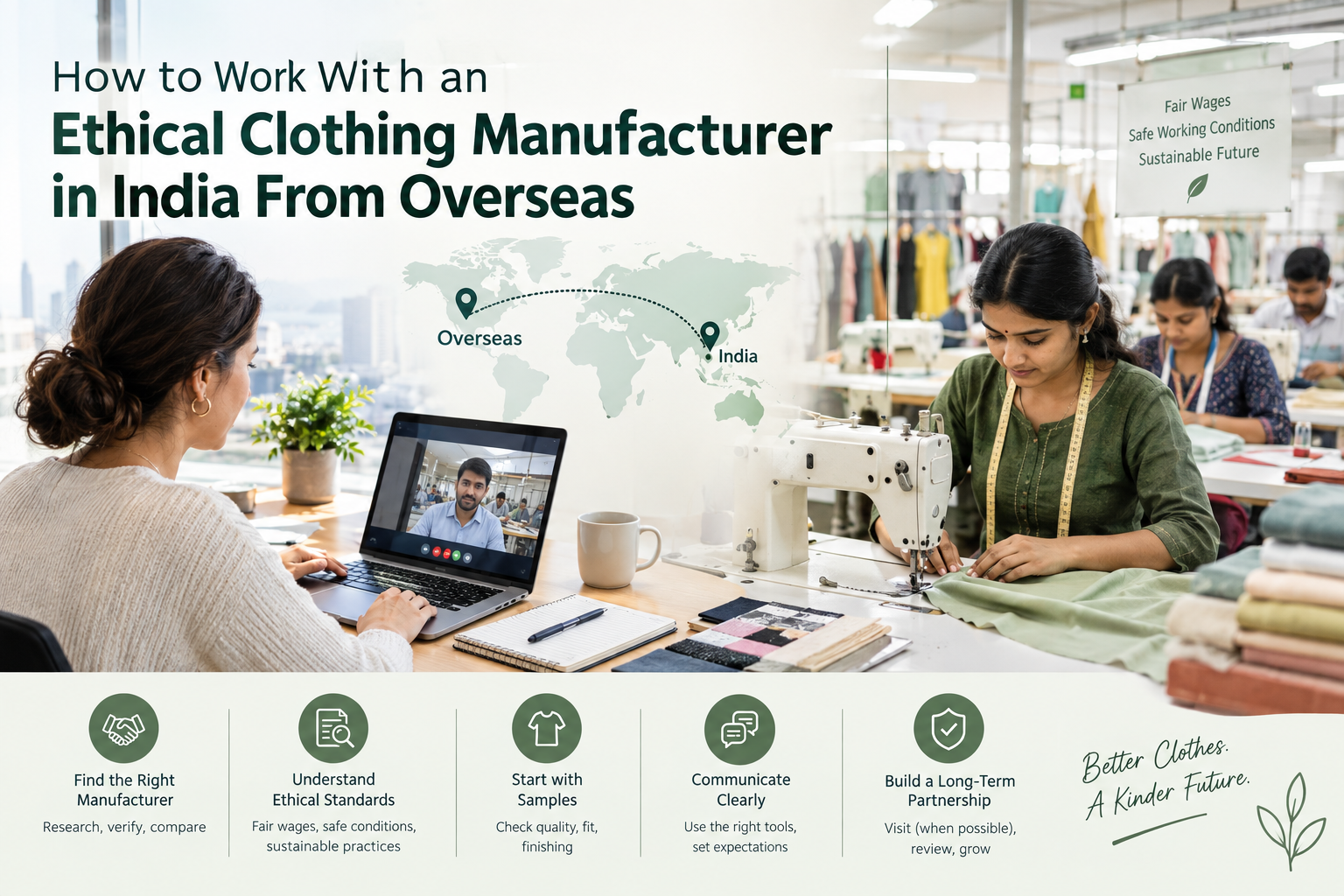
Australian fashion startups often need manufacturing partners that understand international sourcing and can communicate effectively across distance. Product specifications, measurements, fabric requirements, colour references, packaging details, and delivery expectations should be clearly documented from the beginning.
When considering Clothing Manufacturer Australia requirements, startups should look beyond a manufacturer’s location and focus on its ability to meet the specific requirements of the brand. The right partner should be able to explain its manufacturing process, sampling stages, MOQ requirements, production capacity, quality procedures, and export arrangements.
Australian startups may also need to consider shipping timelines carefully because international production involves additional logistics compared with domestic sourcing. Production time and shipping time should be treated as separate parts of the overall launch schedule.
A realistic manufacturing plan can help reduce last-minute pressure and allow the startup to coordinate product launches, marketing campaigns, photography, website updates, and inventory planning more effectively.
Clothing Manufacturing for USA Startups
The USA has a large and diverse fashion market, and startups may operate across categories such as casualwear, activewear, streetwear, contemporary fashion, resortwear, and lifestyle apparel. Each category can have different fabric, construction, fit, and finishing requirements.
For brands researching a Clothing Manufacturer USA Brands should focus on whether the manufacturing partner can meet the product specifications and commercial requirements of the intended collection.
A startup should communicate its target market, product category, estimated order quantity, fabric preferences, sizing requirements, branding requirements, and delivery expectations before requesting a production quotation.
Clear communication is particularly important when working internationally. Measurements should be provided in an agreed format, colours should be specified using appropriate references, and artwork or logos should be supplied in suitable production-ready formats.
The more clearly a startup communicates its requirements, the easier it becomes for the manufacturer to understand the project and provide an appropriate response.
Clothing Manufacturing for UK Startups
UK fashion startups can also benefit from working with an experienced international manufacturing partner, particularly when they require private label production, custom apparel development, or specialised fabrics.
For brands searching for a Clothing Manufacturer UK Brands, the evaluation process should include product quality, manufacturing experience, communication, sampling, MOQ, production timeline, packaging, and export capability.
UK startups should also think about the long-term relationship rather than focusing only on the first order. If the initial collection performs well, the manufacturer may become an important part of the brand’s supply chain.
A good manufacturing relationship should therefore be scalable. The startup should be able to discuss future collections, repeat orders, new colours, new products, and increasing quantities as the business develops.
Working With Clothing Manufacturers for Startups
One of the biggest advantages of working with specialised Clothing Manufacturers for Startups is the opportunity to develop products according to the brand’s own requirements rather than simply selecting generic ready-made garments.
A startup may have a particular silhouette, fabric composition, colour palette, logo placement, stitching detail, label requirement, or packaging concept. These specifications can be communicated to the manufacturer during the development stage.
The manufacturing process should begin with a clear understanding of the product.
A detailed product description or tech pack can help communicate measurements, construction details, materials, trims, artwork, branding, and finishing requirements. When specifications are incomplete, misunderstandings can occur during sampling or production.
For this reason, product development should be treated as a collaborative process between the brand and manufacturer.
Understanding MOQ Before Placing an Order
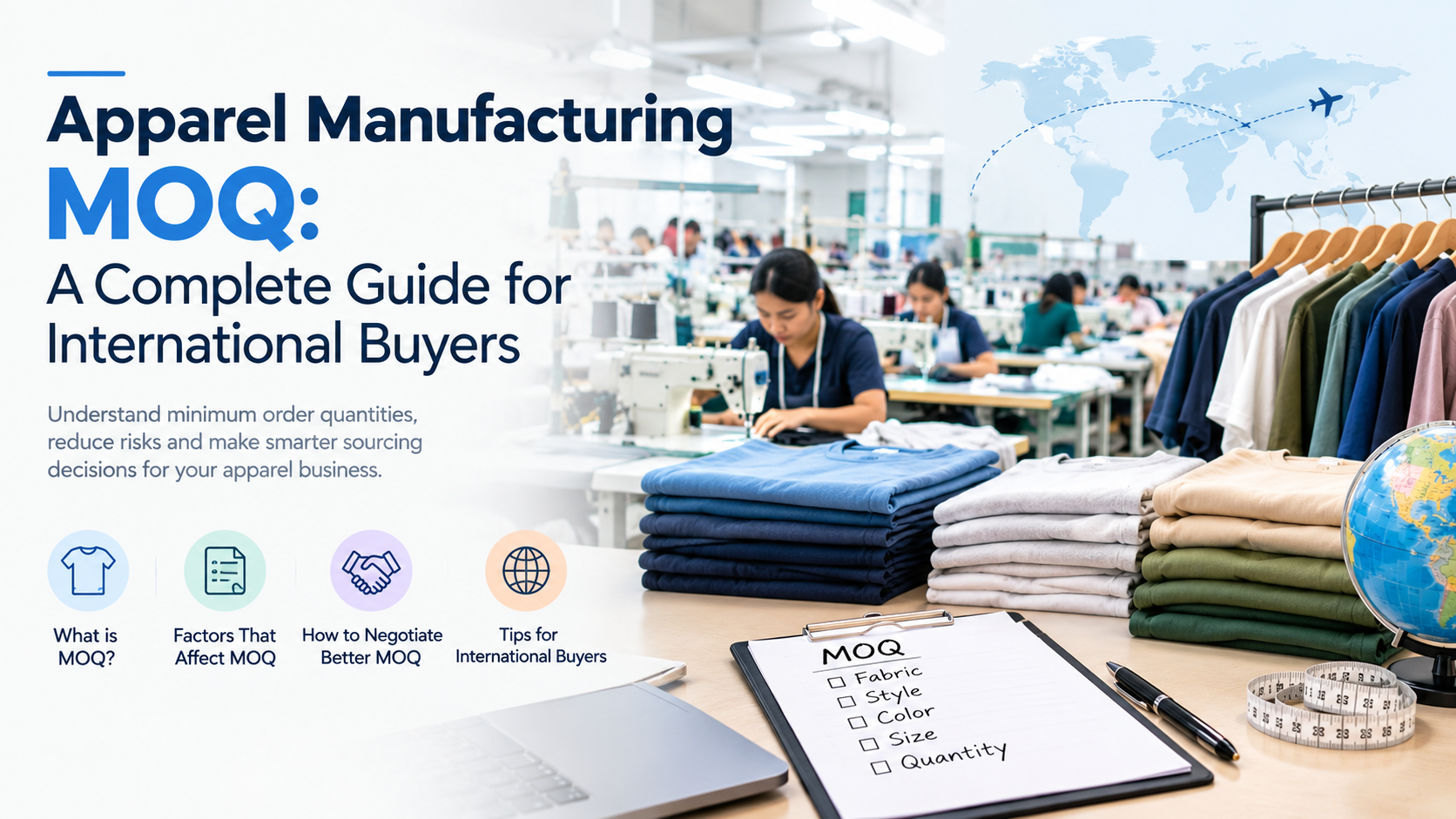
MOQ, or Minimum Order Quantity, is one of the most important factors for a startup to understand before beginning production.
MOQ refers to the minimum quantity a manufacturer is willing to produce for a particular order or product. The exact MOQ can vary depending on the manufacturer, garment type, fabric, colour, construction complexity, customisation, and production requirements.
A startup should not assume that every manufacturer has the same MOQ.
Instead, the brand should ask specific questions about whether MOQ applies per style, colour, size, fabric, or total order quantity.
For example, a manufacturer may have different requirements for a completely custom garment compared with a simpler product using an existing fabric or construction method.
Understanding MOQ early helps startups plan their initial inventory investment more realistically.
Why Low MOQ Can Matter to Startups
Startups often need to validate products before making larger commitments.
If a brand is introducing a new collection, ordering a manageable initial quantity may allow it to test customer response before scaling production.
However, low MOQ should not automatically be treated as the only objective.
A startup should also consider fabric availability, production quality, pricing, sampling, lead time, and the manufacturer’s ability to support future growth.
The right MOQ is ultimately one that makes sense for the brand’s business model and production requirements.
How the Clothing Sampling Process Works
Sampling is one of the most important stages of clothing manufacturing.
A sample allows the brand to evaluate the product before moving into bulk production. It provides an opportunity to review the fit, fabric, construction, colour, measurements, branding, finishing, and overall appearance.
The first sample may not always be the final version.
Depending on the complexity of the garment, revisions may be required. The brand may request changes to measurements, fabric weight, stitching, trims, neckline, sleeves, fit, colour, or other specifications.
This is a normal part of product development.
A startup should therefore include sufficient time for sampling and potential revisions in its launch schedule rather than planning around an unrealistically short development period.
Why Sample Approval Is Important
Bulk production should generally be based on clearly approved specifications.
Before production begins, the startup and manufacturer should have a shared understanding of the final product. Approved samples, measurements, materials, artwork, labels, packaging requirements, and other specifications can provide useful references for production.
This helps reduce ambiguity and provides a clearer basis for quality checking.
For startups, this stage is particularly important because the first production order represents the brand’s initial opportunity to establish its product quality with customers.
Production Timeline for a Startup Clothing Brand
A clothing production timeline can include several stages rather than one single manufacturing period.
The overall process may involve product development, quotation, material confirmation, sampling, revisions, sample approval, material procurement, bulk production, quality checks, packaging, and shipping.
The exact timeline depends on the product and manufacturer.
A startup should therefore ask for an estimated production schedule before confirming an order.
It is also important to distinguish between manufacturing time and shipping time. A garment may be completed at the factory but still require additional time to reach its final destination.
Planning the entire supply chain instead of looking only at factory production time can help startups establish more realistic launch dates.
Private Label Clothing Manufacturing for Startups
Private label manufacturing allows a brand to sell apparel under its own brand identity while working with a manufacturing partner to produce the garments.
For startups, this can be an efficient way to build a distinctive product range without establishing their own manufacturing facility.
A Private Label Clothing Manufacturer can potentially support different parts of the process, depending on the services offered. These may include garment development, fabric selection, labels, branding, packaging, sampling, and bulk production.
The startup should clarify which services are included and which responsibilities remain with the brand.
Private label manufacturing can be especially useful for brands that want their products to have a consistent identity across multiple collections.
OEM and ODM Options
Startups may also encounter the terms OEM and ODM during the manufacturing process.
OEM generally involves producing products according to the buyer’s specifications, while ODM can involve adapting or developing products based on existing manufacturer capabilities and designs.
The appropriate model depends on how much control the startup wants over product development.
A brand with highly specific designs and technical requirements may prefer a manufacturing model that allows detailed customisation. A startup looking to develop products more quickly may consider options based on existing manufacturing capabilities.
The important point is to understand exactly what the manufacturer is offering before moving forward.
Fabric Selection and Product Development
Fabric is one of the most important components of a garment.
The correct fabric can influence comfort, appearance, drape, durability, breathability, weight, and overall customer experience.
Startups should therefore discuss fabric requirements at the beginning of product development.
Depending on the product category, a brand may require different fabric characteristics. For example, activewear may require performance-focused materials, while casualwear may prioritise comfort and everyday durability.
Echo Earth’s manufacturing approach can include consideration of specialised materials such as hemp and bamboo fabrics, as highlighted in its service planning, alongside apparel manufacturing and sustainable product categories.
For a startup, material selection should be connected to the intended customer, product positioning, performance requirements, and price point.
Packaging and Branding Requirements
Packaging is another part of the manufacturing process that startups should consider early.
A clothing brand may require branded labels, hangtags, care labels, packaging bags, boxes, stickers, or other presentation elements.
These requirements should be communicated before production rather than added at the last minute.
Consistent branding across garments and packaging can help create a more professional customer experience.
For startups selling internationally, packaging requirements should also be coordinated with shipping and product protection considerations.
Quality Control in Clothing Manufacturing
Quality control is essential because product consistency can influence customer satisfaction and brand reputation.
A startup should establish clear quality expectations before bulk production begins.
Important areas may include measurements, stitching, fabric quality, colour consistency, print or embroidery placement, labels, trims, finishing, and overall garment appearance.
The specific inspection process depends on the manufacturer and product.
Startups should ask how quality is checked during production and what happens if issues are identified.
A clear quality-control process can help create accountability and reduce avoidable production problems.
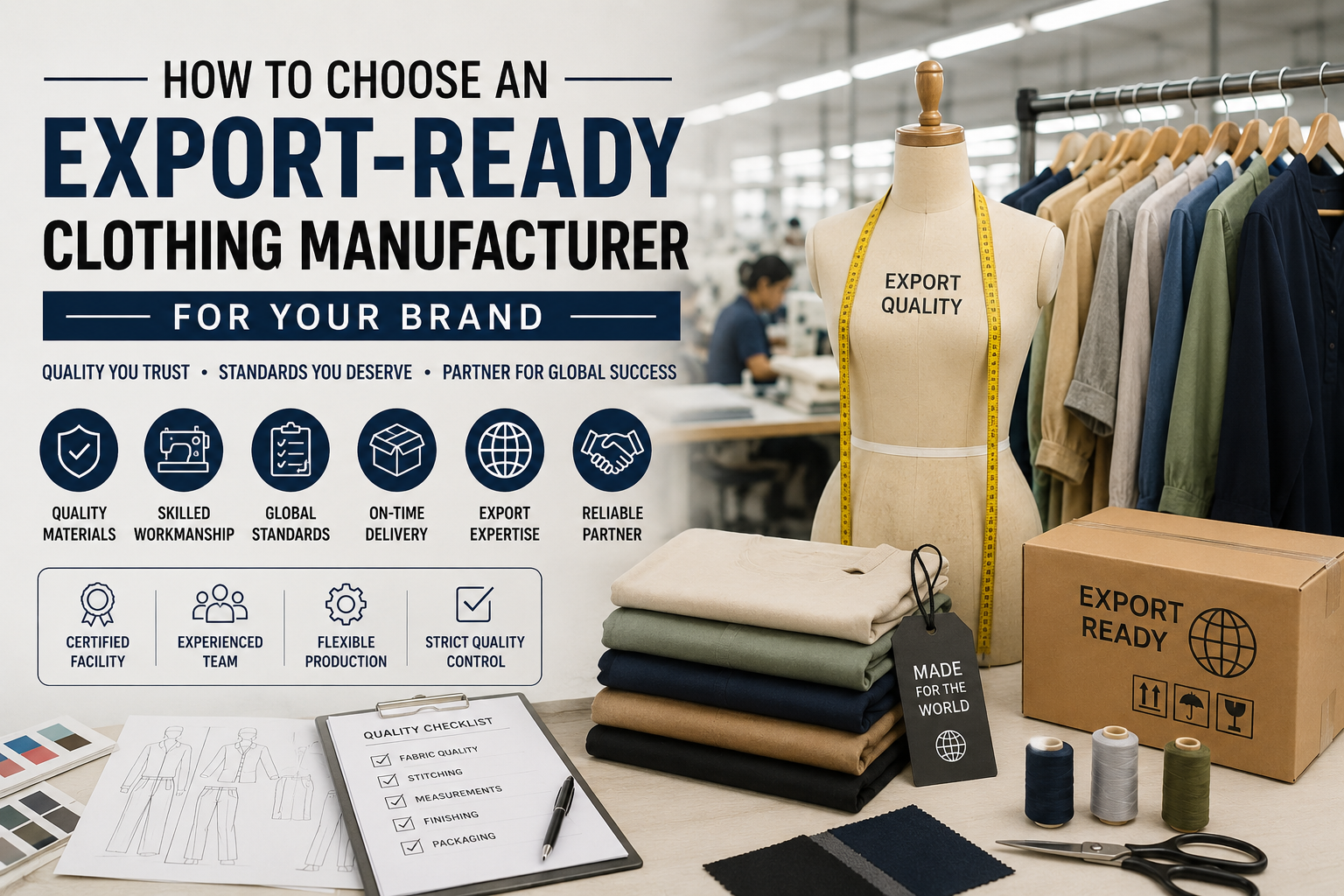
Export and International Shipping Considerations
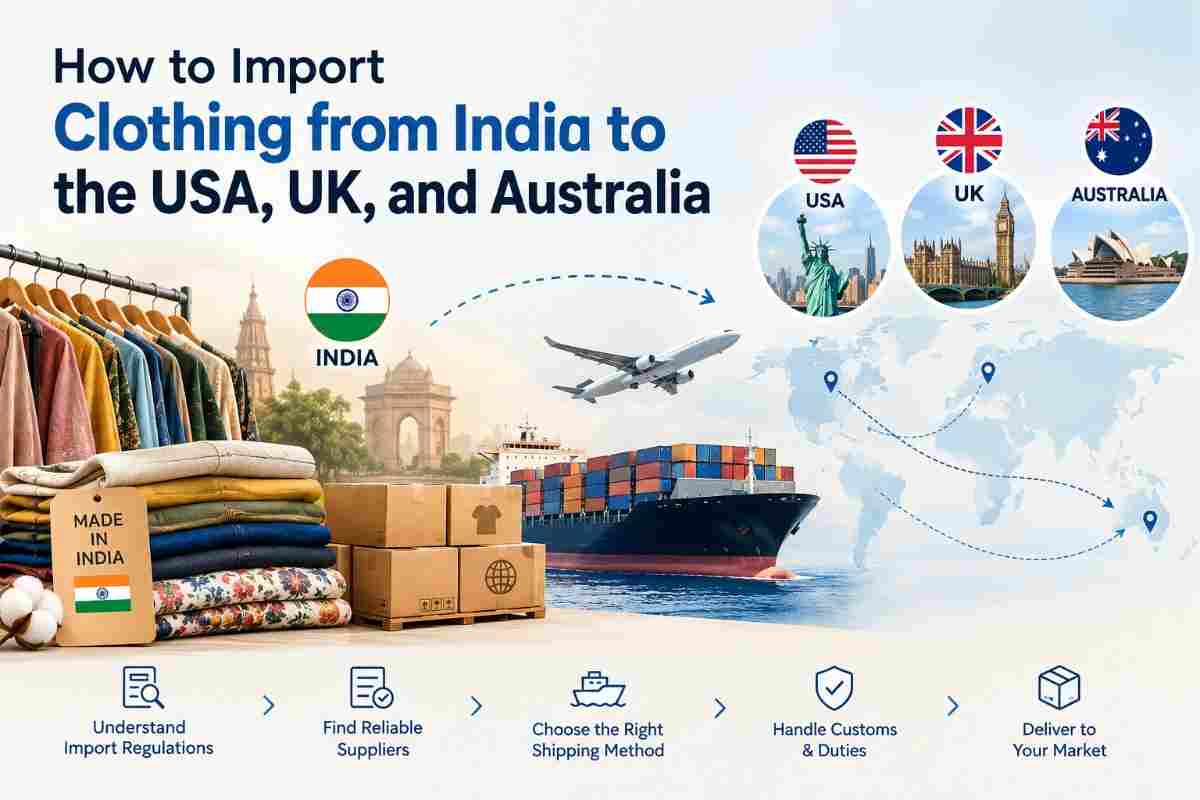
For Australian, USA, UK, and European startups working with an overseas manufacturer, export planning is an important part of the manufacturing process.
International orders involve more than completing production.
The brand and manufacturer may need to coordinate documentation, packaging, shipping arrangements, delivery timelines, and other export-related requirements.
Startups should clarify which party is responsible for each part of the process.
The manufacturer should also clearly communicate what information or documentation is required from the buyer.
Because export requirements can vary by destination and shipment type, startups should confirm current requirements with the appropriate logistics or customs professionals when necessary.
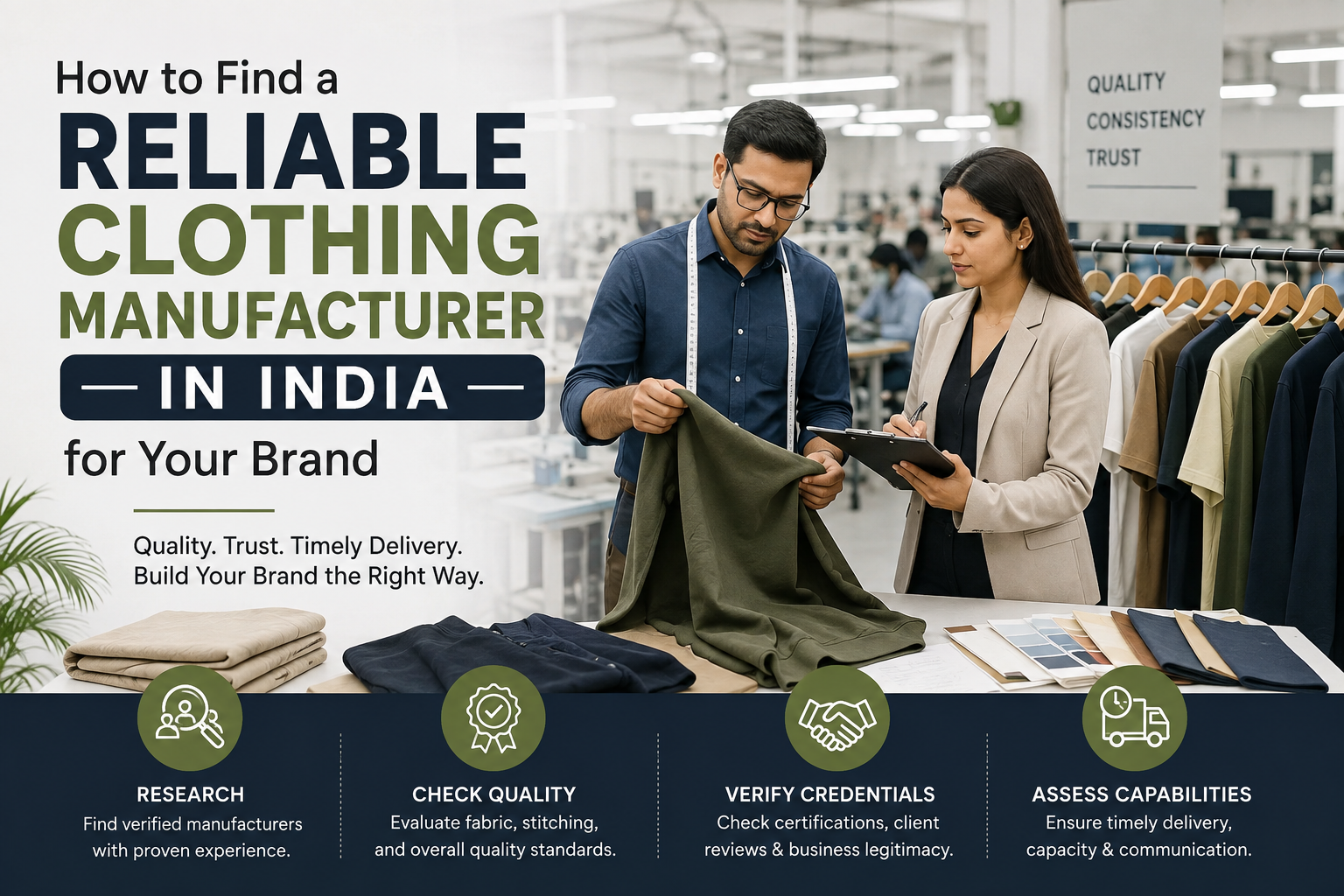
Choosing a Reliable Clothing Manufacturer
Reliability should be evaluated through more than a manufacturer’s website or sales presentation.
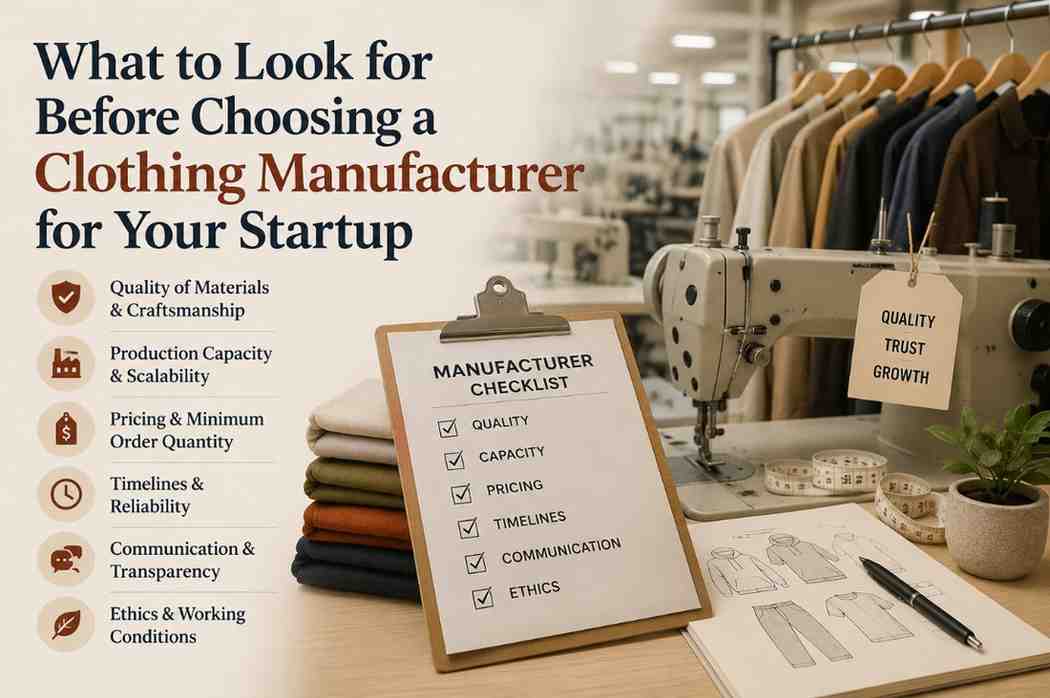
A startup should look for evidence of relevant manufacturing experience, clear communication, realistic production information, product development support, and an ability to explain the manufacturing process.
It is also useful to ask detailed questions before placing an order.
A manufacturer that provides clear answers about MOQ, sampling, production timelines, quality control, packaging, and export arrangements can make the sourcing process easier to understand.
Startups should also avoid choosing a manufacturing partner solely because it offers the lowest price.
A low initial quotation may not represent the complete cost if quality issues, delays, revisions, or communication problems occur later.
Building a Long-Term Manufacturing Relationship
A successful clothing brand often needs a manufacturing relationship that develops over time.
The first order may be relatively small while future orders can become larger as customer demand grows.
A manufacturer that understands the brand’s product standards and development process can become increasingly valuable as the business expands.
This is why startups should consider future requirements when choosing their first manufacturing partner.
The ideal relationship should allow the brand to discuss new designs, repeat production, additional colours, expanded sizing, new fabrics, and larger quantities as appropriate.
Why Echo Earth Can Support Startup Clothing Brands
For an international startup, the manufacturing partner should be able to understand the difference between simply producing garments and supporting a brand through product development.
Echo Earth can position its manufacturing services around the requirements of overseas apparel brands, including private label, OEM/ODM, sampling, packaging, dyeing, printing, export processes, and specialised fabric categories. These service areas are specifically identified in the provided SEO notes as priorities for developing a stronger export-focused website.
For startups, this broader approach can make the manufacturing journey easier to organise because different stages of product development can be considered together rather than treated as completely separate activities.
International buyers should still discuss their exact requirements with the manufacturer before placing an order, including MOQ, sample development, production timeline, fabric specifications, quality expectations, packaging, and export arrangements.
A Practical Manufacturing Roadmap for Startups
A startup can approach clothing manufacturing through a simple sequence: define the product, prepare specifications, discuss requirements with the manufacturer, request a quotation, understand MOQ, develop samples, review and revise the samples, approve the final specifications, confirm the production plan, manufacture the bulk order, complete quality checks, arrange packaging, and coordinate export and delivery.
This process should not be rushed.
The earlier a brand identifies potential issues, the easier it may be to address them before bulk production.
Good preparation can also improve communication between the design team and manufacturing team.
Conclusion
For Australian, USA, UK, and European fashion startups, finding the right manufacturing partner is an important step toward building a reliable clothing business. A manufacturer should not be evaluated only on price. Startups need to consider product quality, MOQ, sampling, production timelines, fabrics, private label capabilities, branding, packaging, quality control, communication, and international export support.
Understanding MOQ before placing an order can help startups plan inventory more effectively. Sampling provides an opportunity to refine products before bulk production. Clear specifications and approved samples can improve communication, while realistic production and shipping timelines can help brands plan launches more confidently.
The search for a Clothing Manufacturer for Startups should therefore focus on long-term suitability rather than a single order. Whether a brand is researching a Clothing Manufacturer USA Brands, Clothing Manufacturer UK Brands, or Clothing Manufacturer Australia, the fundamental questions remain similar: Can the manufacturer produce the required quality? Can it support the desired MOQ? Is the sampling process clear? Are production timelines realistic? Can the manufacturer communicate effectively? Can it support international export requirements?
For brands seeking a Private Label Clothing Manufacturer or broader OEM/ODM manufacturing support, these questions become even more important because the manufacturer can become a key part of the brand’s product development and supply chain.
Echo Earth’s export-focused approach is aligned with the need to create content and services for overseas buyers rather than focusing primarily on domestic search audiences. The company’s SEO guidance specifically recommends buyer-oriented content around importing clothing, sampling, production timelines, MOQ, reliable manufacturer selection, and international markets such as the USA, UK, Australia, Europe, and UAE.
Ultimately, the strongest manufacturing partnership is one that supports the startup from its first product idea through sampling, production, packaging, export, and future growth. By asking the right questions, documenting product requirements clearly, allowing sufficient time for sampling and production, and choosing a manufacturer based on quality and reliability rather than price alone, emerging fashion brands can create a stronger foundation for sustainable long-term growth.
FAQs
What is the minimum order quantity (MOQ) for clothing manufacturing for startups?
MOQ varies from manufacturer to manufacturer and depends on factors such as fabric type, garment complexity, customization level, and production method. Some manufacturers offer low MOQ for startups, while others may require higher quantities per style or color. It is always best to confirm whether MOQ applies per design, size, or total order before starting production.
Can startups work with international clothing manufacturers?
Yes, many startups in Australia, the USA, the UK, and Europe work with international clothing manufacturers. However, it is important to ensure clear communication, proper tech packs, agreed specifications, and a reliable sampling process. International manufacturing also requires planning for shipping time, customs, and export documentation.
How long does clothing sampling take?
Sampling time depends on the complexity of the garment and the manufacturer’s workload. In most cases, it can take a few days to a few weeks. If revisions are required, additional time may be needed. Startups should always include sampling time in their overall product launch schedule.
Why is sampling important in clothing manufacturing?
Sampling allows brands to check fit, fabric, stitching, measurements, and overall design before bulk production. It helps identify issues early and ensures that the final product matches the brand’s expectations. Without sampling, there is a higher risk of production errors.
What is the difference between OEM and private label clothing manufacturing?
OEM manufacturing means the product is made according to the buyer’s specific design and requirements. Private label manufacturing allows a brand to sell ready-made or semi-customized products under its own brand name. Both options are suitable for startups depending on their level of customization and speed of production.
How do I choose the right clothing manufacturer for my startup?
Startups should evaluate manufacturers based on product quality, communication, MOQ flexibility, sampling process, production timeline, packaging options, and export capability. It is also important to check whether the manufacturer understands startup requirements and can support future scaling.