


Why Sustainable Textile Brands Prefer an Eco Friendly Fabric Supplier
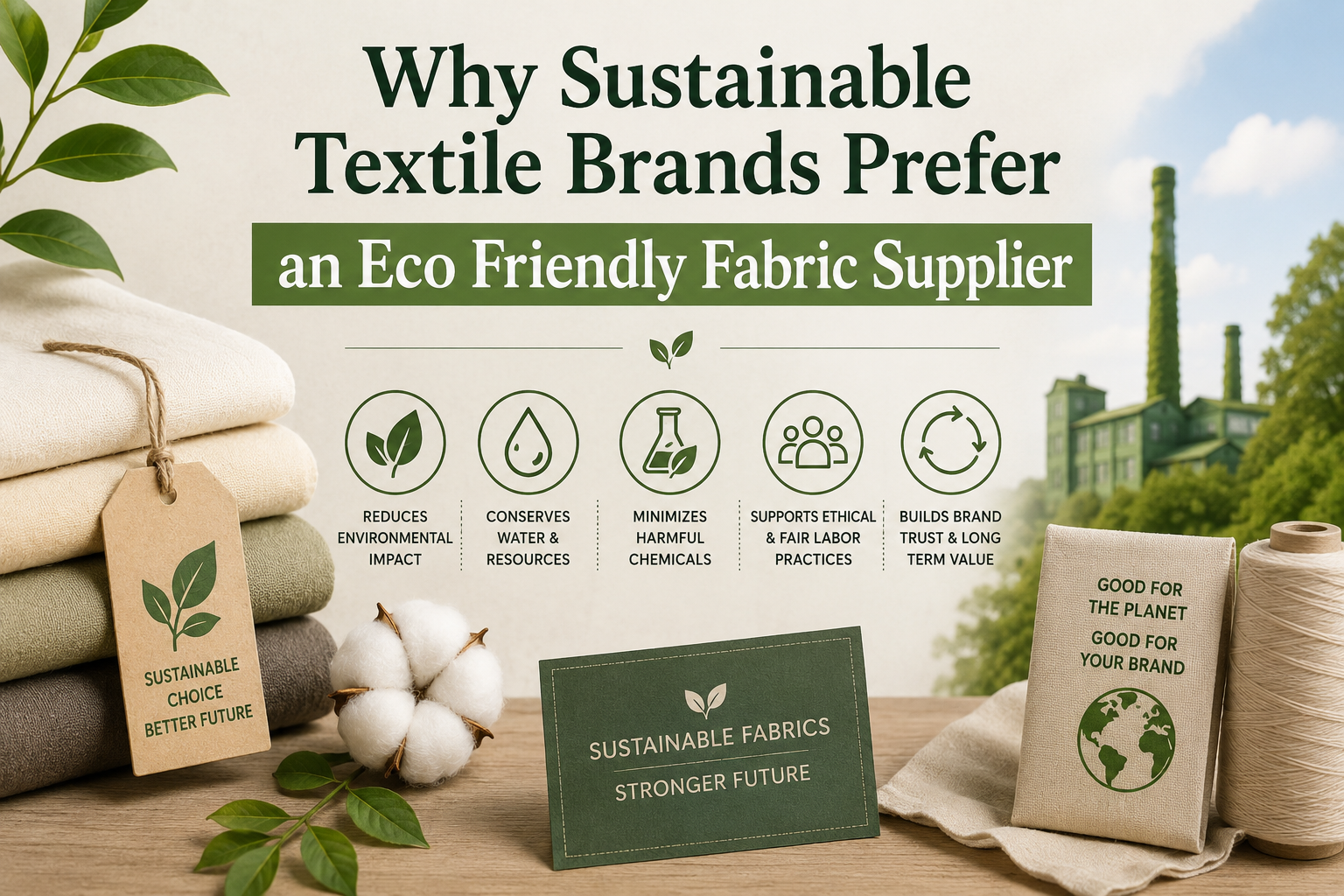
The global textile industry is undergoing a significant transformation as sustainability becomes one of the most important priorities for fashion brands, manufacturers, and consumers. Growing awareness about environmental conservation, ethical sourcing, and responsible production has encouraged businesses to rethink the way fabrics are produced and supplied. Modern consumers no longer evaluate clothing based only on style and price—they also consider the environmental impact, production process, and sustainability of the materials used. As a result, the demand for environmentally responsible textiles continues to grow, making an Eco Friendly Fabric Supplier an essential partner for brands that want to build a sustainable future while meeting evolving customer expectations. Sustainable fashion brands understand that creating environmentally responsible products begins with choosing the right raw materials. Working with the Best Eco Friendly Fabric Supplier ensures access to responsibly sourced fabrics that combine quality, durability, comfort, and environmental responsibility. Whether manufacturing clothing, home textiles, accessories, or lifestyle products, selecting sustainable fabrics helps businesses reduce their ecological footprint while strengthening their brand reputation. At Echo Earth, we are committed to supplying premium eco-friendly textiles that support ethical manufacturing and sustainable innovation. This guide explains why modern textile brands increasingly prefer sustainable fabric suppliers and how responsible sourcing contributes to long-term business success. The Growing Importance of Sustainable Textiles The textile industry has traditionally consumed large amounts of water, energy, chemicals, and natural resources. Conventional fabric manufacturing often contributes to pollution, excessive waste generation, and environmental degradation. As governments, businesses, and consumers become more environmentally conscious, sustainable textiles have emerged as a practical solution for reducing the industry’s ecological impact. An experienced Eco Friendly Fabric Supplier provides fabrics produced using environmentally responsible methods that minimize water consumption, reduce harmful chemical usage, and encourage efficient resource management. Sustainable fabrics help brands align with global environmental goals while meeting increasing consumer demand for ethical fashion products. Consumers Are Choosing Sustainable Fashion Modern consumers actively research brands before making purchasing decisions. Many shoppers now prefer clothing made from responsibly sourced materials because they understand the environmental consequences of conventional textile production. Sustainability has become a major purchasing factor alongside quality, comfort, and design. Brands that collaborate with the Best Eco Friendly Fabric Supplier gain a competitive advantage by offering products that reflect environmental responsibility. Customers appreciate transparency, ethical manufacturing, and sustainable sourcing, making eco-friendly fabrics an important factor in building long-term brand loyalty. High-Quality Sustainable Fabrics One common misconception is that environmentally friendly fabrics compromise quality. In reality, premium sustainable textiles offer exceptional durability, softness, breathability, and performance while reducing environmental impact. Professional suppliers carefully maintain strict quality standards throughout the manufacturing process to ensure consistency across every fabric batch. A trusted Sustainable Textile Manufacturer India focuses on advanced production techniques that combine environmental responsibility with superior fabric performance. This allows brands to deliver products that satisfy customer expectations without compromising sustainability. Hemp Is Transforming the Textile Industry Among all sustainable textile materials, hemp has gained significant recognition due to its remarkable environmental and performance benefits. Hemp requires considerably less water than conventional cotton, grows rapidly, improves soil health, and requires minimal pesticide usage. These characteristics make hemp one of the most sustainable natural fibers available today. A leading Hemp Fabric Manufacturer India produces premium hemp textiles suitable for fashion apparel, home furnishings, accessories, upholstery, and lifestyle products. Hemp fabrics are naturally breathable, durable, antibacterial, and highly comfortable, making them an excellent choice for environmentally conscious brands seeking long-lasting textile solutions. Supporting Ethical Manufacturing Practices Sustainability extends beyond environmental conservation. Ethical manufacturing also includes fair labor practices, responsible sourcing, safe working conditions, and transparent production processes. Brands increasingly prefer suppliers who maintain high ethical standards throughout every stage of textile manufacturing. Choosing an Eco Friendly Fabric Supplier demonstrates a commitment to responsible business practices while strengthening customer confidence. Ethical sourcing enhances brand credibility and supports long-term relationships with environmentally conscious consumers. Reducing Environmental Impact One of the primary reasons sustainable brands choose environmentally responsible textile suppliers is the opportunity to reduce their overall environmental footprint. Sustainable manufacturing emphasizes efficient water usage, renewable energy, waste reduction, recycling, and lower greenhouse gas emissions throughout production. An experienced Sustainable Textile Manufacturer India continuously improves manufacturing processes to reduce resource consumption while maintaining premium product quality. These environmentally responsible practices help businesses contribute to global sustainability initiatives without sacrificing manufacturing efficiency. Reliable Supply Chain and Consistent Quality Consistency is essential for every fashion and textile brand. Working with a trusted supplier ensures reliable availability of fabrics, consistent quality standards, timely delivery, and professional customer support. Long-term supplier relationships simplify production planning while reducing operational challenges. The Best Eco Friendly Fabric Supplier understands the importance of maintaining strict quality control throughout fabric development, processing, finishing, and distribution. Reliable sourcing allows manufacturers to meet production schedules while maintaining customer satisfaction and brand reputation. Innovation in Sustainable Textile Development The sustainable textile industry continues to evolve through ongoing research and technological innovation. Manufacturers are constantly developing improved eco-friendly fibers, advanced weaving techniques, biodegradable finishes, and environmentally responsible dyeing processes that further reduce environmental impact. Professional suppliers invest in innovation to provide modern textile solutions that satisfy changing market demands while supporting sustainable production. Continuous improvement ensures that brands remain competitive in the rapidly expanding sustainable fashion industry. Why Hemp Clothing Is Becoming the Future of Sustainable Fashion The global fashion industry is increasingly adopting hemp as one of its preferred sustainable materials. As a leading Hemp Clothing Manufacturer, companies are recognizing the exceptional qualities that hemp offers for modern apparel production. Hemp fabric is naturally breathable, lightweight, durable, moisture-absorbent, and comfortable, making it suitable for every season. Unlike many conventional fabrics, hemp becomes softer with every wash while maintaining its strength and shape, providing consumers with clothing that lasts significantly longer. Fashion brands appreciate hemp because it supports both sustainability and product quality. Consumers are also becoming more aware of the environmental benefits associated with hemp garments, leading to increased demand across domestic and international markets. This growing popularity has positioned hemp as one of the
