



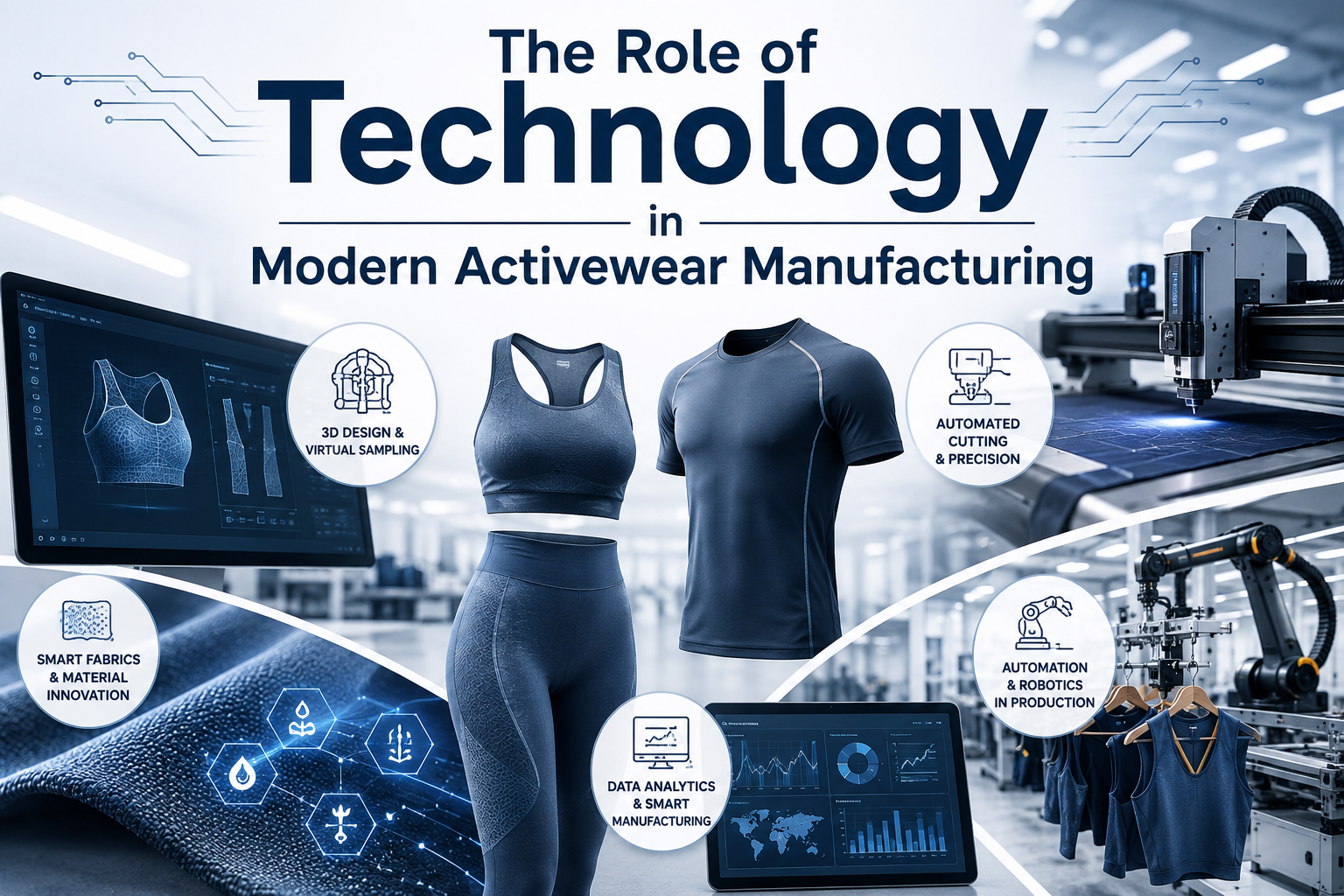
The Role of Technology in Modern Activewear Manufacturing
The global activewear industry has experienced massive growth over the past decade, driven by increasing health awareness, fitness culture, and the rise of athleisure fashion. Today, consumers expect more than just stylish workout clothing—they demand comfort, performance, durability, and sustainability. This shift has pushed brands to adopt advanced technologies in production, making Activewear Manufacturing one of the most innovation-driven sectors in the apparel industry. From fabric innovation to automated production systems, technology plays a central role in shaping how modern activewear is designed, developed, and delivered. At Echo Earth, we understand that success in the apparel industry depends on combining creativity with cutting-edge technology. Whether brands are working with a private label activewear manufacturer, exploring activewear manufacturer low MOQ solutions, or partnering with a custom activewear manufacturer, technology ensures precision, scalability, and quality. Today’s manufacturing ecosystem is also powered by OEM activewear manufacturer and ODM activewear manufacturer models, enabling businesses to bring innovative designs to market faster and more efficiently than ever before. The Evolution of Activewear Manufacturing Through Technology Activewear manufacturing has moved far beyond traditional sewing and fabric cutting methods. Earlier, production relied heavily on manual labor, limiting speed, accuracy, and customization. Today, digital transformation has revolutionized the industry. Modern factories now use automated cutting machines, 3D design software, AI-powered trend forecasting, and smart production systems. These advancements allow manufacturers to create high-performance garments with greater consistency and efficiency. The role of a reliable activewear production partner is no longer limited to stitching garments—it now includes innovation, material science, sustainability, and data-driven manufacturing strategies. Digital Design and 3D Prototyping One of the most significant technological advancements in activewear manufacturing is 3D design and prototyping. Designers no longer need to rely solely on physical samples. With 3D software tools: Designs can be visualized instantly Fabric behavior can be simulated digitally Fit and movement can be tested virtually Errors can be corrected before production This reduces time, cost, and material waste. For brands working with a custom activewear manufacturer, 3D prototyping ensures faster product development and better accuracy in design execution. Smart Fabric Technology and Innovation Modern activewear is built on fabric innovation. Technology has enabled the development of high-performance textiles that enhance comfort, flexibility, and durability. Key innovations include: Moisture-wicking fabrics Anti-odor technology Compression materials for performance support Breathable mesh structures Sustainable recycled fibers These innovations are essential for brands collaborating with a private label activewear manufacturer, as they help create unique product lines that stand out in a competitive market. Smart textiles also allow brands to integrate wearable technology, such as fitness tracking and temperature regulation, into clothing. Automation in Manufacturing Processes Automation has significantly improved efficiency in activewear production. Machines now handle tasks that once required extensive manual labor. Automated systems include: Laser cutting machines for precision fabric cutting Automated sewing machines for consistent stitching Robotic fabric handling systems Digital printing technology for customized designs These advancements help reduce production errors and ensure uniform quality across large batches. For an activewear manufacturer low MOQ, automation also makes small-batch production more cost-effective. Role of AI and Data Analytics in Production Artificial Intelligence is transforming how activewear brands operate. AI tools analyze consumer behavior, fashion trends, and market demand to predict future product needs. Manufacturers use AI for: Demand forecasting Inventory optimization Design trend analysis Production planning For an OEM activewear manufacturer, AI ensures that production aligns with market demand, reducing waste and increasing profitability. Data-driven decisions help brands stay competitive in a fast-moving industry. Customization and On-Demand Manufacturing Consumers today prefer personalized clothing that reflects their lifestyle and identity. Technology has made customization easier and more scalable. Modern manufacturing systems allow: Custom color combinations Personalized logos and branding Size-specific production Limited edition collections A custom activewear manufacturer uses digital tools to quickly adapt designs and produce tailored products without long lead times. On-demand manufacturing also reduces excess inventory and supports sustainable production practices. Low MOQ Manufacturing and Startup Support One of the biggest challenges for new brands is managing inventory risk. This is where activewear manufacturer low MOQ solutions play an important role. Technology enables manufacturers to: Produce small batches efficiently Test new designs with minimal investment Scale production based on demand Reduce storage and wastage costs This model is ideal for startups and emerging brands looking to enter the market without heavy financial risk. OEM and ODM Models Powered by Technology The apparel industry relies heavily on OEM and ODM manufacturing models. OEM Activewear Manufacturing In the OEM activewear manufacturer model, brands provide their designs, and manufacturers handle production using advanced machinery and systems. Technology ensures precision and consistency. ODM Activewear Manufacturing In the ODM activewear manufacturer model, manufacturers design and produce products that brands can rebrand. Digital design tools and trend analysis help create market-ready collections quickly. Both models rely heavily on automation, AI, and digital design platforms to streamline production. Sustainable Manufacturing Through Technology Sustainability is a major focus in modern activewear production. Technology helps reduce environmental impact in multiple ways. Key sustainable practices include: Water-efficient dyeing techniques Recycling fabric waste Using eco-friendly materials Energy-efficient machinery A responsible activewear production partner integrates sustainability into every stage of manufacturing. Technology ensures that eco-friendly practices do not compromise quality or performance. Quality Control and Smart Inspection Systems Maintaining consistent quality is crucial in activewear manufacturing. Technology has introduced advanced quality control systems. These include: AI-based defect detection Automated fabric inspection machines Digital measurement systems Real-time production monitoring These systems ensure that every product meets industry standards before reaching the market. This is especially important for global brands working with an OEM activewear manufacturer or private label activewear manufacturer. Speed and Efficiency in Production Technology has drastically reduced production timelines. What once took weeks can now be completed in days. Key improvements include: Faster sample development Real-time production tracking Automated workflow systems Efficient supply chain management This speed is essential for fashion brands that need to respond quickly to market trends and seasonal demand. Digital Supply Chain Management Modern manufacturing relies on connected supply chains. Digital systems
